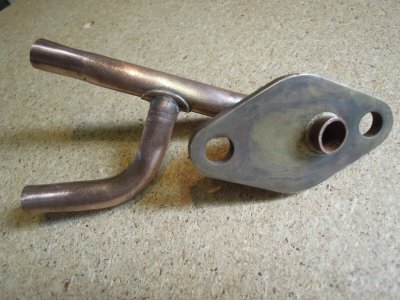
bukh DV20 front crank oil seal leaking

I have posted many times about blockage of the seawater inlet behind the flywheel. On earlier engines the inlet was a closed tube, perforated with many drilled holes, like an ancient gas poker, words I have used in these posts. Later inlets are of a different, more open design that seems to block less readily.
 
I have posted many times about blockage of the seawater inlet behind the flywheel. On earlier engines the inlet was a closed tube, perforated with many drilled holes, like an ancient gas poker, words I have used in these posts. Later inlets are of a different, more open design that seems to block less readily.
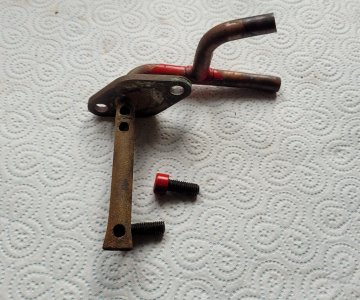
I cut that section off many years ago and it seems to have had no adverse effect on the engine.


Before:
1694518331629.jpeg


After:
1694518358161.jpeg
 
From memory, a long time ago now, mine had far more smaller holes than your original. Difficult to know why they didn't make it like yours originally.
I confess that first picture is not a photo of mine but is a photo I found on the internet and which, as you suggest, has had its holes enlarged.

Mine too had smaller holes.

I wonder what the BUKH designer had in mind when he designed it!
 
The only reason I can think of is that it is intended to limit the proportion of water flowing through the cylinder block but, if so, it seems an awkward way of achieving it.
I happened to have a freakish experience only about 3 weeks ago with mine, which demonstrated two things:

1/. The restriction acts like a strainer to prevent anything of substance getting into the block/cylinder head water jacket, which I think is a good thing

2/. If it does get blocked, the time you have to act to prevent damage is only a few minutes....

What happened?

I was running the engine to trace the source of an oil leak, so luckily I was right next to the raw water inlet hose to the pump which is clear. After about ten minutes of running, my eye caught a flash of an object going through it, just for a split second. I didn't stop the engine, but monitored the cooling system as well as the engine temp gauge. Sure enough, after a couple of minutes, I saw that the gauge was rising, went up on deck to check flow from the exhaust and saw it was not normal. I shut down the engine, took the hose off the water pump outlet, and found the outlet was blocked. I was thinking probably barnacle or a bit of seaweed. I took the pump cover plate off and removed the impellor, then I was able to push the blockage back through into the vacant impellor housing with a screwdriver. It was a small fish, cute, only about 15 mm in diameter about 50mm long...poor little guy, how incredibly unlucky. :( I noticed that his tail was missing, but figured that it would simply have been mangled and pushed through the system. I put things back together and restarted the engine, noting that the exhaust was belching out water as it should, the gauge showed it was running cool and water pump felt cool...all good. Then I went up on deck with the engine running in neutral at about 1200 rpm, I could hear the water coming out of the exhaust, everything seemed fine, but I had a nagging thought about that y fitting, and decided to check the temp gauge (which is down below)....luckily, because it was again climbing, and quickly. Shut down. Repeated the same process, but no blockage found. So, I figured it was probably in the y fitting, requiring removing it, but to confirm that, I sucked the inlet gently (it was fairly warm) and noted that is was indeed blocked...so then I tried sucking a bit harder, at which point a gush of hot salt water with a fish tail came out, not too pleasant. The piece of fish tail, which was only about 20mm long and 10mm in diameter, completed the unfortunate little fish's body, very small, but it was enough to have cooked the engine. No need to take the fitting out. Engine then run, everything ok. I don't have a raw water inlet strainer fitted, the 43 yo boat never had one, but after this episode, I am convinced it should have one.

This demonstrated that the seemingly odd elbow fitting design does have a worthy purpose.
 
Last edited:
I happened to have a freakish experience only about 3 weeks ago with mine, which demonstrated two things:

1/. The restriction acts like a strainer to prevent anything of substance getting into the block/cylinder head wall, which I think is a good thing

2/. If it does get blocked, the time you have to act to prevent damage is only a few minutes....

What happened?

I was running the engine to trace the source of an oil leak, so luckily I was right next to the raw water inlet hose to the pump which is clear. After about ten minutes of running, my eye caught a flash of an object going through it, just for a split second. I didn't stop the engine, but monitored the cooling system as well as the engine temp gauge. Sure enough, after a couple of minutes, I saw that the gauge was rising, went up on deck to check flow from the exhaust and saw it was not normal. I shut down the engine, took the hose off the water pump outlet, and found the outlet was blocked. I was thinking probably barnacle or a bit of seaweed. I took the pump cover plate off and removed the impellor, then I was able to push the blockage through into the vacant housing with a screwdriver. It was a small fish, cute, only about 15 mm in diameter about 50mm long...poor little guy, how incredibly unlucky. :( I noticed that his tail was missing, but figured that it would simply have been mangled and pushed through the system. I put things back together and restarted the engine, noting that the exhaust was belching out water as it should, the gauge showed it was running cool and water pump felt cool...all good. Then I went up on deck with the engine running in neutral at about 1200 rpm, I could hear the water coming out of the exhaust, everything seemed fine, but I had a nagging thought about that y fitting, and decided to check the temp gauge (which is down below)....indeed it was climbing, and quickly. Shut down. Repeated the same process, but no blockage found. So, I figured it was probably in the y fitting, requiring removing it, but to confirm that, I sucked the inlet gently ( it was fairly warm) and noted that is was blocked...so then I tried sucking a bit harder, at which point a gush of hot salt water with a fish tail came out, not too pleasant. The piece of fish tail, which was only about 20mm long and 10mm in diameter, completed the unfortunate little fish's body, very small, but it was enough to have cooked the engine. No need to take the fitting out. Engine then run, everything ok. I don't have a raw water inlet strainer fitted, the 43 yo boat never had one, but after this episode, I am convinced it should have one. This demonstrated that the seemingly odd elbow fitting design has a worthy purpose.
Fascinating!
So by cutting off the piece that I did, I would have increased the possibility of debris getting into the cylinder block were it not for the raw water strainer I have fitted.
 
Last edited:
Fascinating!
Fascinating!
"So by cutting off the piece that I did, I would have increased the possibility of debris getting into the cylinder block were it not for the raw water strainer I have fitted. '

I like the sarcasm. As you know, not every boat had a strainer system fitted, mine didn't even though it was out of a well regarded production company. I'm guessing this wasn't uncommon, and it sounds to me like your boat may not at first have had one either. That said, I have decided to fit one,

I'm not criticising what you've done, the opposite is true actually, I like it... I'm merely saying what I believe the purpose of the fitting probably is, because that's what it actually did in this case.
 
Last edited:
"So by cutting off the piece that I did, I would have increased the possibility of debris getting into the cylinder block were it not for the raw water strainer I have fitted. '

I like the sarcasm. As you know, not every boat had a strainer system fitted, mine didn't even though it was out of a well regarded production company. I'm guessing this wasn't uncommon, and it sounds to me like your boat may not at first have had one either. That said, I have decided to fit one,

I'm not criticising what you've done, the opposite is true actually, I like it... I'm merely saying what I believe the purpose of the fitting probably is, because that's what it actually did in this case.
Simon. I assure you that no sarcasm was intended. It worries me that you thought there was.

I really do find engineering a fascinating subject.

Anyway, that's that misunderstanding cleared up.

My boat originally had a Stuart seacock incorporating a filter.

I replaced this with a Blakes seacock, and fitted a Vetus strainer in the engine compartment just above waterline level.

This has a clear plastic lid so I can check the water is flowing through without having to go on deck.

Another benefit is that it makes flushing the engine with fresh water very easy. Just take the lid off and let fresh water feed in from a hose.
 
Simon. I assure you that no sarcasm was intended. It worries me that you thought there was.

I really do find engineering a fascinating subject.

Anyway, that's that misunderstanding cleared up.

My boat originally had a Stuart seacock incorporating a filter.

I replaced this with a Blakes seacock, and fitted a Vetus strainer in the engine compartment just above waterline level.

This has a clear plastic lid so I can check the water is flowing through without having to go on deck.

Another benefit is that it makes flushing the engine with fresh water very easy. Just take the lid off and let fresh water feed in from a hose.
Sorry, I took it the wrong way, but it made me laugh, I liked it that way, seemed very witty.

Thanks for the ideas, I have had this boat for 34 years now. It did suck up a bit of sea grass about 25 years ago, I wasn't on the boat, a friend was using it...apparently it triggered the alarm. I worried back then that it had been damaged, but everything checked out ok. I meant to put a strainer on way back then, but didn't get to it. It is an awkward spot to fit, but I will figure one out. That's the only issue I have ever had until this poor little fish swam too close to the inlet. Thinking back, if I had done what you have done to the Y joint, the little tail would have gone into the block and would have broken down there, no harm. I like the mod, it makes sense, if you have a strainer and definitely would ease the worry this thing can create.
 
Top