bukh DV20 front crank oil seal leaking

Jamesanderton

Active Member
Joined
15 Jan 2008
Messages
52
Location
Gosport
Visit site
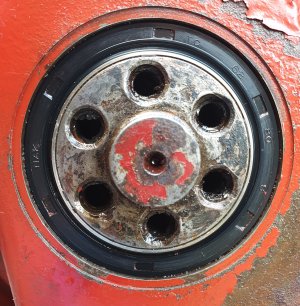
I have a leak from the front crank oil seal, I have had the seal out and found quite a nasty groove in the shaft, cleaned up the shaft and popped a new seal on a good few mm short of said groove, there was however some slight pitting which I had hoped yo have missed when the new seal went on. A week after changing it the new seal is leaking again :(

Question now is has anyone used a speedi sleeve or some form of sleeve and oversized seal? I have had a quick look online and can only really see any kits (as was suggested to me) but only the sleeves as per size required.

So what are peoples experiences with them?!
 
shaft sleeves

I have a leak from the front crank oil seal, I have had the seal out and found quite a nasty groove in the shaft, cleaned up the shaft and popped a new seal on a good few mm short of said groove, there was however some slight pitting which I had hoped yo have missed when the new seal went on. A week after changing it the new seal is leaking again :(

Question now is has anyone used a speedi sleeve or some form of sleeve and oversized seal? I have had a quick look online and can only really see any kits (as was suggested to me) but only the sleeves as per size required.

So what are peoples experiences with them?!
The sleeves are so thin that the standard seal is ok,have used them on Jabsco & gearbox output coupling shafts.

Jim
 
Had this trouble on my DV20. Was due to letting the water pump drip! I used a speedisleeve and standard lip seal. I found the speedisleeve a bit slack on the shaft, but locktite holds it OK. I didn't break off the speedisleeve installation flange in case I disturbed the locktite. Have you checked your crankcase breather? Excess pressure there can start leaks in all sorts of places.

Neil
 
Speedisleeve: Thanks.....had no idea that such a product even existed as an 'off-the-shelf' item. Does make you wonder how many other great 'solutions' are out there which you never know about because you had no idea there was a solution to search for.

(OK, if you put 'worn shaft' into GOOGLE, it suggests 'worn shaft repair' which promptly leads to Speedisleeve. But faced with a worn shaft would you have thought of that?)
 
I used a speedisleeve and standard lip seal.
Neil

Did you manage to find the sleeve specifically for the DV20, or did you get one going from the crank shaft diameter? I can find out the crank diameter if need be but if there is an off the shelf size to fit that would make life that bit easier!

Also fairly sure crank case pressure isn't the cause of the leak, ran the engine with the dipstick out, there was a very small amount of breathing from the tube but minimal and the leak remained!
 
Did you manage to find the sleeve specifically for the DV20, or did you get one going from the crank shaft diameter? I can find out the crank diameter if need be but if there is an off the shelf size to fit that would make life that bit easier!

Also fairly sure crank case pressure isn't the cause of the leak, ran the engine with the dipstick out, there was a very small amount of breathing from the tube but minimal and the leak remained!
HiJames,

I see this happened 10 years ago, but my DV 20 now has a leaky front crank seal...grooved and some pitting on the shaft.

If you can remember what you did to solve your problem, I would really appreciate you letting me know. I have looked into getting a speedi sleeve...but the shaft is an odd size. My callipers are not very high definition, so I can't get an accurate enough figure consistently to be reliable. I have been in contact with Bukh Australia, they have specific sleeves for it, they say it is an odd size, but would not tell me what the spec nominal diam of the shaft is...problem is their price for the sleeve is about 5 times what an off the shelf sleeve would cost....extortionate. This peeves me off, mainly because they would not tell me what the nominal shaft diam is. I have a feeling an off the shelf sleeve could well work ok.
If you sleeved yours, can you recall what you used, and if it was off the shelf, did it work ok? Can you also recall if you managed to get an accurate size of the shaft? My best effort using my calipers is around 59.3 mm, but possibly up to 59.35 due to accuracy of calipers being only to 0.1mm.

One more related question; if you did end up sleeving the shaft, did you remove the cover housing? To do the job thoroughly, to me it seems that would be the right thing to do, but it adds quite a bit of work and cost, so maybe that's being a bit too fussy. If the cover wasn't taken off, I guess you left the flange on the sleeve.

Thanks for your time, I appreciate any advice you may be able to pass on to me. I hope all went well with your engine.

Regards
Simon.
 
Had this trouble on my DV20. Was due to letting the water pump drip! I used a speedisleeve and standard lip seal. I found the speedisleeve a bit slack on the shaft, but locktite holds it OK. I didn't break off the speedisleeve installation flange in case I disturbed the locktite. Have you checked your crankcase breather? Excess pressure there can start leaks in all sorts of places.

Neil
Hi Neil,

10 years + since this post, but can you remember if you used an off the shelf Speedi sleeve? Sounds like you did and though it was perhaps a little loose, it worked out fine. Would I be pushing it too far to ask if you remember which size sleeve you used? One last thing, do you remember if you were able to nail down the nominal spec diam of the shaft? Measuring it myself in situ is not accurate enough to rely on. I have searched and cannot find it. Bukh Australia know, but won't tell me, they just want me to buy a matched sleeve from them at about 5 times the price of an off the shelf one!

Thanks for your time, hope you're still boating and enjoying it.

Regards,
Simon.
 
Looks like guys over the tasman are bit friendlier...
As i have been asking yesterday about front crankshaft seal (flywheel side) i have been told it can be actually in 3 sizes...59.5, 60 and 62.
Ill check imprinted numbers on seal it self.
Tough yes pricing wise its still pretty steep, makes me wonder if there a chance to get that seal actually from different unofficial sources...
Not to mention iprice of big end - con rods bearings, piston rings and bukh head gasket.
Would be great to find more about quality of Dev engineering parts, as they are surely cheaper.
tnorrismarine.co.uk actually listing head gasket from Dev (at least photo is with there watermark)
 
Looks like guys over the tasman are bit friendlier...
As i have been asking yesterday about front crankshaft seal (flywheel side) i have been told it can be actually in 3 sizes...59.5, 60 and 62.
Ill check imprinted numbers on seal it self.
Tough yes pricing wise its still pretty steep, makes me wonder if there a chance to get that seal actually from different unofficial sources...
Not to mention iprice of big end - con rods bearings, piston rings and bukh head gasket.
Would be great to find more about quality of Dev engineering parts, as they are surely cheaper.
tnorrismarine.co.uk actually listing head gasket from Dev (at least photo is with there watermark)
Thanks Lukas,

I have another dv20 that's seized, so pulled the front cover off it today to get a more accurate measurement. The shaft diam is 59.4 mm, with possible error of .05mm. This is consistent with the measurements of the one in the boat.

I'm quite intrigued by the 3 seal sizes you mention, it's news to me. The people at Bukh Australia haven't ever mentioned any shaft size variations when I talked to them about new seals or a sleeve....only one size shaft. Is it possible the larger seal size options (60 & 62mm) might be for shafts that have had a sleeve fitted?

I have replaced these seals previously using a non genuine, off the shelf part supplied by a local bearing shop, a heck of a lot cheaper, the seals are very good quality and do the job well. The problem is, if you have a leaking seal, it is very likely due to pitting and/or a groove worn into the shaft by the seal. So replacing the seal may work for a little while, but if the shaft has this wear or damage, it won't be long before it leaks again. That's why I need to get a sleeve. I noted today that the shaft on the seized engine, which actually has fewer hours and is a slightly younger unit than the active one in the boat, had enough wear to justify fitting a sleeve to it...but it had not started leaking. If your's is leaking, I'd check the shaft before putting another seal in.

Regards,
Simon
 
Hi, think my unit is with 62mm shaft as per seal imprint.
Its a steep learning curve for me as usually, its engine which i got in hopes of rebuild...
I saw perfectly dispersed oil traces from centre of of flywheel from the side of crankshaft.
Which would suggest either drip from this seal or as I have been told in shop, there could be some "plugs" around balancers casing.

RE your seized units, how does con-rods bearings looks like? I know not ideal but I would trust sec. hand more than aftermarket ones lol
Im glad that on front piston looks ok but on rear piston sadly worn out (so now getting Dev eng after market ones or bukhs for roughly 270nzd - just pair).
 

Attachments

  • 20230906_112115.jpg
    20230906_112115.jpg
    1.9 MB · Views: 19
  • 20230906_120523.jpg
    20230906_120523.jpg
    862.6 KB · Views: 23
  • 20230906_121037.jpg
    20230906_121037.jpg
    1.3 MB · Views: 20
  • 20230906_115827.jpg
    20230906_115827.jpg
    885.2 KB · Views: 20
I replied in detail yesterday, but unfortunately it doesn't look like it went up.

Your shaft is sleeved, hence the 62mm size.

I doubt that the oil leak would be from the counterweight screws in the front cover...it's possible, but if they are not loose then only a slight seap would be about all you'd have. If the leak was quite noticeable, and was getting worse quite quickly, it points to the crank seal...backed up by the pattern of oil on the back of the flywheel. Leak from the screws would most likely run down the cover only, not make it onto the flywheel. I suggest taking the seal out and check for groove or pitting on the shaft. Check the seal itself for signs of damage if the shaft looks good perhaps something may have run down externally onto it ...in the pic there looks to be some kind of particles around it. Also, if the engine ran a little hot at some point, that may have damaged the seal.

Couple of points to consider...

There is a crankcase breather valve mounted under the rocker cover that can fail or become blocked up so that gas pressure builds up and pushes oil past a good crank seal. It's worth checking that before doing anything else.
If you do end up deciding to remove the crank seal take great care not to allow the tool you use to contact the shaft's seal surface.
If you decide to undo any of the screws in the front cover, take care to work them out methodically, and with a lot of patience, especially the c/weight screws,. All of the screws will likely be difficult to get out, I have had to resort to drastic measures on a couple of the cover mounting screws on these engines before , but you definitely wouldn't want to get into that position with either of the two c/weight screws.

As for my old engine, I haven't dismantled it on anything close to the level needed to see what the components are like. It seized most probably due to salt laden moisture from exhaust system getting into bores(s)....it didn' t seize while running, no noises, good oil pressure, compression, and temp ok, last shut down was normal....It just sat for about a month after that which is what led to the problem, I believe.

Regards,
Simon.
 
Hi, firstly thank you very much for your time and valuable advices.
I bought this engine with lots of spares, as original owner planned to do rebuild but then he has changed his mind (for about 400nzd plus trip to get iit).
My original plan was to attempt start and try to run it, before opening it up. As only info what i got about it was "its hard to start".
Although I was able to turn it around, I checked under rocker cover and immediately found lots of "traces" of water ingress - well pretty rusty head with jelly like compound around. Oil in sump was chunky emulsion so oil was flushed as per old school mechanic advice "with diesel".
Glad i got in "set" spare head, reconditioned injectors (which I put to shop for test and apparently they are as "new"), injector pump (pump which was on block had "sticky" adjusting rod - but after lil pressure it got loose).
Apart from other things there are cylinder sleeves from Dev engineering (which im little bit tempted to use if necessary),
and Pistons (which just seeing the quality of cast in comparison with originals are definitely not going in) but makes me wonder if those piston rings would at least be ok - but not convinced at all.


Please what would you do with those B/E bearing, as they are on photos from previous post. Not sure if to go way of Dev engineering pars (way cheaper) or Bukh parts which must be literally coated with paladium (based on price tag).
One pair of B/E beerings looks ok but other is pretty worn out from one side - even that I have been told "it will be fine to keep them as they are if on budget".
If ill will slightly sand and polish crankshaft journals, shall i get upper size or keep original (Dev provides different sizes, tough of course best would be to measure final diameter - well another tool to get - micrometer).
Regarding that shaft seal, as im at this stage surely i would like to replace that seal as Ideal scenario would be not to touch it again for while. Removal with flat screwdriver should be hopefully fine, though installation is ok without punch - just squeeze it in?
And regarding potential rust inside, i know best would be to do complete disassembly which is not far at this stage. Only last "sensitive" component is oil pump and even that theres probably not much of it - im tempted to "soak up" that block...

Overall Im hoping to create something better that current DV20 in my boat which is from 1972 but unfortunately very neglected as the water pump was left to drip for way too long.
 
Last edited:
Hi Lukas,

Sounds to me like one of two things may have happened..

1/ Head gasket was blown or
2/ Block and/or cylinder liner has rusted through.

Either of these points to things that aren't good, and is usually the result of neglect or poor maintenance.


The head gasket on these engines are very tough, it takes a fair bit to blow them...the most likely cause of a failure would be an overheat. If that's the case, it would have been a severe overheat, and there would likely be other damage, especially to pistons and a warped or cracked head. Unfortunately, these engines are very easy to overheat due, in my opinion, one major weak point in the cooling system which can create the impression that cooling is working fine when it a actually isn't. I have seen this first hand and was very lucky to discover the issue before the engine was run. The cooling system has a Y joint/elbow block insert fitting that can quite easily become clogged up with white corrosive build up which occurs downstream of the y joint, where this elblow goes into the block. Because it is downsream of tbe y joint, cooling water still flows to the thermostat housing on top of the exhaust manifold, and then is realeased into the exhaust,system, but it has completely by-passed tbe block...unless you're montoring the temp guage closely and the alarm works properly and you're close enough to hear it, this can cook the engine even though water seems to be coming out of the exhaust just as it should.

If the water in the oil was caused by a rusted through liner, it is a major issue which would probably not be worth doing all that' would be needed to repair. That said, I think this is less likely to be the problem as I doubt that the engine would start at all, but if it did actually start,, it would be very difficult to do so, would run very rough, would probably not idle, and it would also almost certainly stop before long, even at above idle. It would also have been making horrible noises.

These engines are tough and very reliable...that's great, but they will keep running when they really shouldn't be able to...which causes a lot more damage if something is wrong. If they get to the point running roughly, it is usually due to a major problem.

I suspect an overheat...so I 'd be pulling the cooling elbow fitting I mentioned out examine it very carefully for the blockage I mentioned. If it is blocked, you csn bet that caused the problem.

If you have the workshop repair manual, you've probably already been over it, but if you don't, then get it...easy to find and download (pdf) online.

I wouldn't be touching any of the crankshaft journals with anything more abrasive than a clean, soft cloth... and even then only with a lot of care. If you can see scratching or pitting or gouging in any of them, the crank would need to be taken out and taken to a shop to be professionally ground, assuming there is enough meat left to allow any damage or flaws to be removed. You would then need oversized bearing shells for any journals that had to be machined. The workshop manual soecifies the tolerance limits, and the oversized machining values etc for an engineer shop.

Good luck.

Regards,
Simon.
 
I rebuilt one of these some time ago. The price of spares like bearing shells, pistons and rings. will make your eyes bleed.
It hasn't gotten any better....probably the biggest issue of all when it comes to Bukh engines, puts a lot of people off them. They are very different and heavy for their power output, but as long as they get the basic maintenance and care, they will outlast most other brands of small marine diesel.
 
Hi, firstly thank you very much for your time and valuable advices.
I bought this engine with lots of spares, as original owner planned to do rebuild but then he has changed his mind (for about 400nzd plus trip to get iit).
My original plan was to attempt start and try to run it, before opening it up. As only info what i got about it was "its hard to start".
Although I was able to turn it around, I checked under rocker cover and immediately found lots of "traces" of water ingress - well pretty rusty head with jelly like compound around. Oil in sump was chunky emulsion so oil was flushed as per old school mechanic advice "with diesel".
Glad i got in "set" spare head, reconditioned injectors (which I put to shop for test and apparently they are as "new"), injector pump (pump which was on block had "sticky" adjusting rod - but after lil pressure it got loose).
Apart from other things there are cylinder sleeves from Dev engineering (which im little bit tempted to use if necessary),
and Pistons (which just seeing the quality of cast in comparison with originals are definitely not going in) but makes me wonder if those piston rings would at least be ok - but not convinced at all.


Please what would you do with those B/E bearing, as they are on photos from previous post. Not sure if to go way of Dev engineering pars (way cheaper) or Bukh parts which must be literally coated with paladium (based on price tag).
One pair of B/E beerings looks ok but other is pretty worn out from one side - even that I have been told "it will be fine to keep them as they are if on budget".
If ill will slightly sand and polish crankshaft journals, shall i get upper size or keep original (Dev provides different sizes, tough of course best would be to measure final diameter - well another tool to get - micrometer).
Regarding that shaft seal, as im at this stage surely i would like to replace that seal as Ideal scenario would be not to touch it again for while. Removal with flat screwdriver should be hopefully fine, though installation is ok without punch - just squeeze it in?
And regarding potential rust inside, i know best would be to do complete disassembly which is not far at this stage. Only last "sensitive" component is oil pump and even that theres probably not much of it - im tempted to "soak up" that block...

Overall Im hoping to create something better that current DV20 in my boat which is from 1972 but unfortunately very neglected as the water pump was left to drip for way too long.
In a working lifetime of looking at failed bearings I have never seen one that looked like your photo. It appears that the bond between the lining and back has failed, resulting in the chipped appearance. This could be a manufacturing defect, rare but not unknown, or it could be the result of corrosion. In either case it is almost impossible to know how far the disbond extends beneath the lining. Clever NDT might do it but replacement may well be cheaper, even at Bukh prices.
 
In a working lifetime of looking at failed bearings I have never seen one that looked like your photo. It appears that the bond between the lining and back has failed, resulting in the chipped appearance. This could be a manufacturing defect, rare but not unknown, or it could be the result of corrosion. In either case it is almost impossible to know how far the disbond extends beneath the lining. Clever NDT might do it but replacement may well be cheaper, even at Bukh prices.
I reckon it's probably from a severe overheat event, with salt water (I assume) in the oil from a blown head gasket then getting into the crank journals onto the hot bearing shells which in turn instantly superheated the salt water which then melted the bearing material, causing this nasty delamination. I'd say the crankshaft is pretty likely damaged beyond repair.
 
I reckon it's probably from a severe overheat event, with salt water (I assume) in the oil from a blown head gasket then getting into the crank journals onto the hot bearing shells which in turn instantly superheated the salt water which then melted the bearing material, causing this nasty delamination. I'd say the crankshaft is pretty likely damaged beyond repair.
I doubt very much that the bearings have been very hot. The overlay, either lead-tin or lead-indium, is still intact. It melts at less than 200C. Other than a bit of soft particle scoring they seem to be in fair condition other than the bonding issue.

By far the most common source of seawater in Bukh engines is the water pump, following blockage of the tell-tale hole. Good example here Water pumps but I have seen many similar.
 
I agree with you regarding the most common cause of water getting into the oil in the DV20, but water in the oil alone might not explain what has happened to these shells...and the areas of delamination or break away is what I was referring to, they are central to the point here.

In the pic with the two lower shells lying together, heat cracking is evident in material that hadn't quite yet broken away in that severely damaged area where some bearing material had departed...those areas at one edge of each of those shells, at the very least, have overheated. That may simply have been due to friction suffered from inadequate lubrication, which may in turn have been caused by contaminated oil, but I believe it could also have been due an overheat event, which would also similarly degrade the lubrication process through possible oil contamination via a head leak and/or the oil becoming hot.

Regardless of the root cause, whether it be water getting into the oil as you say, or an overheat, the effects would likely manifest themselves in the same way first at the edges where the normal, protective low friction hydraulic pressure oil film 'bed' between the two surfaces would tend to break down first. The crankshaft big end bearing surfaces look to me to be quite badly scoured/pitted, though it is hard to tell for sure, but assuming all the oil and grime has been wiped away, the damage areas seen are not just limited to the edges coincident with the damage to the shells, and is also present on each of the pots. To my eye, there might be a hint of heat discolourisation, though not severe. This would very likely have been caused by water contamination of the oil. The pictured conrod shell (1); although it obviously needs replacing, it doesn't look too bad to me, but I understand from what Lukas said, the other one was much worse, and its piston was badly damaged.

One point I would make here again about the DV20...the cooling system weakness (Y joint elbow block fitting blockage) I referred to before the comment you have responded to is common, I have seen it on several engines, and I'm guessing you probably have too. Not replacing the zinc often enough would likely be at the root of it, but also if an engine sits for a while, build up can happen surprisingly quickly inside it. There have been many posts in boating forums etc made by people complaining about a Bukh DV20 overheating despite everything apparently to them being in working order, with plenty of water emitting from the exhaust. I believe this very likely was the culprit in many such cases, and that it has probably been the cause of many seemingly mild, brief but recurring overheats that actually do more damage (including to the head) than the operator realises. That's why I mentioned it for Lukas, it is a nasty hidden little problem which can quickly destroy an engine, but which can quite easily be checked and be cleared if owners are aware of it.
 
Top