europe172
Well-Known Member
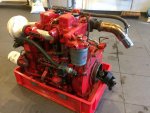
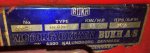
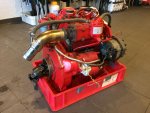
Does anyone know how to tell Dv20 from a Dv18? Are there any external differences, what is the development history? Thanks

It is odd , there is a bukh Facebook page with comments about a dv18 being slightly different than a dv20Bukh engines are DV 10, DV20, DV 24 and DV36. Not heard of a 15. There may have been a DV 8 . Could a DV15 have been a lowered powered version of a 20.
David MH

I don’t know , perhaps it was export down under only, most of the comments seem to be from New ZealandMust be correct, Faceache is never wrong......................................................................................................... until they are!
Sail drive DV20?

Thanks for the detailed answer, it is odd and my question came about because I wanted to replace my fixed two blades with a folding prop, now my fixed worked well so I wanted a similar pitch and size. When I spoke with the propellor supplier that said “ that size according to our records is for the dv18” which like many I have never heard of .I'm no expert, but have taken an interest in Bukh DV engines for a while (having a DV10 and a DV36 of my own), but can't recall hearing of a DV18, and there's no documentation of them on Bukh's own website (see e.g. Reservedels Katalog )
There are definitely the following DV models -
Singles - DV8, DV10
Twins - DV20, DV24, DV29, DV32 (turbo)
Triples - DV36, DV48 (turbo)
The ones underlined above are still in production (mainly sold for lifeboats these days), along with a lot of mainly much bigger, more modern, high-tech Bukhs.
As for the development history, as far as I understand it (no guarantees!).
The DV8 (single) was, I think, a predecessor of the DV10, but looks different.
The DV10 (single), from 60s or early 70s, IIRC (I have the date somewhere), was presumably some sort of development of the DV8.
The DV20 (twin) is essentially just a DV10 with two cylinders.
The DV36 (triple) was introduced in 1979, and is significantly different in layout and detail etc, from the DV10 and DV20.
The DV48 (triple) is a later, turbocharged version of the DV36.
The DV24 (twin) replaced the DV20. I suspect it may be a sort of twin version of the DV36, but don't know.
The DV29 (twin) is, I think, an uprated DV24, and the DV32 a turbocharged DV24.
There were various suffixes to the above models, or at least the early ones, including L, ME, and SME. I have forgotten what the M is for, but IIRC the E indicates electric start, and the S indicates a sail drive version.
I think a DV18, if it exists at all, would be a de-rated (rev limited?) DV20, or a DV10 with a turbo fitted (but seems very unlikely anyone would bother). I suspect it may be just a typo or other mistake.
if the difference between them is only 2hp as indicated by the model number that should not make much if any difference to the prop size unless the maximum revs or gearbox ratio are different.Thanks for the detailed answer, it is odd and my question came about because I wanted to replace my fixed two blades with a folding prop, now my fixed worked well so I wanted a similar pitch and size. When I spoke with the propellor supplier that said “ that size according to our records is for the dv18” which like many I have never heard of .
further compounded by the Facebook group having some posts discussing a dv18 . So still a mystery

These will be DNV approved lifeboat engines and possibly like Volvo Bukh apply am industrial rating to some engines which is lower than the leisure rating.N.z here. Have seen listed and photo (Micro Marine, shipbreakers, India?) a 2 or 3 cylinder Bukh of a hp that have never seen before. Not the usual hp of the usual suspects.
BUKH DV 18 is a Ruggerini MM150, where Bukh bought the basic engine and put their marine equipment and gear on and sold as BUKH DV 18.