Bowthruster?

goeasy123

Well-Known Member
Joined
10 Nov 2018
Messages
762
Visit site
I have a 4.4KW Sidepower SE80 bowthruster. The battery end of the cable is fused with a 426A ANL fuse that comes with the fitting kit. The fuse gets so hot it's melting the plastic of the fuse holder. What's wrong. How do I fix it?
 
Your 4.4kW is pretty close to the 426A rating of the fuse.
Maybe you are using the thruster in longer bursts than the makers intended?
Fusing hundreds of amps at 12V is not an easy business.
Or is it 24V?

Fuses always generate heat, often some of it is taken away by the cables.
An imperfect connection will create more heat via resistance, and also reduce the heat sinking of the cables.
Has it always behaved the same or is it getting worse over time?

Is the battery good and healthy?
A lower voltage can cause a motor to draw more current, counter-intuitively.
 
Your 4.4kW is pretty close to the 426A rating of the fuse.
Maybe you are using the thruster in longer bursts than the makers intended?
Fusing hundreds of amps at 12V is not an easy business.
Or is it 24V?

Fuses always generate heat, often some of it is taken away by the cables.
An imperfect connection will create more heat via resistance, and also reduce the heat sinking of the cables.
Has it always behaved the same or is it getting worse over time?

Is the battery good and healthy?
A lower voltage can cause a motor to draw more current, counter-intuitively.
I think everything is in spec. It's 12VDC and I'm not running the thruster for more than a few seconds at a time. The mounting tabs on the fuse are very thin, but mount onto heavyweight bus bars.
 
I have a 4.4KW Sidepower SE80 bowthruster. The battery end of the cable is fused with a 426A ANL fuse that comes with the fitting kit. The fuse gets so hot it's melting the plastic of the fuse holder. What's wrong. How do I fix it?
Interesting as I have exactly the same symptom. Ours is 7hp 12v thruster with a 500A fuse, it melted prior to our ownership so I don’t know if it was over extended use of the thruster causing heat build up Or not. What make boat do you have? As it happens this very afternoon I am commencing the project of installing a bow thruster battery bank right beside the motor to avoid the problems of necessarily huge spec long cables and also to get the massive “shock” loads off the AGM domestic bank. As it currently is setup when the thruster is energised it causes the battery voltage on the domestic bank to fall to <11v thereby hard booting the nav equipment, not good.
 
Najad 400. It as it came out of the factory. The cables from the back of the boat to the front are humongous, so I don't have such a voltage drop problem. A previous owner has brazed washers onto the blade of the fuse. That clearly hasn't done much.
The problem is that the blade from the fuse housing to the threaded mounting post is very thin. It's bound to get hot.... an inherent design flaw.
I'm thinking i might make up a little Aluminium heat sink.
 
My first reaction was to say "Take the nail out of the fuse holder", but trying to be sensible, a 400 or 500amp fuse should be capable of carrying those 4 or 500 amps without an issue, and certainly without melting.

I'd be inclined to give everything a really good clean and see if that makes a difference. If not, I'd give serious thought to replacing the fuse and fuse holder, because they clearly aren't up to the job.
 
Najad 400. It as it came out of the factory. The cables from the back of the boat to the front are humongous, so I don't have such a voltage drop problem. A previous owner has brazed washers onto the blade of the fuse. That clearly hasn't done much.
The problem is that the blade from the fuse housing to the threaded mounting post is very thin. It's bound to get hot.... an inherent design flaw.
I'm thinking i might make up a little Aluminium heat sink.
Back many a long year I worked for a top end German engineering company who specialised in low voltage DC driven equipment and plate fuses with the ceramic flash guards were the standard fit. Never had any trouble if the assembly was as it was meant to be that is to say clean and with brass nuts and washers on brass posts suitably sized and correctly tightened. 400-500amp fuses were common on large traction motors of warehouse material handling equipment and large forklifts. Would suggest you rebuild as it's meant to be missing out the bodge and all that that your previous owner has done by the sounds of it. As said above get new quality holder and fuse and start again it will be penny's in the scheme of things.
 
Done all the cleaning and checking. Given there's a user defined mod I'm inclined to agree that it's not up to the job. I have removed the bodge.
If I were to replace it with something better, what would you suggest?
 
If your question was to me goeasy then I would return it as the Najad designer intended. Why second guess a pro doing his job. If he intended plate fuses which are an industry standard then why go elsewhere. If it were mine I'd buy a quality mount and fittings and a quality fuse and replace the tampered ones with it. If the problem persists then it might indicate issues elsewhere. Plate fuses are not a bad design nor uncommon on low voltage, high current DC systems.
 
Done all the cleaning and checking. Given there's a user defined mod I'm inclined to agree that it's not up to the job. I have removed the bodge.
If I were to replace it with something better, what would you suggest?

Fit a 500a Littlefuse Megafuse and holder.

Not all "ANL" fuses are the same. Not all Megafuses are the same.
 
Najad 400. It as it came out of the factory. The cables from the back of the boat to the front are humongous, so I don't have such a voltage drop problem. A previous owner has brazed washers onto the blade of the fuse. That clearly hasn't done much.
The problem is that the blade from the fuse housing to the threaded mounting post is very thin. It's bound to get hot.... an inherent design flaw.
I'm thinking i might make up a little Aluminium heat sink.
Interesting - Malo 43 also as straight out of the factory.
 
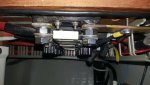
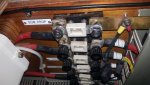
Is there anything wrong with this installation, apart from the SS nuts which I promise to change. It had brass nut previously with the same bad result. All the mating surfaces where scoured to a bright finish.
After 10 secs of running the plate between the ceramic housing of the fuse and the nut, on the right of the pictures gets to 100degrees C. The plate on the left get to 60 C. These are to two point where the heat is being generated.
 

Attachments

  • s20211108_195143.jpg
    s20211108_195143.jpg
    303.7 KB · Views: 88
  • s20211108_195010.jpg
    s20211108_195010.jpg
    387 KB · Views: 90
Is there anything wrong with this installation, apart from the SS nuts which I promise to change. It had brass nut previously with the same bad result. All the mating surfaces where scoured to a bright finish.
After 10 secs of running the plate between the ceramic housing of the fuse and the nut, on the right of the pictures gets to 100degrees C. The plate on the left get to 60 C. These are to two point where the heat is being generated.
I have the same fittings, here is the melted thumbscrew:

FuseHolder.jpg
 
Is there anything wrong with this installation, apart from the SS nuts which I promise to change. It had brass nut previously with the same bad result. All the mating surfaces where scoured to a bright finish.
After 10 secs of running the plate between the ceramic housing of the fuse and the nut, on the right of the pictures gets to 100degrees C. The plate on the left get to 60 C. These are to two point where the heat is being generated.

I can't see clearly what's connected to where on the top two fuses, three studs on the left.

What are thee the top left two cables and how are they connected ?
Same question for the top right busbar and the top right cable (beneath the busbar)?
 
Yes.
A lack of insulating covers on the high current terminals.

How does that make the terminals hot ?

Ah, it doesn't.

If the installation is in an electrical cabinet, with no risk of negative cables shorting the positives out, they don't have to all be covered with insulating covers, the cabinet does that.
 
I can't see clearly what's connected to where on the top two fuses, three studs on the left.

What are thee the top left two cables and how are they connected ?
Same question for the top right busbar and the top right cable (beneath the busbar)?
On the left all the fuses are commoned onto a vertical busbar. I think the three cables are equal length and come from three batteries.
The cables on the right are all independent feeds for different systems. The cable at the top, hidden in the ducting in this picture, is on the little horizontal busbar probablly because it wont bend round the corner.
 
Top