Bow thruster ( sorry)

The water tank is an integral part of the Neptunian's hull. The only way to install a bow thruster would be to chop the tank short at the bow and glass in a new tank front at the same time as the bow thruster. This will be my first season with my Neptunian. Surely she can't be any more difficult to steer in astern than my previous boat, a Nic 26? Dare say I'll find out.
In some ways that is easier than removing a steel tank and making a new one, although I guess you would lose a lot of capacity. The issue with long keel boats and astern handling is for many in the UK is just an irritant and something you learn to live with as the benefits are worth having in our conditions. Not so good when you transfer the boat to a different environment that demands good astern performance and access off the back of the boat for boarding and swimming. A bow thruster and a bathing platform attached to the stern go a long way to make such boats more usable.
 
Thanks Tranona,

My envy of those sailing in the med is rapidly reducing - I thought it was such a relaxed way of life.

No wonder its called 'The Lucky Country' - so many reasons and the reasons keep increasing :)

Take care, stay safe

Jonathan
You can't change the environment, so if you want to enjoy the weather, scenery, clear blue waters, food, culture and all the other things that make it such a magic place, you buy a boat with gear suited to the conditions and learn how to use it. Not difficult to adapt as I found out over the 13 years or so I spent out there.
 
At least one member of our group of 6 is keen on getting a bow thruster fitted.......


I will welcome any suggestions ( preferably not practice make perfect!)


Sounds like he is outvoted 6 to 1 right now, maybe the others are wobbling?

As you well know it will be a big expense for an older boat, introduce fallible complexity plus maintenance, performance and buggeration overheads. In short, an all round disaster except for the obvious.

Sorry I can't make any useful suggestions (I recall Tom Cunliffe did a piece on "How to handle your boat in reverse" and a Twister totally stumped him) but only say what I would probably do.
That is; I would consider redesigning the pulpit area to accommodate a wide, secure, purpose made passerelle and berth nose in. The other way around is popular for social reasons and it works well on boats with back steps, otherwise it has little to commend it. Convincing the other 5 may be tricky, people are often timid and love to follow the herd.

.
 
The water tank is an integral part of the Neptunian's hull. The only way to install a bow thruster would be to chop the tank short at the bow and glass in a new tank front at the same time as the bow thruster. This will be my first season with my Neptunian. Surely she can't be any more difficult to steer in astern than my previous boat, a Nic 26? Dare say I'll find out.
Congratulations on getting afloat in your Neptunian! On Coral Wind its not a question of difficulty steering astern ... there is no steering! You may have a different prop and have some propwalk up your sleeve!
When I had long keeled boats I always carried a longish oar that I used on a strop to the backstay. It's very easy to row the stern from side to side whilst under power and you can mostly steer at the same time.
Centre cockpit makes this idea less simple. Worth considering with a crew member astern but the crew member needs to know what the helms intentions are.
 
Thanks everyone. I will look at the actual technical implications regarding the water tank, a complicated job may just blow the cost versus returns 'out of the water' !
I will definitely work out how to get a good safe 'passarell/gangplank' to use from the bow, we should have one anyway for the times we really have to go bow to.
Boarding over the stern is much easier though and its good to chat to our pontoon neighbours from the cockpit.
Thanks again for the input.
 
Thanks everyone. I will look at the actual technical implications regarding the water tank, a complicated job may just blow the cost versus returns 'out of the water' !
I will definitely work out how to get a good safe 'passarell/gangplank' to use from the bow, we should have one anyway for the times we really have to go bow to.
Boarding over the stern is much easier though and its good to chat to our pontoon neighbours from the cockpit.
Thanks again for the input.
Would one of the externally mounted bow thruster types work ?
 
Thanks everyone. I will look at the actual technical implications regarding the water tank, a complicated job may just blow the cost versus returns 'out of the water' !
I will definitely work out how to get a good safe 'passarell/gangplank' to use from the bow, we should have one anyway for the times we really have to go bow to.
Boarding over the stern is much easier though and its good to chat to our pontoon neighbours from the cockpit.
Thanks again for the input.
If you have the money, just do it. Once you have experienced the lowering of blood pressure and the quietness because of the lack of shouting you will wonder why you did not do it earlier. The boat 3 away from me in the yard is just as pure old fashioned cruiser imaginable - a Tradewind 33 and after 3 years of managing he is having a thruster fitted. I shall follow suit with my Golden Hind if I find it a handful, although I am trying a better rudder profile and a larger feathering prop first. Despite what those who have zero experience of bow thrusters may try and tell you there are no downsides - modern ones are well engineered and if properly installed totally reliable - they just work. Recommend a Sidepower which performed faultlessly for 6 years with only a £12 anode change.
 
Looking at the replies.

It seems stern in might have been originally developed and become common as this was a means for yachts to moor and deploy their anchor from the bow. According to Tranona in many place anchor deployment is not, now, allowed and in places where it is allowed its simply a means to ensure your anchor rode and those of your neighbours tangles. Again Tranona advises to overcome the issues of anchor deployment and still allowing stern to anchoring lazy lines have been introduced in many locations negating the need to deploy an anchor from the bow at all. In Tahiti lazy lines are common place - and everyone moors bow in.

Consequently the demand for stern anchoring (as opposed to bow in) now is as a result of conditions that no longer exist as lazy lines have replaced use of the bow anchor.

In terms of numbers of yachts moored - stern in or bow in makes no difference - same number of yachts.

Given the cost of installing a bow thruster in the defined yacht it seems to me to be a no brainer, short term (despite the obvious advantages (I admit to never having used a bow thruster). A bow thruster is not going to offer immediate help to the stern wandering around under its own free will - but you will not find out how successful is the installation - until you have paid for it.

I'm a cheap skate and would avoid paying out the sums involved until I have exhausted the other options.

If there are lazy lines - use them to provide directional control. Ensure there is a pair of robust welding gloves and decent boathook on board to handle the lazy lines.

If there are no lazy lines go bow in and deploy a stern anchor. Find yourself a cheap method of exiting the yacht from the bow (cost - a plank of wood - as used with perfect success in the Baltic). You must have a second anchor and rode (if not - now is the time). Bow in has been used, apparently in the Med until the 1990s - its not that alien a technique. Its been used in the Baltic for....ever and no-one raises an eyebrow. As mentioned many yachts in the Baltic have no anchor on the bow roller but do have a dedicated stern roller and windlass in the lazarette. Deploy the stern anchor by hand and use it to offer directional stability as mentioned in an earlier post. You do not need heavy, expensive gear - 6mm chain will be more than adequate and I suspect a small Fortress will provide the hold necessary (unless no lazy lines and then a slightly bigger Fortress).

On a purely personal note - being stern in is simply a mechanism to completely remove any privacy from the parading tourists who will undoubtedly stand and gawk at you as you have your breakfast, lunch and dinner - bow in seems so much more civilised. But if you enjoy being talked about 0 each to their own.

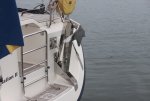
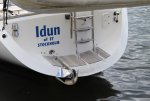
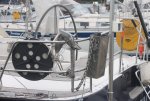
Stern anchors in the Baltic are quite sophisticated and common place. Note there is a mechanical device, windlass, or drum winch in the lazaretto for the rode on both of these yachts.

IMG_1512.jpegIMG_2974 2.jpeg


But do not need to be complicated

IMG_1502.jpeg

There are many ways to skin a rabbit - some of them are cheap and easy.

I'm not against bow rollers, at all - but it seems a very expensive modification when a plank of wood, off the bow, and maybe a stern anchor (already on board) has not been tried.

Take care, stay safe

Jonathan
 
Looking at the replies.

It seems stern in might have been originally developed and become common as this was a means for yachts to moor and deploy their anchor from the bow. According to Tranona in many place anchor deployment is not, now, allowed and in places where it is allowed its simply a means to ensure your anchor rode and those of your neighbours tangles. Again Tranona advises to overcome the issues of anchor deployment and still allowing stern to anchoring lazy lines have been introduced in many locations negating the need to deploy an anchor from the bow at all. In Tahiti lazy lines are common place - and everyone moors bow in.

Consequently the demand for stern anchoring (as opposed to bow in) now is as a result of conditions that no longer exist as lazy lines have replaced use of the bow anchor.

In terms of numbers of yachts moored - stern in or bow in makes no difference - same number of yachts.

Given the cost of installing a bow thruster in the defined yacht it seems to me to be a no brainer, short term (despite the obvious advantages (I admit to never having used a bow thruster). A bow thruster is not going to offer immediate help to the stern wandering around under its own free will - but you will not find out how successful is the installation - until you have paid for it.

I'm a cheap skate and would avoid paying out the sums involved until I have exhausted the other options.

If there are lazy lines - use them to provide directional control. Ensure there is a pair of robust welding gloves and decent boathook on board to handle the lazy lines.

If there are no lazy lines go bow in and deploy a stern anchor. Find yourself a cheap method of exiting the yacht from the bow (cost - a plank of wood - as used with perfect success in the Baltic). You must have a second anchor and rode (if not - now is the time). Bow in has been used, apparently in the Med until the 1990s - its not that alien a technique. Its been used in the Baltic for....ever and no-one raises an eyebrow. As mentioned many yachts in the Baltic have no anchor on the bow roller but do have a dedicated stern roller and windlass in the lazarette. Deploy the stern anchor by hand and use it to offer directional stability as mentioned in an earlier post. You do not need heavy, expensive gear - 6mm chain will be more than adequate and I suspect a small Fortress will provide the hold necessary (unless no lazy lines and then a slightly bigger Fortress).

On a purely personal note - being stern in is simply a mechanism to completely remove any privacy from the parading tourists who will undoubtedly stand and gawk at you as you have your breakfast, lunch and dinner - bow in seems so much more civilised. But if you enjoy being talked about 0 each to their own.

Stern anchors in the Baltic are quite sophisticated and common place. Note there is a mechanical device, windlass, or drum winch in the lazaretto for the rode on both of these yachts.

View attachment 132922View attachment 132921


But do not need to be complicated

View attachment 132923

There are many ways to skin a rabbit - some of them are cheap and easy.

I'm not against bow rollers, at all - but it seems a very expensive modification when a plank of wood, off the bow, and maybe a stern anchor (already on board) has not been tried.

Take care, stay safe

Jonathan
plank of wood from a high bow is great until you pass 80! On our mooring we are continually on and off the boat. We just step off the stern but a steep gang plank is less easy.
We don't have the issue of gawping tourists, just our pontoon neighbours who we like to greet and chat with! it is, of course, horses for courses . We don't need our stern anchor
in our marina as there are moorings and lazy lines.
I will work on a better plank for the occasions when bow to is used!
 
Looking at the replies.


There are many ways to skin a rabbit - some of them are cheap and easy.

I'm not against bow rollers, at all - but it seems a very expensive modification when a plank of wood, off the bow, and maybe a stern anchor (already on board) has not been tried.

Take care, stay safe

Jonathan

There are indeed more ways of skinning a rabbit and your photos just illustrate how solutions develop to meet specific circumstances. The Baltic stern anchoring systems are like that because the dominant way of anchoring is using a substantial stern anchor and nudge up to a rocky island where there is hopefully a convenient tree or rock to tie to, otherwise a pick in a rock crevice is used. Going bow in means you can get close up because of the shallow draft forward. Ladder from bow to go ashore. This also works in their permanent mooring pens. Very different from the Med situation where as I explained the dominant berthing is against a quay in non tidal waters, so different solutions required.

Of course people use boats designed for one environment in another so some modification is required and you do see N European boats using bows in and ladders or planks, particularly if they are of the type with a closed high transom or a transom hung rudder. However it is a poor solution compared with boats that are designed for that environment. As I said Baltic boats now almost exclusively are designed for stern to mooring - otherwise they would not sell. It is not just for ease of boarding - people now buy boats as platforms for enjoying being on the water and this includes swimming and eating outside under a shade.

This does not really help the OP who has taken a boat designed for all weather cruising in the UK to the Med and the shortcomings are clear. So the question is how to overcome them. Of course a bow ladder is one solution, but becomes less attractive the older you get and the more times you need to use it. He reports boarding from the stern is satisfactory so the problem becomes one of how painlessly can you ensure easy stern to berthing and the answer has to be a bow thruster - and yes, it is well proven that it will work. As I said once you have done it you will wonder why you did not fit one years ago.

BTW I am 76 and for the last 6 years happily berthed my 33' 5.5 tonnes boat single handed - with the aid of the bow thruster. when you get to our age your priorities change and I simply would not have been able to use my boat without the aid of a bow thruster to get it in and out. Similar with my new project that has an underwater shape similar to the OPs boat. I hope that I will be able to get it in and out as it is, but if not will have no hesitation in fitting a bow thruster. After all no point in owning a boat if you can't use it.
 
Last edited:
If there are lazy lines - use them to provide directional control. Ensure there is a pair of robust welding gloves and decent boathook on board to handle the lazy lines.

The lazy lines sink and are attached at the quayside. So you need to have already made the sternboard into the berth to get close enough to pick up the lazy lines with a boathook - so not really able to use them in making the approach.
 
The lazy lines sink and are attached at the quayside. So you need to have already made the sternboard into the berth to get close enough to pick up the lazy lines with a boathook - so not really able to use them in making the approach.
Yes we need to get the lazy lines picked up quick once the stern is in. or the bow starts to drift about. We keep the lazy lines out of the water when moored so as to prevent weed growth, and dump then when we go out.
It is possible to help the stern a bit using the boats alongside and great care with a boat hook or a deck shoe against the rubbing strake. The ever changing crew need to be told not to grab guard wires etc!
 
Top