
Boating + drinking = are on the agenda again 8 this time RYA are not against it

I too have reservations about the value and implementation of this proposal. I have a dry ship under way but will enjoy a glass or two of wine when anchored, and might have to re-anchor, move marina berth, return to ship in tender after meal out etc.
This is being pushed by the British ports association, and I would think they have better things to do, unless there is a hidden regulation agenda for pleasure craft to which they are working?
I am concerned about velocities of small power craft, but that is a separate governable issue (if the police craft on Thames were fast enough or they buy a jetski).
Given a number here have expressed similar views, how will, the RYA seek views of be influenced, at the right time? Do we all write, or seek an on line vote.....?
 
It was the same all over the South West.

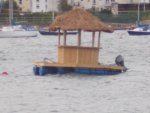
I thought the fact that the Teignmouth Harbour Master was rather ironic as there is a now a floating "bar" on the river.


No he was not.

I don't see what all the fuss is, the numbers of drink related deaths extremely low over the last ten years nobody has the resources to breathalyse boaters. If there is a fatality the toxicology report will include the alcohol content in the body.

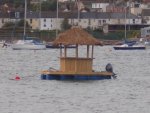
Ah yes, the Teign Floating bar, the apparent highlight of the Teignmouth Carnival and Regatta week, (underway now) a pic for info

DSCN0081.jpg

DSCN0082.jpg
 
Well regard to restrictions on Alcohol it appears that another thread is being pursued at the same time, that of proper training, ie RYA courses, compulsory plus craft registration, I do understand that the Teignmouth Harbour Master is the Chairman of the Harbour Masters consortium as we speak

Down here on the river Teign, there are some notices about ALL craft being registered with the Harbour Authority and paying the registration fee of £10 per craft plus some of us have been levied a charge for entering the river and laying up for a few days, not on a buoy or mooring, just laying up ashore on the beach
 
I too have reservations about the value and implementation of this proposal. I have a dry ship under way but will enjoy a glass or two of wine when anchored, and might have to re-anchor, move marina berth, return to ship in tender after meal out etc.
This is being pushed by the British ports association, and I would think they have better things to do, unless there is a hidden regulation agenda for pleasure craft to which they are working?
I am concerned about velocities of small power craft, but that is a separate governable issue (if the police craft on Thames were fast enough or they buy a jetski).
Given a number here have expressed similar views, how will, the RYA seek views of be influenced, at the right time? Do we all write, or seek an on line vote.....?

http://gcaptain.com/drunken-master-suspected-in-another-ship-grounding-off-sweden/

http://gcaptain.com/damage-to-grounded-car-carrier-worse-than-thought-complex-salvage-ahead/

[The Panama-flagged Makassar Highway ran hard aground off Loftahammar, Sweden on Monday morning while underway from Cuxhaven, Germany from Sodertalije, Sweden.

The cause of the grounding is still under investigation but Swedish media reported that one crew member had been taken into custody on suspicion of being intoxicated.]
 
Last edited:
While the law on drinking and boating applies to all boats and boaters, the regulations that were proposed (which would have brought in prescribed limits and breathalysing) did not. For example would they exclude boats below a certain size or of particular type.
The law allows them to do so. But I struggle with where you set any limit. I suspect in reality this is the reason no prescribed limit is set...
Is it boat length? But I suspect shorter boats are actually more of a risk than longer in this respect, yet I gather the drinking people like the idea of being able to use the tender... so you risk having some crazy law that says Boats > 3.5m and < 7m

Persons on Board? Is the law to protect the 'driver' or all on board? If only the driver, do they pose a risk to others. Not seen much evidence of that - although the Milly RIB incident could have been a risk to others in the water.

Method of Propulsion? Clearly speed is a factor. But if you are pi$$ed as a fart should you be allowed to row? Or do you say have a prescribed limit for engined craft and accept that for slower boats they still can be prosecuted if they are so pi$$ed they can't steer it.

Engine size? Does the engine then need to be on? So could you have a 4HP on a tender but row back? Can you sail with engine off? Neither feel safer. The people saying they might need to re-anchor might sail out and back in the anchor?

Perhaps "capable of travelling > XX knots" should be the measure for a prescribed limit?

As to comparison with road figures. The point is that despite the law having been in place for 40 years and generally good enforcement there are still 8000 people causing accidents because of drink (and a much larger number caught drinking and driving) so it is clearly not working effectively as a deterrent.
Is it not? If the law wasn't there how many would there be?


I too have reservations about the value and implementation of this proposal. I have a dry ship under way but will enjoy a glass or two of wine when anchored, and might have to re-anchor, move marina berth, return to ship in tender after meal out etc.
Intrigued how often people have to unexpectedly move middle of the night?

This is being pushed by the British ports association, and I would think they have better things to do, unless there is a hidden regulation agenda for pleasure craft to which they are working?
I am concerned about velocities of small power craft, but that is a separate governable issue (if the police craft on Thames were fast enough or they buy a jetski).
It is easier to get public support to police drunken ejits on speed boats than to just police people having "fun".

The complete numpties who jetski'd up the Thames the other day are lucky in the current climate they didn't meet with the wrong end of an anti-terror team. I don't understand what happened with the pursuit - it got called off - but why? There was a helo up - a ground team could easily have met them where-ever they came ashore. Yes they can run before the ground guys get there, but they aren't loading a jetski up on a trailer than quickly.
 
The law allows them to do so. But I struggle with where you set any limit. I suspect in reality this is the reason no prescribed limit is set...
Is it boat length? But I suspect shorter boats are actually more of a risk than longer in this respect, yet I gather the drinking people like the idea of being able to use the tender... so you risk having some crazy law that says Boats > 3.5m and < 7m

Persons on Board? Is the law to protect the 'driver' or all on board? If only the driver, do they pose a risk to others. Not seen much evidence of that - although the Milly RIB incident could have been a risk to others in the water.

Method of Propulsion? Clearly speed is a factor. But if you are pi$$ed as a fart should you be allowed to row? Or do you say have a prescribed limit for engined craft and accept that for slower boats they still can be prosecuted if they are so pi$$ed they can't steer it.

Engine size? Does the engine then need to be on? So could you have a 4HP on a tender but row back? Can you sail with engine off? Neither feel safer. The people saying they might need to re-anchor might sail out and back in the anchor?

Perhaps "capable of travelling > XX knots" should be the measure for a prescribed limit?


Is it not? If the law wasn't there how many would there be?


Intrigued how often people have to unexpectedly move middle of the night?


It is easier to get public support to police drunken ejits on speed boats than to just police people having "fun".

The complete numpties who jetski'd up the Thames the other day are lucky in the current climate they didn't meet with the wrong end of an anti-terror team. I don't understand what happened with the pursuit - it got called off - but why? There was a helo up - a ground team could easily have met them where-ever they came ashore. Yes they can run before the ground guys get there, but they aren't loading a jetski up on a trailer than quickly.

what you have described is exactly the debate that went on last time and the lack of any agreement plus the lack of evidence was what scuppered it.

As Graham says, arguably the greatest number of casualties from recreational craft is connected with a tender - getting on or off boat, landing on pontoon, capsizing between shore and ship etc. NONE of these get investigated by the MAIB, but do get reported for obvious reasons to the coroner and result in an inquest. The ones that do get the full treatment from the MAIB invariably involve collisions, either with other boats, often commercial, or hard bits of land.

It is hard to see how the power to breathalyze and prosecute for being over the limit will prevent yachtsmen from having a few pints and rowing back to their yacht or the sort of irresponsible behaviour as exhibited by John Shephard. The number of incidents that result in harm to third party individuals, let alone death is tiny - less than one a year and no pattern apart from almost always involving small high speed power boats.
 
Its actually quite simple cause death by drunk sailing gets a manslaughter charge. No need for special legislation.
 
Its actually quite simple cause death by drunk sailing gets a manslaughter charge. No need for special legislation.

If only it were that simple. Much more difficult to bring a successful prosecution for manslaughter than death through dangerous "driving". That would assume the legislation for recreational boats mirrors that for the roads - and I am not sure that is the intention. AFAIK it will only introduce prescribed limits in prescribed circumstances and give authorities the power to breathalyze on suspicion.

Remember this latest call is part of a campaign following the John Shepard case. The campaign includes laws for compulsory licences, compulsory registration and annual inspection of boats. All in the belief that if these things had been in place the incident would not have happened, or if it had, prosecution would have been easier.

Expect to hear more in this vein if the family are able to gain sponsors to fund and front their campaign.
 
If only it were that simple. Much more difficult to bring a successful prosecution for manslaughter than death through dangerous "driving". That would assume the legislation for recreational boats mirrors that for the roads - and I am not sure that is the intention. AFAIK it will only introduce prescribed limits in prescribed circumstances and give authorities the power to breathalyze on suspicion.

Remember this latest call is part of a campaign following the John Shepard case. The campaign includes laws for compulsory licences, compulsory registration and annual inspection of boats. All in the belief that if these things had been in place the incident would not have happened, or if it had, prosecution would have been easier.

Expect to hear more in this vein if the family are able to gain sponsors to fund and front their campaign.
Interesting, thanks for the post.

Actually, thinking back to the South West news item my interpretation of that the chap from the RYA said was that they would support the move, if there was enough evidence to show there was an issue that needed addressing. Which sounded a bit like sitting on the fence to me.

I'll contact them and see what the actual line it.

While I don't have any problems with registration, qualification and inspection I know thousands will.
 
Interesting, thanks for the post.

Actually, thinking back to the South West news item my interpretation of that the chap from the RYA said was that they would support the move, if there was enough evidence to show there was an issue that needed addressing. Which sounded a bit like sitting on the fence to me.

I'll contact them and see what the actual line it.

While I don't have any problems with registration, qualification and inspection I know thousands will.

Yes, the key point is evidence - the RYA took the same line last time, knowing the evidence is not there.

Their line has always been the same. No evidence that a significant problem exists nor that any of the suggested controls would make any difference to any minor issues that do exist. Of course last time around was when Dave was in charge and the policy was that all new legislation must be evidence based and did not incur any significant costs. Not sure those principles are still around in government.
 
Interesting, thanks for the post.

Actually, thinking back to the South West news item my interpretation of that the chap from the RYA said was that they would support the move, if there was enough evidence to show there was an issue that needed addressing. Which sounded a bit like sitting on the fence to me.

I'll contact them and see what the actual line it.

While I don't have any problems with registration, qualification and inspection I know thousands will.

I’m afraid that I am one of the many who would have problems with registration, qualification and inspection,
This really would be the thin end of a very troubleing wedge. We have enjoyed the freedom of our sport for years, and to bring in a regimented beaurocracy would destroy one of the last freedoms we enjoy. I am all in favour of voluntary qualification, I obtained my Yachtmaster in 1983 and have also acquired the RYA Safety boat Certificate, Survival at Sea etc. and would encourage everyone to go on the various RYA courses, but would not favour it being compulsory, that’s a sure way of destroying our sport.
 
I am not convinced the RYA continues to support boating and boat owners as it's primary objective. It appears to have become an empire building exercise for middle level jobsworths.
 
Remember this latest call is part of a campaign following the John Shepard case. The campaign includes laws for compulsory licences, compulsory registration and annual inspection of boats. All in the belief that if these things had been in place the incident would not have happened, or if it had, prosecution would have been easier..
Ignoring that legislation for roads for those things exist and yet people have fatal accidents.


If we assume licences applied - then perhaps he'd learn to drive a boat better. BUT perhaps not.

Annual inspection - no better than MOT.

But actually - if the belief is prosecution should be easier... ...would they simply prosecute for the 'lesser' offences. So instead of being rightfully charged with manslaughter, he gets prosecuted for boating without a licence, unregistered or inspected. On a car that's 6 points, and a fine.
 
Ok who is the skipper? If I am drunk it is my sober wife. That's clear but it is ok for my 13 year old son to be the designated skipper? What about 4 lads chartering three are on board and drunk and the sober one has gone ashore to get a takeaway? It is quite legal to leave a boat un-attended so can I leave three drunks on board and go and get some food?

The problem with this issue is there are only two ways it can work.

1. No one is allowed to be intoxicated on board.

or

2. You cannot he intoxicated and helming.

Option 2 seems logical and the drink drive limit might be a reasonable limit for a rib capable of 30+ knots but is unreasonable for an Anderson 22. In the case of slow moving yachts a more leant test of capability should really be applied.
 
Look, to legislate for something I.e restrict people’s freedom, you need to first identify a significant problem. You then need to have a sufficient solution that is enforceable. And lastly you need to ensure that your solution is not a bigger problem than your problem. In this case there isn’t a problem, there isn’t an enforceable solution and any solution will create a greater problem than it solves.

THe default position is that people should be free to go about their business without undue hindrance.
 
Top