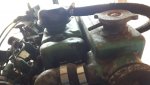
BMC 1.8 Raw water pump

Tunderwood999

New Member
Joined
5 Jul 2018
Messages
9
Visit site
Hi,
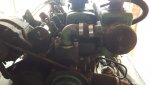
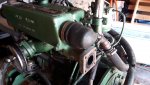
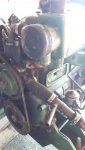
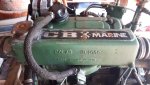
My dad has recently purchased a reconditioned BMC 1.8. We are installing it in our fishing boat. We would like to use raw sea water for the cooling system. Is this possible using the internal inbuilt water pump on the engine? If a separate pump is needed, what happens to the internal pump?
Many thanks
 
Welcome to the forum.

You don't say if the engine is marinised or just an automotive engine. to fit a BMC 1.8 to a boat you need to fit it with a heat exchanger, water cooled exhaust manifold, seawater pump, bell housing and adaptor drive plate to mate it u to a reduction gearbox. The existing water pump circulates fresh water round the engine and that is cooled by the heat exchanger using salt water which is then injected into the exhaust. You will also need an exhaust system and controls for the engine and gearbox.

If you do not have these parts you can get them from a specialist such as Lancing Marine, but be aware that they will likely cost as much as your base engine.
 
I suspect your post is not legitimate. But If it is a serious post I suggest you get some professional advice before proceeding any further. Installing an automotive engine in a boat is not a simple project and obviously your understanding is very limited.

Clive
 
Last edited:
I have a 2.2 BMC engine in my motorsailer, quite similar to the 1.8. I suggest that making yours directly cooled, i.e. by seawater, would not be a good idea. Mine is indirectly cooled, with a seawater pump, heat exchanger that basically replaces the original radiator, and a manifold through which the seawater passes to cool the rubber exhaust hose. I suggest you talk to Lancing Marine, who have a lot of experience with this engine.
 
Thanks.
The engine has been marinised but was previously on a narrow boat (fresh water). It does not have a separate raw water pump. Does the heat exchanger need some kind of tank or just a closed circuit?
 
Thanks.
The engine has been marinised but was previously on a narrow boat (fresh water). It does not have a separate raw water pump. Does the heat exchanger need some kind of tank or just a closed circuit?

Some heat exchangers are incorporated into a header tank with a filler cap, others are not.
The standard circulating pump on the engine will not draw water from below the boat as it is not self-priming. There must have been a raw water pump that you have not received.
 
Here is my 2.2 BMC. Heat exchanger on left with filler cap. Seawater leaving heat exchanger spiked into exhaust manifold.


No photo of the front end but here is one of my Yanmar. Almost identical layout, raw water pump low down with its own drive from the crankshaft separate from the circ pump and alternator drive.
 
Last edited:
Thanks.
The engine has been marinised but was previously on a narrow boat (fresh water). It does not have a separate raw water pump. Does the heat exchanger need some kind of tank or just a closed circuit?

It has not been fully marinised, although suspect it will have a water cooled manifold. Almost certainly it will have been cooled by what is known as a keel cooler, which is effectively an external heat exchanger. It could be a pipe along the bottom of the boat or a cavity in the bottom of the boat full of water. This water is circulated just as in a car engine with the keel cooler doing the same job as the radiator. Generally speaking this arrangement is not suitable for use in a conventional boat so you will still need to marinise.

Just for information most narrow boat engines are marinised in the same way as engines in sea going boats. The keel cooler arrangement is rare, but was popular before properly marinised engines were on the market.
 
You clearly have a heat exchanger. It will have four separate nozzles, two for engine coolant and two for seawater. The seawater exit from the HE normally goes to a manifold, see the one on my BMC for illustration. The inlet side is supplied by the seawater pump. None of your photos show the lower part crankshaft end.
 
You clearly have a heat exchanger. It will have four separate nozzles, two for engine coolant and two for seawater. The seawater exit from the HE normally goes to a manifold, see the one on my BMC for illustration. The inlet side is supplied by the seawater pump. None of your photos show the lower part crankshaft end.

Ok that’s great thank you. Will try and get some more photos within the next few days.
 
It has not been fully marinised, although suspect it will have a water cooled manifold. Almost certainly it will have been cooled by what is known as a keel cooler, which is effectively an external heat exchanger. It could be a pipe along the bottom of the boat or a cavity in the bottom of the boat full of water. This water is circulated just as in a car engine with the keel cooler doing the same job as the radiator. Generally speaking this arrangement is not suitable for use in a conventional boat so you will still need to marinise.

Just for information most narrow boat engines are marinised in the same way as engines in sea going boats. The keel cooler arrangement is rare, but was popular before properly marinised engines were on the market.


Really, I do not think you are familiar why some craft are keel cooled. Beata, for instance are advocating keel cooling in some circumstances and indeed it is common system on ships lifeboats.
 
Unless the op is going to run a dry exhaust, not unusual on fishing boats, he will still need a raw water pump to to cool the exhaust after an injection point, missing on the photos. Might as well fit the pump and go for full HE/raw water cooling. Prob less hassle than fitting a keel cooler.
 
[/COLOR]

Really, I do not think you are familiar why some craft are keel cooled. Beata, for instance are advocating keel cooling in some circumstances and indeed it is common system on ships lifeboats.

What makes you think that? I am well aware of ships lifeboats requirements, but they do not use old BMC engines. The application I quoted was valid as keel cooling was used on narrowboats and with BMC engines, 30 to 40 years ago. Also used on barges and commercial boats that operated in shallow silt laden rivers and in steel yachts where a section of the hollow keel was used as a water tank with a coil inside to take the cooling water from the engine.

As it happens my guess was wrong and the engine is indeed marinised in the conventional way, just missing the raw water pump and plumbing.
 
I would suggest checking that the heat exchanger manifold has a core stack in it ,many keel cooled installations used the body without a core as water cooled manifold & header tank. As there appears to be only one jubilee clip on the rubber end cap I think the core is missing,easy to fit but a bit expensive.
Jim
 
I would suggest checking that the heat exchanger manifold has a core stack in it ,many keel cooled installations used the body without a core as water cooled manifold & header tank. As there appears to be only one jubilee clip on the rubber end cap I think the core is missing,easy to fit but a bit expensive.
Jim

Thank you. Yeah I noticed most others seemed to have two. Didn’t know if there was any other connections on the bottom or anything. Will have a look when I see the engine again.
 
Top