Blue sea fuse - how does it work?

greeny

Well-Known Member
Joined
15 Jun 2004
Messages
2,653
Location
Portugal
Visit site
34978.jpg

Just fitted a replacement fuse to my engine battery after an"accident" with the old one. Got back home and then thought "how does the fuse work?" There's an 8mm stud going right through the middle of the fuse block which appears to bridge the fuse element. What have I missed. I'll have to go back to the boat tomorrow to check it out if I can't satisfy myself it's ok.
 
Good question. not obvious but I am sure it does work though.
I guess the studs do not actually bridge the fuses.

Marine-Rated-Battery-Fuses.png
 
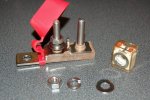
Some have a plastic nut which ensures the stud is insulated from the fuse this allows you to use an uninsulated stud , The insulated studs look like this.
 

Attachments

  • 124282533.vB4eT6qY.jpg
    124282533.vB4eT6qY.jpg
    74.9 KB · Views: 9
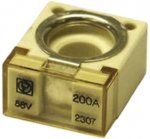
The correctly named marine rated battery fuse or MRBF is a ceramic block with the fuse contained within it, the fuse is connected to the rings top and bottom and the whole lot is encased in a plastic insulator, their main advantages are protection of every mm of the cable connected to them and they are ignition protected enabling them to be safely used in petrol engine installations.
 
OK - I can see how they are supposed to work, thanks for the info. The only problem is that mine doesn't have the insulated stud or a plastic nut on the top. Had a look today and the stud definitely shorts out the fuse element and the top nut is metal. It just shows you that you can inherit a problem and then just carry on repeating the same problem. I've disconnected the battery lead for the time being until I either buy a different fuse assembly or manage to locate/buy an 8mm plastic nut to go on the top. Not going to be easy in Portugal I guess. The replacement fuse block alone cost me 28 euros!
 
OK - I can see how they are supposed to work, thanks for the info. The only problem is that mine doesn't have the insulated stud or a plastic nut on the top. Had a look today and the stud definitely shorts out the fuse element and the top nut is metal. It just shows you that you can inherit a problem and then just carry on repeating the same problem. I've disconnected the battery lead for the time being until I either buy a different fuse assembly or manage to locate/buy an 8mm plastic nut to go on the top. Not going to be easy in Portugal I guess. The replacement fuse block alone cost me 28 euros!

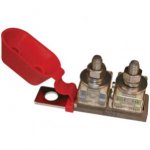
Hi, All the bits needed to make up these fuse assemblies are readily available from RS Components (google search). The nut is stock no. 3420198 (£8.49). Various fuses are available, a 250A one being stock no. 3377987 (£4.61). Perhaps not of interest to you but there is a very useful battery clamp I have used on various occasions that take these CF8 fuses ( stock no. 3420205). The big advantage is that you have the fuse right on the battery clamp, just where you want it at the start of the circuit. I know you are in Portugal but RS are a very good firm to deal with and if you contact them the price including carriage might still be cheaper and a lot less hassle. Carriage is free to the UK. Best of luck with it, Richard.
 
Hi, All the bits needed to make up these fuse assemblies are readily available from RS Components (google search). The nut is stock no. 3420198 (£8.49). Various fuses are available, a 250A one being stock no. 3377987 (£4.61). Perhaps not of interest to you but there is a very useful battery clamp I have used on various occasions that take these CF8 fuses ( stock no. 3420205). The big advantage is that you have the fuse right on the battery clamp, just where you want it at the start of the circuit. I know you are in Portugal but RS are a very good firm to deal with and if you contact them the price including carriage might still be cheaper and a lot less hassle. Carriage is free to the UK. Best of luck with it, Richard.

I didn't know these fuses even existed.... a fuse right on the battery terminal seems like an incredibly safety boon. Think I'll convert mine over!
 
Hi, All the bits needed to make up these fuse assemblies are readily available from RS Components (google search). The nut is stock no. 3420198 (£8.49). Various fuses are available, a 250A one being stock no. 3377987 (£4.61). Perhaps not of interest to you but there is a very useful battery clamp I have used on various occasions that take these CF8 fuses ( stock no. 3420205). The big advantage is that you have the fuse right on the battery clamp, just where you want it at the start of the circuit. I know you are in Portugal but RS are a very good firm to deal with and if you contact them the price including carriage might still be cheaper and a lot less hassle. Carriage is free to the UK. Best of luck with it, Richard.

Brilliant, thanks Richard. Wifey is going back to uk next week, I'll order enough to do all the batteries at the same time and have them delivered in the UK. She can bring them back with her. Bit of a difference between 28 euros and £4.61 for each fuse. Why am I surprised when I bought it from a boat shop!
David
 
I didn't know these fuses even existed.... a fuse right on the battery terminal seems like an incredibly safety boon. Think I'll convert mine over!

Wouln't you normally have the main fuses mounted so close to the battery anyway that the chance of the wiring between them and the battery shorting to the negative is extremely small.
 
Last edited:
Wouln't you normally have the main fuses mounted so close to the battery anyway that the chances of the wiring between them and the battery shorting to the negative is virtually zero.

I do... short lead going straight from the battery to the fuse. But there is always the small chance of one end somehow leaving the fuse box and contacting something, or some insulation getting nicked or something... this way... zero chance. Nothing to start a fire like an unfused battery shorting.
 
Wouln't you normally have the main fuses mounted so close to the battery anyway that the chances of the wiring between them and the battery shorting to the negative is virtually zero.

Yes VicS I agree, highly unlikely a short going to occure if the separate fuse block is mounted close to the terminal. However these "on battery" fuse holders do not need mounting on a surface which is handy if space is tight, also it is one less cable to make up !
 
Brilliant, thanks Richard. Wifey is going back to uk next week, I'll order enough to do all the batteries at the same time and have them delivered in the UK. She can bring them back with her. Bit of a difference between 28 euros and £4.61 for each fuse. Why am I surprised when I bought it from a boat shop!
David

OK David, glad to be of help. I see the fuse I selected, purely as an example, is temporally out of stock. However they do a good range of current ratings so I expect there is one that meets your requirements. Those prices are ex VAT but still a lot cheaper than your local chandlery were looking ! Richard
 
Brilliant, thanks Richard. Wifey is going back to uk next week, I'll order enough to do all the batteries at the same time and have them delivered in the UK. She can bring them back with her. Bit of a difference between 28 euros and £4.61 for each fuse. Why am I surprised when I bought it from a boat shop!
David

Don't want to burst the bubble but you will be sorely disappointed, all you will get is a large blade type fuse that fits in the block shown in the illustration, you will have to buy the block seperately, being designed for automotive use it is also not ignition protected and as such not really suited to installation in an enclosed battery box where hydrogen gas may be present. I use a lot of these type of fuse and have looked at various types on the market and the Blue Seas MRBF is the most suitable and economical for this type of application, also I don't know where you got your price from but a Blue Seas MRBF as Vic's post illustration I charge about £15 and I'm not doing myself short at that..
 
Last edited:
I do... short lead going straight from the battery to the fuse. But there is always the small chance of one end somehow leaving the fuse box and contacting something, or some insulation getting nicked or something... this way... zero chance. Nothing to start a fire like an unfused battery shorting.

A main fuse would have helped the Austin 1100 which stopped mid junction, smoke coming from the bonnet. The driver lifted the lid to see the c. 8mmx1m bonnet stay, which had dropped on the pos battery terminal, glowing nearly orange....

I have unfused battery main leads which are physically disconnected when the boat is left.
 
Don't want to burst the bubble but you will be sorely disappointed, all you will get is a large blade type fuse that fits in the block shown in the illustration, you will have to buy the block seperately, being designed for automotive use it is also not ignition protected and as such not really suited to installation in an enclosed battery box where hydrogen gas may be present. I use a lot of these type of fuse and have looked at various types on the market and the Blue Seas MRBF is the most suitable and economical for this type of application, also I don't know where you got your price from but a Blue Seas MRBF as Vic's post illustration I charge about £15 and I'm not doing myself short at that..


R3377915-01.jpg
HI David, if you look at radio spares online catalogue number 337-7987 you will see that the block actually incorporates the fuse as well and doesn't need a seperate fuse. It looks exactly the same as the one I took off originally and the one I bought over here in Portugal last week for 28 euros. The only apparent difference is the printed name on the block.
At this price I will give it a go and order them as I am sure they will fit and do the job for me. If not I'll have to go back to the 28 euro / £15 ones.
David
 
A main fuse would have helped the Austin 1100 which stopped mid junction, smoke coming from the bonnet. The driver lifted the lid to see the c. 8mmx1m bonnet stay, which had dropped on the pos battery terminal, glowing nearly orange....

I have unfused battery main leads which are physically disconnected when the boat is left.

It's all just different ways of following Vigor's Black Box theorem :)
 
It's all just different ways of following Vigor's Black Box theorem :)

You have made me do my second web search this morning. (The first one was 'how the heck do you make booze from Vegemite?' )

Good concept. I write this on Rivendell after returning from my round Britain last night.

Though the boat has performed without fault, I'm up to item 26/ so far on my winter jobs list-

http://britainbyrivendell.weebly.com/https:/
https://www.facebook.com/groups/287097314802170/
 
Last edited:
Wouln't you normally have the main fuses mounted so close to the battery anyway that the chances of the wiring between them and the battery shorting to the negative is virtually zero.

[mathematical pedantry] virtually zero chance is infinitely more likely than no chance [/mathematical pedantry]
 
Top