Blake’s seacock - scratched cone

sv_telemachus

Active Member
Joined
3 Nov 2021
Messages
45
Visit site
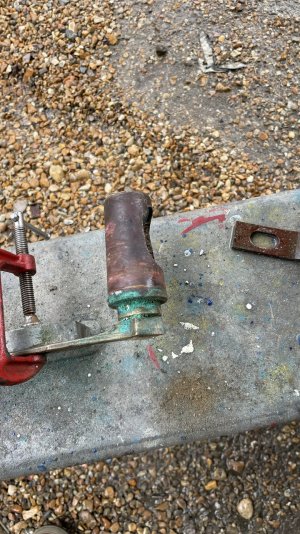
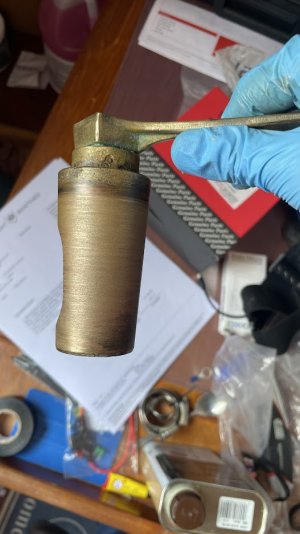
Mea culpa - first time servicing seacocks.

Chandlery didn’t stock grinding paste so I was perhaps over-enthusiastic with a wire brush. I’ve now read that scoring / scratches can cause leaks.

I intend to revisit with Chemico grinding paste. Is this salvageable?
IMG_8462_Original.jpeg
IMG_8461_Original.jpeg
 
Should be. Start with coarse grinding paste and see what it look like.
Too late now but it looked fine before. Probably just needed cleaning and maybe a light rub with wet and dry to polish it. You are looking for an even coating of grease around the plug.
 
Should be. Start with coarse grinding paste and see what it look like.
Too late now but it looked fine before. Probably just needed cleaning and maybe a light rub with wet and dry to polish it. You are looking for an even coating of grease around the plug.
Thanks, that’s helpful. Will report back.
 
Wet & dry will work on the cone but you still need to do something with the fitting in the hull. You could try wrapping the cone with reversed wet & dry and then rotate it inside the fitting. Tricky but should do something. Grinding paste is the easiest way to grind both at the same time so that you mate the faces together.

Pretty certain a quick bodge with wet & dry will be fine until next service with grinding paste. Just wrap with moist wet & dry and rotate cone by hand to clean up. Repeat on hull as best you can.
 
Looks salvageable to me.

Note that the advantage of grinding paste is that you are grinding the cone against the reverse (internal) cone in the through hull against which it has to seal, and cleaning that up at the same time.

The corollary of that is that using emery paper, wire brush etc. on the cone alone risks creating flats or indentation thus reducing the seal.

You should be able to easily purchase grinding paste from any car spares shop, engineering supplies shop, Amazon, Ebay, etc. etc. Note that Blakes recommend using medium grade grinding paste, whereas it is much more readily available in coarse and fine. The coarse will be good for starting to get rid of the scoring from the wire brush. Medium paste is presumably recommended to provide enough roughness on the surface to retain grease (which is needed for a good seal whilst still being able to easily rotate the cone to open and close the seacock. Others have reported on here using fine grinding paste for lapping in Blakes cones without ill effect, though.
 
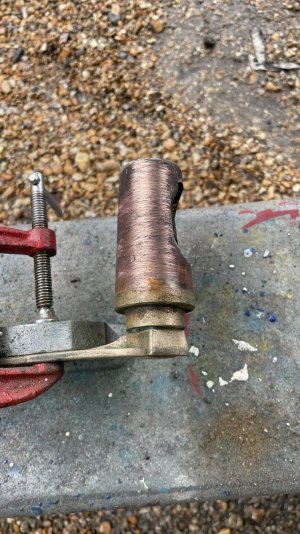
Update: Grinded back with Chemico coarse then fine paste (below), then a liberal application of Blake's seacock grease. Serviced 4-5 other seacocks with just grease and (so far) no leaks. 🤞

Thanks for all the input and advice!

IMG_8606.JPG
 
Update: Grinded back with Chemico coarse then fine paste (below), then a liberal application of Blake's seacock grease. Serviced 4-5 other seacocks with just grease and (so far) no leaks. 🤞

Thanks for all the input and advice!

View attachment 161027
Looks good, I'd do the same on my old boat. Ground with coarse and then fine, only used a tiny amount and I still have about 60% left in the very small tins I bought.

I think these seacocks are very robust, withstand a lot of abuse and last forever. I still remember carefully adjusting the bolts to just allow easy movement before tightening the locking nuts. They'd be fine for the rest of the season with no further adjustment.
 
I think these seacocks are very robust, withstand a lot of abuse and last forever. I still remember carefully adjusting the bolts to just allow easy movement before tightening the locking nuts. They'd be fine for the rest of the season with no further adjustment.
 
I think these seacocks are very robust, withstand a lot of abuse and last forever. I still remember carefully adjusting the bolts to just allow easy movement before tightening the locking nuts. They'd be fine for the rest of the season with no further adjustment.
When I first got my boat (sixteen years ago) I paid too much attention to people saying that seacocks should be easily movable with one finger. After grinding and greasing them while ashore I tightened them to that degree, but was disappointed to find a substantial amount of water in the bilge a few days after she was launched. Since then I have used the proper Blake's grease and tightened them up just a little tighter, with no further problems.
 
Chemico grinding paste. How are they still in business? I inherited mine, and there will be plenty left in the tin to pass on to the next generation.
 
Top