Bilge alarm- DIY?

Kelpie

Well-Known Member
Joined
15 May 2005
Messages
7,766
Location
Afloat
Visit site
Just watched a Sailing Zingaro video where he nearly lost his boat on its shakedown. Log impeller failed and the first anybody knew about it was when the floorboards were floating, by which time the electrics had all shorted out. Scary stuff! I was amazed that he managed to pinpoint the cause of the failure so quickly, whilst dealing with such a volume of water.

It's made me think about two ways of tackling this kind of problem- firstly, separate the bilge into watertight compartments (by sealing up limber holes and anywhere that a cable or pipe runs); secondly, fitting a bilge water level alarm.

I know you can buy off the shelf alarm systems, but I'm wondering about putting something together myself using float switches and a buzzer. Maybe refine it with a little panel showing a light for each compartment. Surely not rocket science? Just wondering if anybody else has done something similar and any lessons learned.
 
A very easy (and cheap) fix I use is this: Battery powered and will wake the neighbours, but unfortunately not currently available - but there are many similar you could use.

TechAffect Water Leak Detector Alarm, Water Detector Leak Sensor, Flood Defence Bath Overflow Alarm: Amazon.co.uk: DIY & Tools

I'm also thinking of an automated system as well linked to the electric bilge pump using these items:

Rule 3 Way Lit Rocker Switch 12V | Force 4 Chandlery

Bilge Pump Switches | Force 4 Chandlery

Wiring diagrams all on the Web!
 
Just watched a Sailing Zingaro video where he nearly lost his boat on its shakedown. Log impeller failed and the first anybody knew about it was when the floorboards were floating, by which time the electrics had all shorted out. Scary stuff! I was amazed that he managed to pinpoint the cause of the failure so quickly, whilst dealing with such a volume of water.

It's made me think about two ways of tackling this kind of problem- firstly, separate the bilge into watertight compartments (by sealing up limber holes and anywhere that a cable or pipe runs); secondly, fitting a bilge water level alarm.

I know you can buy off the shelf alarm systems, but I'm wondering about putting something together myself using float switches and a buzzer. Maybe refine it with a little panel showing a light for each compartment. Surely not rocket science? Just wondering if anybody else has done something similar and any lessons learned.

Depends how your existing bilge pumps & switches are wired up, do you have bilge pump switches at the helm that allow you to run the pumps ?

Some boats, (fairline) have independent float switches that link to a mimic panel with leds for each area & a common alarm sounder.

Either way, fairly easy to do with leds, a sounder & a few diodes.
 
We have one of these Water Leak Alarm/water detectors: Amazon.co.uk: DIY & Tools Works in the kettle, can't say much more about it really.

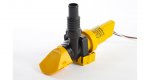
However, we also have a supersub auto pump under the engine which is probably the area most likely to have a leak. This dumps into the cockpit with the idea that if the crew get wet feet they might notice and do something positive before the floor boards float up.

Pete
 

Attachments

  • supersub_smart_650.jpg
    supersub_smart_650.jpg
    67.3 KB · Views: 14
Thanks, some interesting ideas there.
I'm thinking more of an alarm system rather than anything that automatically runs the pumps. I already have an auto pump in the lowest point of the bilge, so even if I compartmentalise the bilge the water will overflow and wind up at the pump long before the floorboards start floating.

I remember in school somebody made a water detector using a clothes peg and a sugar cube, that would be the proper PBO way of doing it...
 
There is an easy mod you can do to a smoke detector to turn it into a water alarm.
Can't remember what it is. Possibly adding two wires to go into the bilge from the test button?
 
I made up a simple bilge alarm with a 9v battery, PNP transistor, small speaker and LED. The detector is a gold-plated audio plug in the bilge where exposure to salty water forms a connection between the the male pin and plug body. It is self contained and reliable, having been in use for more than 10 years. Suitable circuit diagrams are readily available on the web.
 
Just watched a Sailing Zingaro video where he nearly lost his boat on its shakedown. Log impeller failed and the first anybody knew about it was when the floorboards were floating, by which time the electrics had all shorted out. Scary stuff! I was amazed that he managed to pinpoint the cause of the failure so quickly, whilst dealing with such a volume of water.

It's made me think about two ways of tackling this kind of problem- firstly, separate the bilge into watertight compartments (by sealing up limber holes and anywhere that a cable or pipe runs); secondly, fitting a bilge water level alarm.

I know you can buy off the shelf alarm systems, but I'm wondering about putting something together myself using float switches and a buzzer. Maybe refine it with a little panel showing a light for each compartment. Surely not rocket science? Just wondering if anybody else has done something similar and any lessons learned.
My most reliable bilge water level switch, linked to a warning light and a pulsing bleeper, is a washing machine water level switch that works on air pressure, like one of these Genuine Beko Washing Machine Water Level Pressure Sensor Switch | eBay
Mount the switch well above the bilge, step the hose up to a 1/2 inch bore hose that runs down to the lowest part of the compartment. Has so far worked reliably for me for 6 years.

Www.solocoastalsailing.co.uk
 
My log impeller is in an open topped box which extends above the water line. Even if it fails, or I forget to refit it very little water gets in the boat.
 
I built my own from high end industrial pressure sensors from World Magnetics going to an industrial timer relay from Broyce to high current Tyco automotive relays to enable dry pump out. Got them for bilge, bilge high water to an emergency buzzer and lamp. Also for two grey pumps. Cost about £120 each for parts. Commercially available products have failed on me seven or eight times now from various makers, including the Johnson up thread (twice) so I rolled my own. I’m also going to probably buy the large Whale pump. 189 lt per min, it looks a pretty good compact unit.
 
i used a simple float switch and a small12v piezo burglar alarm complete with flashing light. float switch is mounted in keel above the auto bilge pump, the alarm will let me know if the bilge pump fails, and the flashing light alerts me if i dont hear the alarm, engine running etc, we can then use the manual pump, overkill probably but it works.
 
I fitted a simple warning light and siren to the area under the engine - a pair of wires to about an inch from the floor - if water gets in, the alarm sounds when the two wires are in the water - it's very loud, bought from internet cheaply, battery powered. Can't remember brand.
 
To save searching.

If as soon as he'd bunged the hole he'd taken at least some of the batteries out of the water could he not have probably wired up the binge pump directly to a battery? Or do they loose their juice too quickly once under water?
 
Just watching his follow up video and after its dark and they'd spent many hours underwater he gets the batteries out and uses them to run the bilge pumps.


I realise the brain doesn't always work well in a crisis but even still that seems a little obvious. He clearly then knows it could have been done earlier but strangely he doesn't mention that he should have done that straight away in the summing up at the end.

Another interesting thing is they only found that the boat was filling up with water because they went to investigate an electrical fault caused by the flooding over the batteries. He mentions intending to move the thing that served as his bilge alarm (the batteries) to a higher place but doesn't mention intending to install a replacement bilge alarm.
 
Just watched a Sailing Zingaro video where he nearly lost his boat on its shakedown. Log impeller failed and the first anybody knew about it was when the floorboards were floating, by which time the electrics had all shorted out. Scary stuff! I was amazed that he managed to pinpoint the cause of the failure so quickly, whilst dealing with such a volume of water.

It's made me think about two ways of tackling this kind of problem- firstly, separate the bilge into watertight compartments (by sealing up limber holes and anywhere that a cable or pipe runs); secondly, fitting a bilge water level alarm.

I know you can buy off the shelf alarm systems, but I'm wondering about putting something together myself using float switches and a buzzer. Maybe refine it with a little panel showing a light for each compartment. Surely not rocket science? Just wondering if anybody else has done something similar and any lessons learned.
I am not a fan of alarms. They tend to fail just when they are really needed. They sit there untested month after month.
We installed a vehicle reversing sounder to our normal bilge sump pump. Every time the pump runs the sounder goes off. We only panic when it doesnt! If we had a real emergency we would be looking for the problem immediately since the sounder would be on continuously. This solution did notify me of a minor leak from our exhaust skin fitting when crossing the Atlantic last year. The pump would run occasionally for a second or two. It was obvious that a small quantity of water was coming in from somewhere. A bit of chasing through the route of the dribble and we found the problem.
Slightly off topic but another useful addition is a light installed in the cabin wired to the pressurised water system pump. Every time the water pump comes on, so does the red light. We were engining along once and didn't know the tank was dry and the pump was running. Resulted in a burnt out pump.
 
Top