Best shape for chain locker?

I seem to recall some admittedly larger vessels had a sort of cone arrangement with the point directly under the point of chain entry from the windlass. The chain would then wind its way around the cone as it came in and avoided knotting itself .
Just a thought
 
I seem to recall some admittedly larger vessels had a sort of cone arrangement with the point directly under the point of chain entry from the windlass. The chain would then wind its way around the cone as it came in and avoided knotting itself .
Just a thought

This theory is often posted, suggestions are that traffic cones will work . I tried it once, useless. Has anyone used the method successfully?
 
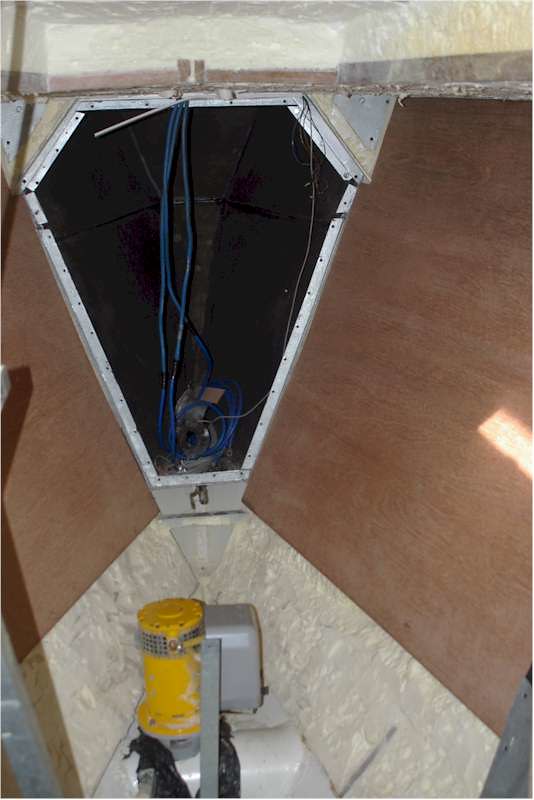
This is the shape on my anchor locker. The steel is lined with 6mm thk rubber to reduce the chain noise.

I have 70 meters of 10mm chain that feed in and out via a horizontal windlass.

35277361233_e8abee6f15_c.jpg


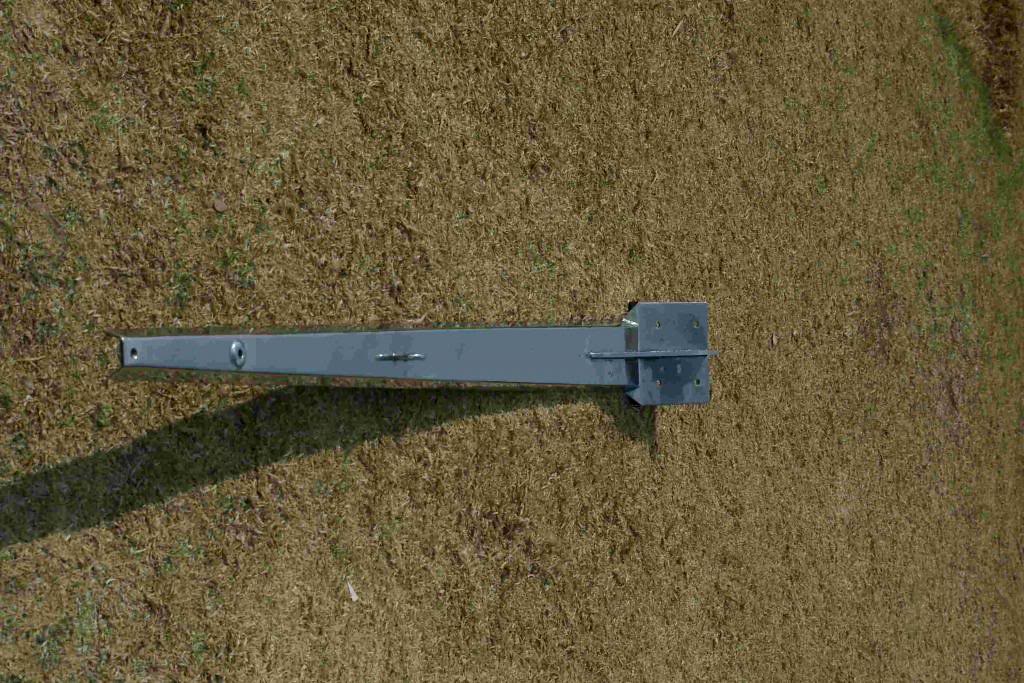
Picture before galvanizing.
 
Roger,

That's a neat looking locker - sadly most people have what they are given - and theirs only bears a distant similarity to yours.

Is yours a dedicated chain locker or do you also store rope in there? and if not - what do you do with rope. 70m of chain is good - but a bit of extra (rope) might be useful.

It is not obvious from the picture, or not to me, but I assume you have drain holes. Do you also have a grate, or felt the need for a grate. And/Or - how do you clean it? I do note what looks like an inspection hatch.

Jonathan
 
Hi Jonathan

The locker is a steel inner that is the same shape ar the bow which is has 50mm foam insulation so I needed and inner container anyway.

36086029215_3cf3b0f1a4_c.jpg


It only has chain 70 meters on my primary and 10 meters on my secondary.

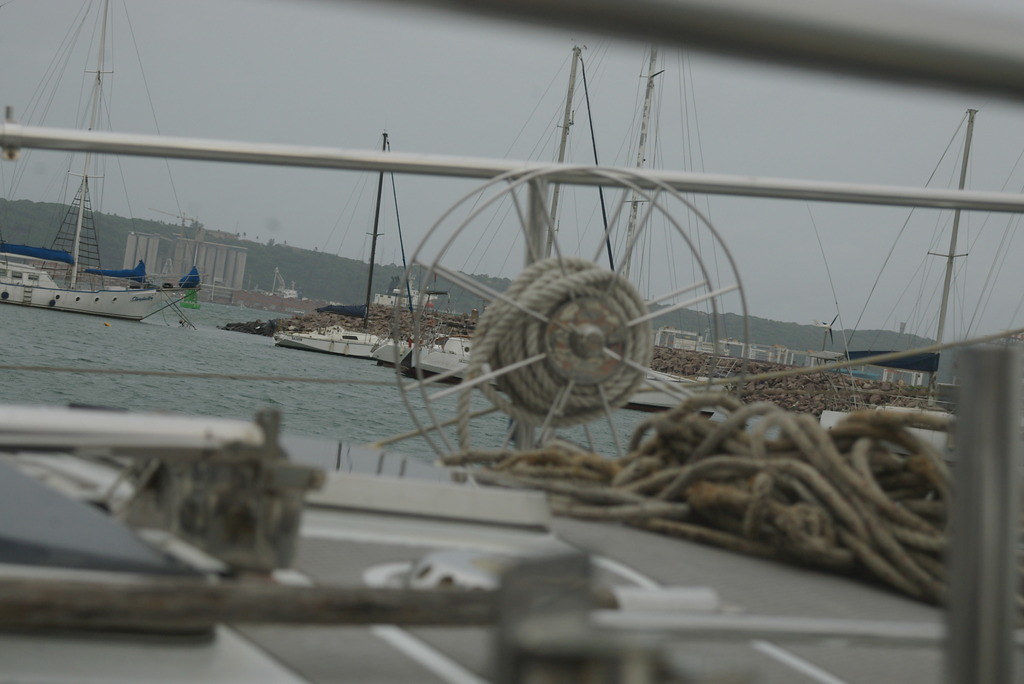
My extra rope rode is stored as below.

35277657553_632e083aff_b.jpg


35696669220_9da49f7f4d_b.jpg


There is a drain out the bow stainless plate as shown below. The darin now has a cover to prevent any bow wave entering the chain locker. I also have a valves to close the drain so I can fill the lower part of the chain locker with fresh water to wash the chain inside the locker.

36086146025_a69f795626_b.jpg


I have 2 water hose outlet on the fordeck that I can use either fresh or sea water to wash the chain and anchor as it comes up.

The door as seen is access from inside the for cabin. I have 2 access from deck one next to the windlass and a second chain pipe for the secondary anchor chain.

I have a rubber mat at under the chain and found all the water does drain out so no chain is left standing in water.
 
Thanks Roger,

As I said very neat.

Your extra bit of rode, the rope. I see lots of 'similar' reels, usually much flatter and with tape on them - Ultra's Quickline, I believe, was the first of their foray into the marine market (and became the name of their original US distributor). I think Ultra supply a range of tapes, nylon, dyneema.

But terminating thread drift :)

How do you attach the rope to the chain? and as the rope and chain seem to be 2 separate components how does it all work. My, limited, experience of mixed rodes is a long splice that feeds through the gypsy with a gypsy that will accept both chain and rope - so you retrieve in one continuous activity - you seem to split the rode? (which seems to imply you need to feed the bitter end of the chain through the windlass every time you have need of the extra length).

Our second rode is 15m of 6mm Gal G80 chain with 40m of 12mm 3ply nylon joined by an eye splice and shackle - but we retrieve by hand, easy when your anchors weight 8kg! I hand coil the rope into a milk crate and simply drop the chain into the resulting 'hole' in the centre of the coil. When we need to deploy a second anchor (or one that will not fit on the bow roller) - the rode is always ready and easily accessible simply by lifting the crate (shackle already attached to each spare anchor). It is all very easy - even from a dinghy - so I marvel at those, like you, with 10mm chain.

We too use rubber mat under our chain as a base to the chain locker - a simple old fashioned rubber door mat. It has pimples underneath and is perforated - so the chain drains, the water seeps or runs under the mat to one of 2 x 1" drain holes in each aft corner of the slightly sloping chain locker base. Our locker is not very deep but is voluminous. With conventional galvanised 8mm chain the 'towers' would jamb the windlass and I would capsize them, usually by hand. With our Armorgalv chain the coating is very smooth, hard and has self polished with use and we no longer have a 'tower' issue - though swapping to 6mm chain has markedly reduced the volume of chain that we would normally retrieve.

Jonathan
 
I have a hard eye on the rope rode and use a shackle to join to the chain, but not at the very end maybe 300-400 mm from the end. I use the rope drum to retrieve the rope then when the all the rope is pulled in I transfer the chain to the chain wheel and remove the shackle and rope and feed the chain into the chain locker.

With the secondary anchor chain I retrieve the rope by hand and the chain which is not that heavy. I have chain locks catch on my bow fittion so I an rest if need be.

We use a recycled door mat like this. Made from old car tyres.

Fluffed_Door_Mat_3a5cdce2-100c-4ee9-9a1c-b477a9178394_2000x.jpg
 
Last edited by a moderator:
I have a hard eye on the rope rode and use a shackle to join to the chain, but not at the very end maybe 300-400 mm from the end. I use the rope drum to retrieve the rope then when the all the rope is pulled in I transfer the chain to the chain wheel and remove the shackle and rope and feed the chain into the chain locker.

Necessity is the mother of invention - I do like the 'attach 400mm from the bitter end' to allow that loose 'end' to be fed into the windlass with the rope still attached (securing the rode).

Good idea

Thanks Roger.

Jonathan
 
Top