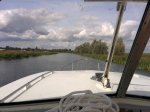
Beautiful jaunt up the Gt Ouse yesterday

mark.adams

Well-Known Member
Joined
9 Aug 2014
Messages
73
Location
E. Anglia
Visit site
We took the boat from Cathedral Marina Ely and turned right, up the Ouse towards Denver, stopping at Littleport just past the boathaven for a spot of lunch and a bit of fishing. The river was lovely and peaceful. Spent a relaxing day out on the river. Even let the teenager have a go at driving on the way back (to stop him complaining)
Buying a boat was definitely the right choice.
 
Bought our first boat from the Ouse. Only spent a short weekend aboard before moving it elsewhere but got a flavour for the river...very peaceful. Pictures would be good...... :)
 
Spent five years on the Great Ouse in the 90's. Lovely area, the river (and it's tributaries) have many pretty and often remote moorings. Often reminisce of the time enjoyed there and even remain members of GOBA in case we were to return. The problem is the width and height restrictions which limit your choice of boat.

Ditto re' pictures.
 
Out of interest, what other rivers are within the area that are not subject to the same restrictions as the Gt Ouse?
We live up in the Fens (Chatteris)
 
We had a nice weekend went from 20p marina to st neots and back, more than we would normally do but left the fridge on last weekend so wanted a decent run to charge batteries. The main restrictions are offord bridge for height, old west for depth and I think bedford lock for width.
 
We hope to cruise the Great Ouse next summer. Not made it that way yet despite it being not so far from our home waterways of the Fossdyke and Witham.
 
Out of interest, what other rivers are within the area that are not subject to the same restrictions as the Gt Ouse?
We live up in the Fens (Chatteris)

There is the Nene and middle levels but both have the same restrictions, if you want more air-draught then its the broads or Fosdike / Witham.
 
We hope to cruise the Great Ouse next summer. Not made it that way yet despite it being not so far from our home waterways of the Fossdyke and Witham.

Have a look at Kings Lynn to Denver.pdf at this link http://macnorton.weebly.com/downloads.html , it was supplied to me by a member of this forum (thanks Dave!)

How low does you boat go (air draught), if you fancy visiting the nene whilst over this way (same navigation licence) could poss meet up...
 
Have a look at Kings Lynn to Denver.pdf at this link http://macnorton.weebly.com/downloads.html , it was supplied to me by a member of this forum (thanks Dave!)

How low does you boat go (air draught), if you fancy visiting the nene whilst over this way (same navigation licence) could poss meet up...

Useful link and nav info for that stretch, thanks for posting.
But there's no mention of the "Stowbridge hump", along the middle of a straight part which is where we got stuck 3 years ago trying to get from KL to Denver, admittedly on a neap tide at the end of a drought.
Also, other than at the bridges there's no line to show the deepest water / best route like it does on the TBA charts for the Trent.
I'm continually disappointed by GOBA for not publishing better information about that stretch.
It is, after all, the one stretch that a boater really needs guidance on.
Instead, most of their charts all end at Denver with a small note saying "Tidal waters, there be dragons, local knowledge needed"
Your Nene guide is the only proper info I've seen, despite its limitations so thanks again.

I'm not sure I'll be too willing to try that stretch again though until the EA learn what dredgers are for, and what waterways are for other than for saving eels.
 
Have a look at Google earth for that stretch. The pics show it at low tide. It gives you a fair indication.

Some of the main reasons for not surveying and charting this stretch:-
Too expensive... GOBA operates on a very limited budget and simply cannot afford it.
Very few boaters use this stretch other than to gain access to the sea. - Very little bang for buck.
The bottom is constantly shifting..... a survey today would be inaccurate next month.


The 'Local knowledge' required is not extensive, we have used it to access the sea many times and other than touching the bottom on a rising tide occasionally we have had no problems.
Depending on your air draught and boat speed your approach will be different.

Denver to Kings Lynn.
Leave Denver at high tide. If your airdraught is lower than the rails on the lock you will fit under the first bridge. Cast of and go for it. - Steer wide at the bends. Anything above 6 knots will get you to sea safely.

Kings Lynn to Denver.
Slightly trickier. Leave the pontoons at KL at just before high tide. If your air draught is over 2.5M you may have to wait for the level to drop slightly to get under bridges, then push up against the tide. You will need to be able to sustain 8-9 knots. Steer wide at the corners - watch the depth.
or
Leave 4 hours after low tide and come up the river with the tide. Go as slow as you want, you will have to wait for water as you approach the last bridges. You will probably touch the bottom occasionally, but the tide is racing in so you will soon lift off, it is only mud. Steer wide at the corners - watch the depth.
or
If coming in from the sea, wait at the Bulldog tide gauge until it shows 4M. Then proceed in and follow the low tide instructions.

As with anything - springs and neeps will make a big difference.
 
Have a look at Google earth for that stretch. The pics show it at low tide. It gives you a fair indication.

Some of the main reasons for not surveying and charting this stretch:-
Too expensive... GOBA operates on a very limited budget and simply cannot afford it.
Very few boaters use this stretch other than to gain access to the sea. - Very little bang for buck.
The bottom is constantly shifting..... a survey today would be inaccurate next month.


The 'Local knowledge' required is not extensive, we have used it to access the sea many times and other than touching the bottom on a rising tide occasionally we have had no problems.
Depending on your air draught and boat speed your approach will be different.

Denver to Kings Lynn.
Leave Denver at high tide. If your airdraught is lower than the rails on the lock you will fit under the first bridge. Cast of and go for it. - Steer wide at the bends. Anything above 6 knots will get you to sea safely.

Kings Lynn to Denver.
Slightly trickier. Leave the pontoons at KL at just before high tide. If your air draught is over 2.5M you may have to wait for the level to drop slightly to get under bridges, then push up against the tide. You will need to be able to sustain 8-9 knots. Steer wide at the corners - watch the depth.
or
Leave 4 hours after low tide and come up the river with the tide. Go as slow as you want, you will have to wait for water as you approach the last bridges. You will probably touch the bottom occasionally, but the tide is racing in so you will soon lift off, it is only mud. Steer wide at the corners - watch the depth.
or
If coming in from the sea, wait at the Bulldog tide gauge until it shows 4M. Then proceed in and follow the low tide instructions.

As with anything - springs and neeps will make a big difference.

Thanks for the suggestions.

A few comments by way of reply:-
1. GOBA has over a thousand members I believe. The TBA had less than 50 when we remapped the Trent. It's not a question of money, just someone being bothered to do it. A friend of mine did it, with input from multiple others with years of experience. Surely that "local knowledge" exists on the Gt Ouse too?
2. Of course this stretch is used to gain access to / from the sea - that's where it goes. But I'm surprised that so few boaters from the Gt Ouse area use this stretch. They're not very adventurous if that's the case. It's the route to the Wash and beyond! But also it is after all one of the key routes for visiting boats from the wider world trying to come in to the Gt Ouse cruising area (as we were) from the Wash. As there were until about 12 months ago no mooring facilities in Kings Lynn it's inevitable that boats coming in this way would carry straight on through KL and try to get up to Denver. Once through Denver a large inland cruising area is available. Loads of bang for the buck! You're only looking at it from the inside out.
3. The bottom constantly shifting. Really? Significantly? OK I can understand if it does as it happens on the Humber, but there are presumably stretches where this happens more than others and notes could be put into the guide accordingly.
4. When we came in we used our extensive experience of river navigation and thought it would apply to the Gt Ouse too. We came in with the flood tide from KL at very slow speed, using the basic rules of river navigation as you described above. i.e. that the deepest water is always on the outside of bends, and in the middle along the straights. Except that didn't work along the Stowbridge hump. There was a big hump along the middle of the river along that straight section! And at neap tide with very little fresh, not even 1m depth with which to float, anywhere across the river. We spent the night beached in the middle of the river! Luckily I'm on bilge keels.
5. My boat doesn't travel at 8-9 knots on any kind of day, (7kn max) so leaving KL at HW is not something I would even think of. In any event I'd never dream of going up against a falling tide. That's asking for trouble!
 
John... No. We got as far as Wells, Enjoyed Wells too much, weather window closing, couldn't justify the diesel for a short visit.... blah..blah..excuses!!

Trundle.... valid ponts... Most Gt Ouse boaters, inc GOBA don't generally consider the tidal section as part of the 'system'. Only a very tiny percentage dare to go that way. The horror stories abound, People have died on cruisers navigating this section..... within living memory, so that tends to scare many folk.
It is short sighted I agree, but there is very little demand to cruise that section from the Ouse residents.... I would guess almost none, other than those of us who dare to brave the sea and I can sympathise with them. It can be dangerous and to top it all off, there is no where to moor and absolutely nothing worth going there for, other than to get out to sea. OK there are now pontoons at Kings Lynn, but for most folk.... there is no reason to visit KL!!!

The local knowledge is nothing special, but as you highlighted with your boat characteristics, the approach will vary depending on many factors. I have come up both on a rising tide and a falling tide. I understand fully why you wouldn't want to do it on a falling tide, but as I can't take the ground and benefit from a very low air draught, it suits me far better to do the high tide thing. We tend to come up at 12 knots with 2 meters under the boat in slow moving water. Very safe for us. The rising tide thing used to scare me silly with the speed of the water!!
Which ever way you do it, basically just steer religiously wide at the bends and keep a very keen eye on the depth sounder. You can almost 'see' the underwater profile as you steer from bank to bank.
 
John... No. We got as far as Wells, Enjoyed Wells too much, weather window closing, couldn't justify the diesel for a short visit.... blah..blah..excuses!!

Trundle.... valid ponts... Most Gt Ouse boaters, inc GOBA don't generally consider the tidal section as part of the 'system'. Only a very tiny percentage dare to go that way. The horror stories abound, People have died on cruisers navigating this section..... within living memory, so that tends to scare many folk.
It is short sighted I agree, but there is very little demand to cruise that section from the Ouse residents.... I would guess almost none, other than those of us who dare to brave the sea and I can sympathise with them. It can be dangerous and to top it all off, there is no where to moor and absolutely nothing worth going there for, other than to get out to sea. OK there are now pontoons at Kings Lynn, but for most folk.... there is no reason to visit KL!!!

The local knowledge is nothing special, but as you highlighted with your boat characteristics, the approach will vary depending on many factors. I have come up both on a rising tide and a falling tide. I understand fully why you wouldn't want to do it on a falling tide, but as I can't take the ground and benefit from a very low air draught, it suits me far better to do the high tide thing. We tend to come up at 12 knots with 2 meters under the boat in slow moving water. Very safe for us. The rising tide thing used to scare me silly with the speed of the water!!
Which ever way you do it, basically just steer religiously wide at the bends and keep a very keen eye on the depth sounder. You can almost 'see' the underwater profile as you steer from bank to bank.

Ironically the Nene cut is a doddle in comparison although a bit restricted on a neap, I think had the EA not cancelled the dredging when they took over both tidal cuts would be used more.

Cutbacks is just the latest in a long line of EA excuse's, with flooding and lack of use the result!
 
Disagree there, KL high St is like a throwback to 1985, delightfully quaint and even has a Wimpy....

We stopped on the pontoons on our way in this year and ate at the Wimpy... simply because it was a Wimpy and all 80's throwback. What was alarming was that it didn't look like it had been there that long!!!
PS. It was as bad as I remember... not highly recommended.
 
Not sanctimonious at all, it's actually not his life jacket, he took his one (that fits fine) off to put on the one he found in a cubby in the boat, it's a 4yr old thing, thinks he knows best... Probably gets it from his mother :rolleyes:
 
Top