Be very when the US Navy's around

... but a closer look at the various reports shows that the merchant ship approached from more than 22.5 degrees abaft the beam and was still the overtaking vessel at the time of the collision.

Could you post links to those reports? I've looked at few, mainly links from SA, and have not noticed that before. I'm sure the Yanks would've trumpeted it rather than hidden it in the small print.
 
Well I think mebbe only three or four dived transits along the Straits and thats when you can ignore TSS! Keeps the Sound Room sonar guys a tad busy though......:)

Never did a dived transit of the straights though have been through on the surface in many vessels, grey, black and sailing. I have even done practical training in IRPCS in the straights, many handy targets to be found. Not as scary as crossing the separation zones in the Dover Straights in an SSN headed for Chatham. We sat stationary in the separation zone for some time waiting for a big enough space to get through.
 
It perhaps depends on whose version of the IRPCS you're looking at? To resolve a query I had over anchoring, having regularly heard US Yachties claim that the IRPCS states "you don't need to display an anchor light in a 'designated' anchorage" I downloaded a US version to compare with my UK Version and found there to be extra/additional clauses in the US Version of the booklet.

I think the clue is in the word "International", something the USofA has struggled with in recent times...
 
I think the clue is in the word "International", something the USofA has struggled with in recent times...

An interesting suggestion, seeing as we ourselves are in the middle of the most publically (globally) humiliating act of isolationism the world has ever seen.
 
The reason I mentioned the starboard aspect was that the obvious answer was that the warship had to keep clear but a closer look at the various reports shows that the merchant ship approached from more than 22.5 degrees abaft the beam and was still the overtaking vessel at the time of the collision. Obviously, the warship should have seen what was happening and taken avoiding action when a collision was likely but did not.

I am afraid none of this is true. The destroyer was heading about 190° and the Crystal about 70°. The Fitzgerald was approaching the Crystal, as the US Navy report itself stated.
 
I am afraid none of this is true. The destroyer was heading about 190° and the Crystal about 70°. The Fitzgerald was approaching the Crystal, as the US Navy report itself stated.

Having refreshed my memory on the evidence I think you may well be correct.
Why then did the owners of the merchant ship pay $27m (not $17m as I said previously) in compensation?
 
Having refreshed my memory on the evidence I think you may well be correct.
Why then did the owners of the merchant ship pay $27m (not $17m as I said previously) in compensation?

Possibly the American made threats about what they'd do the next time they visited the US. But in the end it's hard to hit someone without breaking parts of rule 17*, so they weren't blameless. I guess the damage to their own ship was a lot less than the damage to the American destroyer, so they couldn't claim much themselves and just handed over a relatively small amount to close the matter.

*PS Of course whether anyone in the USN had read as far as rule 17 is another matter.
 
Still struggling with being designated IALA 'B', probably.

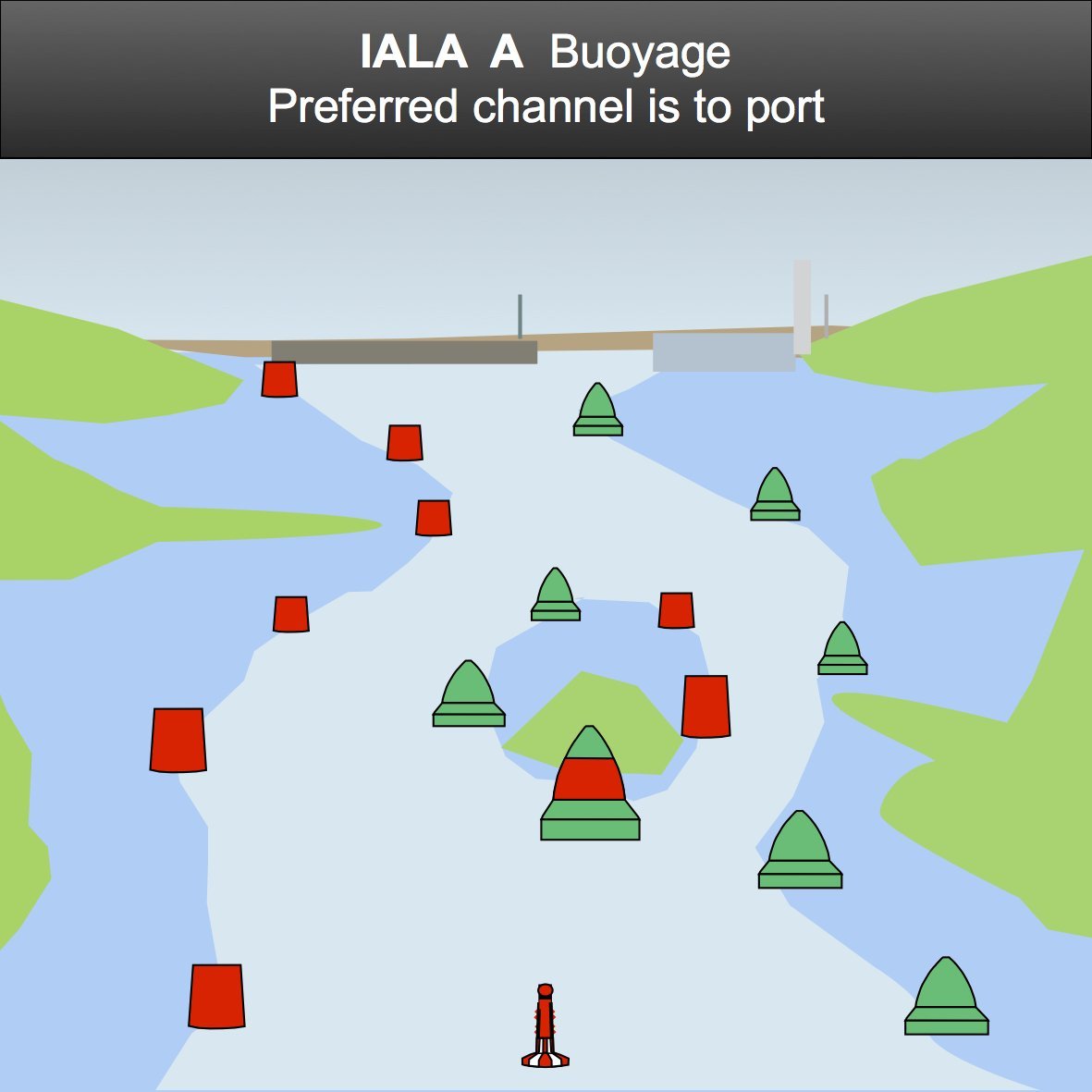
IALA A:

IALA-A-buoyage.jpg


IALA B:

IALA-B-buoyage.jpg


IALA Man:

24128761099_62e83842ef_b.jpg


ISLA Whisky

malts_fin6.jpg
 
Top