
Battery voltage indicator

Telstar26

Well-Known Member
Joined
23 Aug 2004
Messages
204
Location
Fishguard, Pembs
www.parkerseal.org.uk
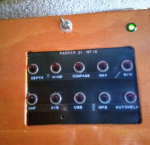
Just in case anyone is looking for one, I'm really pleased with the one I got from Sparkbright - a single LED that shows green, amber or red. And the brightness adjusts to the ambient light!

Here it is in my new switch panel:
IMG_20210206_132242_9~2.png
I'm not connected with Sparkbright in any way, just a satisfied customer.
 
What voltage does the colour change from green to amber to red.

There are wee devices you can plug into your cigarette lighter unit* that will give you the actual voltage to one decimal place for about £5.

* do these things have a proper name. Smokers/vapours onboard need to walk 2 nm downwind to have a puff and we don't stop while they do it.
 
There are a lot of LED Voltage meters available that give a one place decimal readout, why would you want an indicator bulb where you don't know what the colour switching levels are without refering to a table?
If
What voltage does the colour change from green to amber to red.

There are wee devices you can plug into your cigarette lighter unit* that will give you the actual voltage to one decimal place for about £5.

* do these things have a proper name. Smokers/vapours onboard need to walk 2 nm downwind to have a puff and we don't stop while they do it.
You can specify what colour/voltages you want. I had a digital voltmeter before but you have to remember to actually look at it! I'm more likely to notice that the light's no longer green....
 
If

You can specify what colour/voltages you want. I had a digital voltmeter before but you have to remember to actually look at it! I'm more likely to notice that the light's no longer green....
Thanks @Telstar26 I'm more a numbers man and voltage, amps used and temperature gives me far more info about the health of the batteries than a simple light, but I can see it having its usage.
 
A neat and useful gadget.
I have some Ctek indicators for their charging plugs which flash green, amber, red. Current consumption is very low.
Some sort of indicator light is a good idea.
Flashing is good, there are often steady LEDs which I tend to ignore.
 
Voltage
>15.20v >13.20v >12.45v >12.25v >12.05v >11.80v <11.80v
green/red alternating  green steady amber steady red slow flashing●● red 2 flashes, repeating ●●● red 3 flashes, repeating ●●●● red 4 flashes, repeating

For a general application it's a nice solution.
I need a bit more data as charge current and SOC help me decide how much I use my tiller pilot.

As an attention getter It would be better if it was out when the battery state was normal.
 
Having worked with looking at voltages for many years a voltmeter would be more informative and I have a panel meter that shows to 2decimal places .If I had yours I would have to keep referring to the instructions as what the coloured lights mean.
 
  • Like
Reactions: GHA
Having worked with looking at voltages for many years a voltmeter would be more informative and I have a panel meter that shows to 2decimal places .If I had yours I would have to keep referring to the instructions as what the coloured lights mean.
A light means it's time to press the button to switch on the voltmeter!
Digital voltmeters are very cheap but use more current than I want when the battery is not being charged.
 
I like to see that I've switched the power on or off
look at anything that uses power. Don't need a light for that.

We have gravitated towards the "dark and quiet cockpit" philosophy in aviation where when everything is normal then there is no indication. That way, any light immediately gets attention. We have also moved away, like you, from digital indications and towards a simple colour philosophy. This is for primary indication. Then we can dig deeper when something is not normal and see all the data we need.

It's a move which allows the crew to focus their attention on only those things which are pertinent and not be overloaded with unnecessary information.

Billions of ££££ of research into human factors behind the move and safety statistics that support the philosophy. So light good! Light for normal ops, probably not required.

But I like the idea.
 
A light means it's time to press the button to switch on the voltmeter!
Digital voltmeters are very cheap but use more current than I want when the battery is not being charged.

The better modern units with a display voltage using digits use around 15ma. For most applications a this consumption is not a concern and is not significantly more than this product. The advantage of the digital display is there is a continuous voltage readout sometimes to two decimal places, which is superior to the more limited and relatively crude information about voltage from a single LED light.

The cost and display size of these true voltmeters is greater than a single LED so I can see some application where a simple LED indicator voltage light is useful, but for most applications the added information from a true voltmeter is likely to be worthwhile.
 
Last edited:
The better modern units with a display voltage using digits use around 15ma. For most applications a this consumption is not a concern and is not significantly more than this product. The advantage of the digital display is there is a continuous voltage readout sometimes to two decimal places, which is superior to the more limited and relatively crude information about voltage from a single LED light.

The cost and display size of these true voltmeters is greater than a single LED so I can see some application where a simple LED indicator voltage light is useful, but for most applications the added information from a true voltmeter is likely to be worthwhile.
Fair comment.
15mA is 2.4Ah per week.
Which is perhaps nothing to worry about if you've got any solar.
It's a lot for my 250cc bike with its 4Ah battery though.
The Ctek thingy claims 1Ah per month
CTEK Battery status/ Indicator Connection Lead new M8 EYELETS | eBay
It was handy for my RIB when it was on the drive.

Perhaps the Arduino thread people could look at a truly low power solution if they are short of things to do?
 
I think if you are in your cockpit and want to be reassured of the current state of your batteries then indicator bulbs would be useful, better than dragging your wet foul weather gear down to the nav station, dry of your glasses etc etc. No doubt knowing the state of your batteries to the second decimal place would also be useful - but not exactly essential (one decimal place seems enough) - if your electrics are reliable. At the prices quoted it would not impact the thickness of your wallet to have both.

Thank you Telstar - don't be discouraged.

Jonathan
 
I think if you are in your cockpit and want to be reassured of the current state of your batteries then indicator bulbs would be useful, better than dragging your wet foul weather gear down to the nav station, dry of your glasses etc etc. No doubt knowing the state of your batteries to the second decimal place would also be useful - but not exactly essential (one decimal place seems enough) - if your electrics are reliable. At the prices quoted it would not impact the thickness of your wallet to have both.

Thank you Telstar - don't be discouraged.

Jonathan
Exactly. A light to get your attention while sailing, then you can push a few buttons on the nearest instrument and it will tell you the volts.
 
I find the posts overly critical - my Volvo control panel tells me my engine is overheating, no worries about the actual temperature and no-one is critical of Volvo. If I enter into shallow water, or wind speed exceeds a certain level - I receive an audible signal - I don't expect the warning to provide the precise data. Why does everyone suddenly want a voltage to 2 decimal places when a warning is what is needed - and you can worry about loss of 0.02 volts later.

I'd actively encourage people to share ideas - not discourage them.

Jonathan
 
Top