Battery Boxes - should they be ventilated?

Phildorset

Well-Known Member
Joined
10 Nov 2005
Messages
313
Location
Poole
Visit site
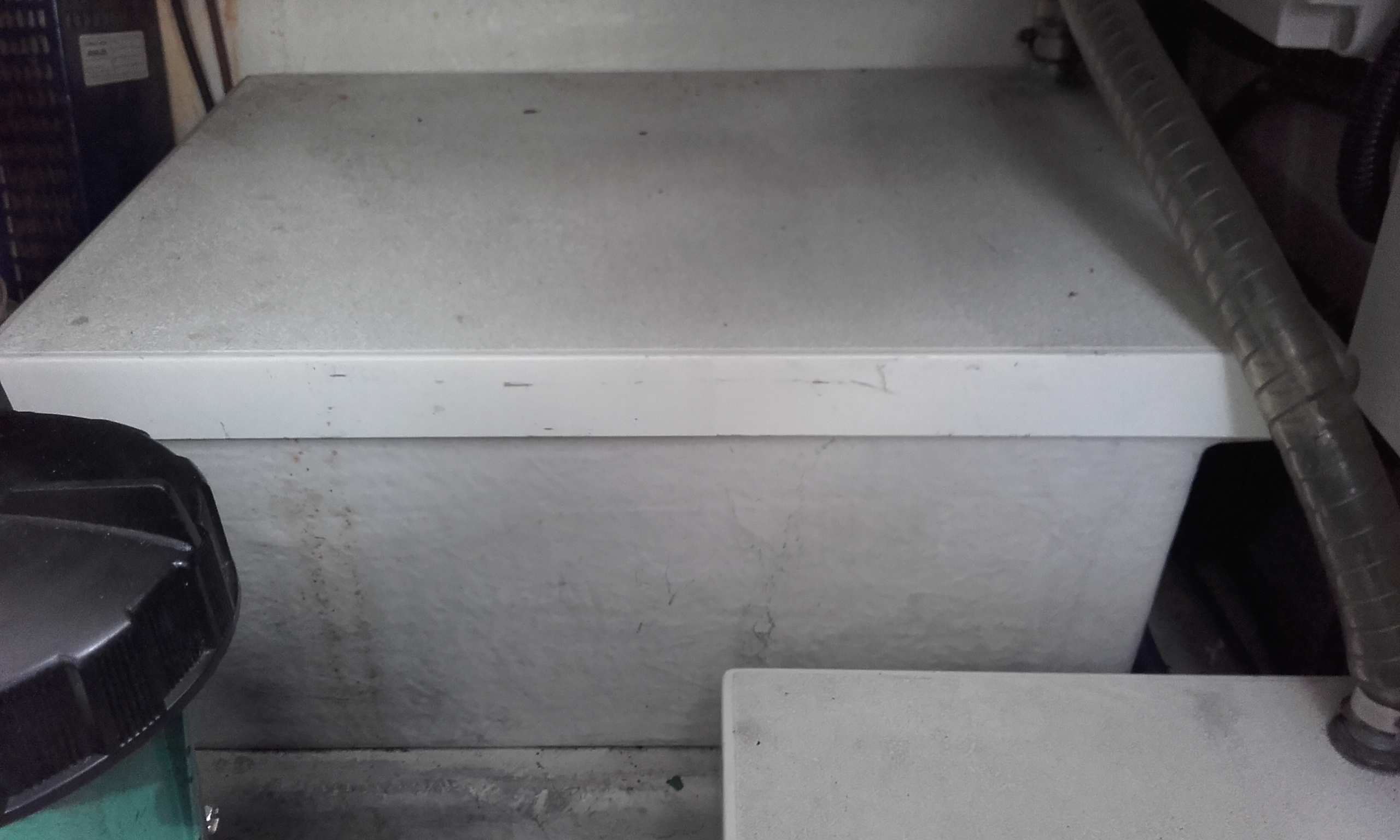
I have three large battery boxes, these are those purpose made, moulded plastic, with lids that clip shut. There is minimal ventilation as they are - and as the last set of batteries lasted ten years perhaps I should just leave as is? What's the thinking re (passive, ie; drilled air holes in box sides) ventilating or not? These are in my engine space - so I doubt they'd be getting cooler by adding vent holes... thanks for your thoughts.
 
Any cooling impact is secondary - the purpose of the vent is to allow hydrogen ( lighter than air) to be safely vented out of the confined space of the engine room. Hydrogen as you know can explode ... it is released when the battery is charged.

Some on here will say if you have sealed batteries you don't need to vent. Personally i disagree. If they fail they melt and there is a good chance of hydrogen being released.

I don't know what boat you have but i find it inconceivable that and production boat could not have a vented battery compartment.
 
Any cooling impact is secondary - the purpose of the vent is to allow hydrogen ( lighter than air) to be safely vented out of the confined space of the engine room. Hydrogen as you know can explode ... it is released when the battery is charged.

Some on here will say if you have sealed batteries you don't need to vent. Personally i disagree. If they fail they melt and there is a good chance of hydrogen being released.

I don't know what boat you have but i find it inconceivable that and production boat could not have a vented battery compartment.

The lids don't fit very tightly if that helps :)
Thanks for that - I may well drill a few holes in the lid tops (and yes - while they're off!)
 
If in the engine space there must be ventilation of that space.
Why modify an existing design that is proven adequate over 10 years?

fair point, whilst the boxes and lids do restrict ventilation somewhat, the engine space that these are in is very well vented when underway... and probably adequately so when sat idle. Do we only get the dangerous gas issue if/when batteries are being overcharged?
 
I dont believe gas to be an issue with sealed batteries in good condition.
Even if not sealed batteries its not an issue in an engine bay which by its very nature is ventilated. If in doubt run the engine bay fans for a few minutes before starting an engine.
 
I dont believe gas to be an issue with sealed batteries in good condition.
Even if not sealed batteries its not an issue in an engine bay which by its very nature is ventilated. If in doubt run the engine bay fans for a few minutes before starting an engine.

I would always urge caution with batteries - only a few months ago, a car of mine was in the garage at home hooked up to a very well respected brand of to battery conditioner. The conditioner must have developed a fault and boiled the hell out of the battery, filling the house with hydrogen sulphide in just an hour or so. The fire brigade ordered us to leave the house and they sent in 2 crews with breathing apparatus to rescue the car and ventilate the house. Potentially a nasty accident.

I've also been on a boat when one of the batteries exploded on cranking the engine, that was not fun either!

I now take many more precautions with batteries than I used to
 
I would always urge caution with batteries - only a few months ago, a car of mine was in the garage at home hooked up to a very well respected brand of to battery conditioner. The conditioner must have developed a fault and boiled the hell out of the battery, filling the house with hydrogen sulphide in just an hour or so. The fire brigade ordered us to leave the house and they sent in 2 crews with breathing apparatus to rescue the car and ventilate the house. Potentially a nasty accident.

I've also been on a boat when one of the batteries exploded on cranking the engine, that was not fun either!

I now take many more precautions with batteries than I used to

Now heres the truth of it. When all is well, there is no need for ventilation. A modern battery that is gassing out due to normal charging (or even extreme over charging) will expel water, there is a catalyst in the vent system that recombines the hydrogen and the oxygen that is produced at the same time. I'll see if I can dig out my favourite battery abuse video...
thing is what if something goes wrong. thats when you want to take precautions and preventing the build up of hydrogen is a might fine one.
 
We had a Porsche in the body shop years ago where the battery had been run down. They put it on charge overnight and when the bloke un clipped the crocodile clips from the battery without switching off the charger the battery exploded and he got showered in a combination of fire & acid.

Our battery boxes have a large pipe coming from the top which vents upwards to the outside world. I would be cautious about starting electrical vent fans in an atmosphe containing hydrogen.

Henry :)
 
I have three large battery boxes, these are those purpose made, moulded plastic, with lids that clip shut. There is minimal ventilation as they are - and as the last set of batteries lasted ten years perhaps I should just leave as is? What's the thinking re (passive, ie; drilled air holes in box sides) ventilating or not? These are in my engine space - so I doubt they'd be getting cooler by adding vent holes... thanks for your thoughts.
Phil, my Azi has purpose made battery boxes, tops branded Azi. Both boxes have flex hoses that vent out through the hull. When one of my batteries boiled a couple of years ago, you could still smell the gas venting off in the boat. Not nice.
 
The Boat Safety Scheme requires battery boxes to be vented on inland waters and whilst there are many things within that scheme that are OTT I don't think this requirement is one on them.
 
Same here, my Targa 40 has a grp battery box with a through hull fitting and hose connected to the lid and vented outside. Should be easy to do on an existing box.
 
The Boat Safety Scheme requires battery boxes to be vented on inland waters and whilst there are many things within that scheme that are OTT I don't think this requirement is one on them.

My main batteries are in the engine bay. They are in GRP battery boxes . The lids are not sealed but secured by webbing straps . The engine space has vents for air supply for the engines.
The bow thruster battery is under the front cabin floor in an unventilated space. It is sealed type battery.
The boat has a valid boat safety certificate , the last test being done for me in 2015.
 
My main batteries are in the engine bay. They are in GRP battery boxes . The lids are not sealed but secured by webbing straps . The engine space has vents for air supply for the engines.
The bow thruster battery is under the front cabin floor in an unventilated space. It is sealed type battery.
The boat has a valid boat safety certificate , the last test being done for me in 2015.

It's surprising how many BSS examiners miss the batteries up front, there's a lot of examiners out there that shouldn't be testing boats, if sealed then no requirement for venting but what is you decide to swap for one that's not sealed? It won't get picked up on until next test, it's only if battery is fitted outside of engine bay they have to be vented otherwise they rely on the vented space of the engine room
 
It's surprising how many BSS examiners miss the batteries up front, there's a lot of examiners out there that shouldn't be testing boats, if sealed then no requirement for venting but what is you decide to swap for one that's not sealed? It won't get picked up on until next test, it's only if battery is fitted outside of engine bay they have to be vented otherwise they rely on the vented space of the engine room

Rather like an MOT test the BSS test can only reflect the boat at the time of the test.
I prefer to keep my boat compliant between tests .
Others do not but that is their choice.

My boat has a valid BSS when I bought it but it failed to achieve BSS requirements at my pre purchase survey on a number of potentially serious faults, - which were quickly corrected before I moved the boat anywhere.
 
Thanks chaps - it seems there's some vagueness then as to how this is viewed and covered by the manufacturers - even between boats (Rafiki and I both have Azimuts, yet his boxes are vented and mine not).
I'll add vent hoses to my boxes just to be safe.
 
One way of fitting vents to the batteries is directly.
Most batteries have a small hose connector (male) fitted. This is the vent.
My BSS examiner recommended fitting windcscreen washer hose / tube to the connectors by just pressing it on, and vent it out of the battery box. That way you'll only need to drill a 10-12mm hole for each tube. This fully complies with BSS. Always best to route the tube upwards because hydrogen is lighter than air.

I have drilled extra holes in the battery box just to be on the safe side though
 
BSS just says "adequately ventilated".

In case it's of any interest, these are my battery boxes...

20170819_165323.jpg


Pete
 
And there is a vent in the top right of the pic.

All please remember he aim is to get the gas out not have it mix in any way with the engine room. It must vent upward and overboard. Sealed batteries go wrong.

Like Henry story I had this on a jag xjs in the body shop also. Be under no doubt it was an explosion. A real explosion with acid and bits of battery. Vent it
 
Top