
B&Q Exterior Varnish Mistake - Rectification?

CaptainBob

Well-Known Member
Joined
7 Nov 2007
Messages
1,477
Location
North Yorkshire
www.yacht-forum.co.uk
Being from Yorkshire as I am, and having a tin of exterior varnish from B&Q in the shed already - when it came time to do some coats on my brightwork the solution seemed obvious.

But now, a very damp month or two later, it's clear that this varnish has bonded with what was already there and deteriorated. Dark marks are appearing, and I can very very easily remove what seems like all of the varnish layers using just my fingernail, without much effort.

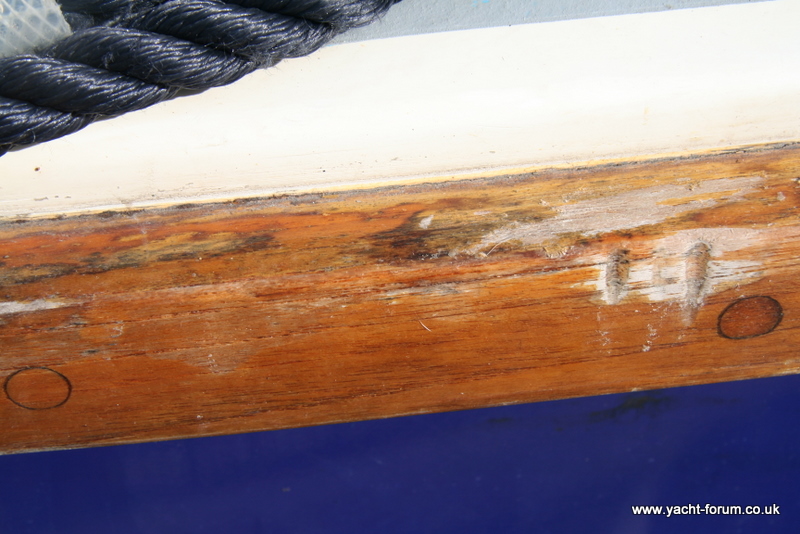
Here's a pic:
varnishontempest.jpg


You can see where I scraped with my nail on the right, a dark bit on the left and centre, and a (so far) untouched bit below.

If I sand it all back and then stick a few coats of decent marine varnish on, will the dampness in the wood be a problem?

I used to use a bottle of dark brown low viscosity stuff on my Centaur that soaked deep into the wood and could be applied even when the wood was wet. The finish wasn't shiny, but it worked very well. Only problem is that it was very dark brown, which wouldn't go with the look of my Tempest - which is a much lighter colour (as seen in pic).

What should I do?
 
Very simple. Strip it back to bare wood. Hot air gun and a Sandvik scraper may do it, or try water soluble Nitromors. Sand smooth, clean with acetone and then coat with Sikkens Cetol Novotech/Novatop system. Have the top tinted with pine. Follow the easy instructions and you will have a basic coating system that will last potentially up to 10 years with the occasional rub down and recoat. This is a microporous eroding stain so does not break down like conventional varnish.

All the brightwork on my wooden boat is finished this way. The mast was up 5 years and no sign of film failure. Just needed a rub down and one new top coat.

Only possible downside is that it is low gloss. Oh, and you won't be able to boast in the club how you carefully put on 15 coats of MARINE varnish!

You can get Sikkens from any decent coating supplier such as Brewers. A tin of each will do all the brightwork on your boat and give you enough to top up for the rest of its life.
 
I scraped all my exterior wood work back to bare wood last year and applied Sikkens Cetol fromInternational Yachtpaint
First impressions are favourable but it'll be several years before I know if it's really is any better than all the other things I've tried in the past.

The lowest maintenance is bare wood scrubbed clean now and then.
Best looking is a well maintained good quality varnish.
Worst looking is varnish that has not been maintained.
Least suitable "Yacht" varnish from a DIY store.

I used the "Natural" finish to avoid making it a darker colour.
 
Very simple. Strip it back to bare wood. Hot air gun and a Sandvik scraper may do it, or try water soluble Nitromors. Sand smooth, clean with acetone and then coat with Sikkens Cetol Novotech/Novatop system. Have the top tinted with pine. Follow the easy instructions and you will have a basic coating system that will last potentially up to 10 years with the occasional rub down and recoat. This is a microporous eroding stain so does not break down like conventional varnish.

All the brightwork on my wooden boat is finished this way. The mast was up 5 years and no sign of film failure. Just needed a rub down and one new top coat.

Only possible downside is that it is low gloss. Oh, and you won't be able to boast in the club how you carefully put on 15 coats of MARINE varnish!

You can get Sikkens from any decent coating supplier such as Brewers. A tin of each will do all the brightwork on your boat and give you enough to top up for the rest of its life.

I will second that - Make sure though that you buy the new system Novotech/Novatop, which is in 2 tins- sub coat and top coat. In speaking to the manufacturers, they suggest that you only use the Novotech subcoat in the marine environment, as the Novatop stays sort of sticky for quite a long time. I used this n a teak garden table as a trial, 10 years ago - the finish is still intack despite being left in the open for 10 years. I used Beech - as they said it had the least pigment in it.

To be honest - the purist might not use it as it does not have the deep glow of tradidional varnish. However it is much beter than the Cetol that vic mentions as it looks more like varnish (IMHO). I think that this is the best bet. Microporous is the reason it lasts!
 
Last edited:
Tranona and I have similar views by the look of it !

Varnish is a masochists way of doing it. Long gone are the days of 'wiping on' traditional varnish finishes that would last ... now varnishes are unsuiatble to be thinned enough to wipe on. People want a brushable solution. So we now have non-lasting varnish ...

B&Q Exterior even the Yacht one - if you read the tin says not suitable for weather beaten areas ... in fact same as other so called yacht varnishes etc. The term actually means it's shiny and gives a nice gloss finish suitable for interior work.

I'm with Tranona as said ... get a good stain and use that. It lasts much better, is UV resistant, quick sand every so often and a light overcoat to brighten it back up again. Don't do as some do ... coat on coat on coat building up that 'cardboard' film look that is so terrible. The trick is light coat enough to bring up the look of the wood and no more.
It doesn't crack, it doesn't weather like paint / varnish, it doesn't peel etc. Can be had in various shades and wood finishes to bring out the grain and best in wood.

I even use it to bring up a nice finish and then a single varnish coat over top for cosmetic items where that varnish gloss is wanted. The stain seems to bind the varnish better and give it a better resistance to failure. It is also easier to remove later when you want to refinish.
 
Yes, the top coat can be a bit sticky, but usually because it is too easy to put on too much. It does, however improve the look and based on my mast really lasts well.
 
BUT After a little investigation I discover that according to the product data sheet Novatech is unsuitable for use on oily woods such as teak and iroko!

http://www.sikkens.co.uk/NR/rdonlyres/9D61D321-2172-4D63-B16F-1161DC502B58/0/CetolNovatech.pdf

Back to the drawing board!

Vic - that may be so - but I have the proof that it works...... 10 years of it and that was new teak (albeit - "teak" as described in quality garden furniture)

That may well be the case for new teak, but Cpt'n Bobs teak is not "new", so I don't think it is very oily anymore, (and therefore could benefit from protection.)
 
Sorry for getting my "a's" and "o's" mixed up. Its my age! (See thread on licences on Scuttlebutt)

Anyway, I have used it successfully on Mahogany, Iroko, Khaya veneers, Douglas Fir, Oak and a little bit of Teak. Don't notice any difference in either adhesion or durability.

Lots of boats in our club use stains on teak rubbing strakes.
 
This is Cetol - the original matt finish.

uvs090216-001480x360jpg.jpg


It doesn't look as 'classy' as a good, well kept, varnish finish, but it's so much easier to apply and maintain.
 
So-called 'Yacht Varnish'

We had the same problem with 'International Yacht Varnish' from B & Q a few years ago - when we took this up with International Paints they said they had sold the name and that it was 'just a name' - with no suitability for a marine environment implied. We were told that only two-part varnish was considered suitable and reliable. Since then we have used 'Sandolin' which is easy to brush straight from the tin onto bare wood, has a matt or silk finish, comes in a variety of shades and seems to last a couple of years. However we do sail on a lake so don't have problems with salt water spray. Incidentally 'Nitromors' shouldn't be used near GRP.

John
 
I'm now tarting up my third tired old boat and the recipe that has worked for me is: -

Sand back to bare wood - if it still looks **** then paint it.
If it looks OK then stain it a darker colour with a waterbased stain.
Saturate it with penetrating epoxy such as Eposeal 3000.
Wash with clean water.
Varnish it with a spot repairable varnish such as Le Tonkinois or Epifanes.

It's a fair bit of work initially but my aim is for a decent looking, low maintenance finish. As Ruffles pointed out, a lot of the work can be done at home.
 
I seem to remember from my previous experience that when using sikkens it was HLS then finished with filter 7
 
Top