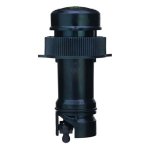
B & G speed paddlewheel

Heckler

Well-Known Member
Joined
24 Feb 2003
Messages
15,817
Visit site
I am fed up with critturs in the paddle wheel in my B & G speed transducer, they give very specific instructions on where to antifoul it. However I want to take the paddle wheel out to make the paint job easier.
Prob is that the axle pin isnt through the whole lot and so I cant get at it to drive it out. It looks as if the "ears" that stick out of the bottom of the transducer are like a U cartridge that holds the paddle wheel. That it should pull out of the cylinder. But it doesnt! I have got it starting to move slightly but am afraid of busting something.
Has anyone done this job before and knows what to do without breaking anything?
S
 
if you press in the outer bearing a little, enough of the shaft will be exposed to be able to grip it with some needle nosed pliers. You can then pull it out. I had the same concern, but antifouled mine at the start of the year and it is still critter free.

Just make sure that when you put it back in, the paddlewheel goes the right way round. Made this mistake too!
 
Last edited:
if you press in the outer bearing a little, enough of the shaft will be exposed to be able to grip it with some needle nosed pliers. You can then pull it out. I had the same concern, but antifouled mine at the start of the year and it is still critter free.

Just make sure that when you put it back in, the paddlewheel goes the right way round. Made this mistake too!
Thanks, but, the shaft end doesnt come through the outer cylinder. It is as if there is a cartridge that holds it all together that fits inside the cylinderical bit
S
 
Thanks, but, the shaft end doesnt come through the outer cylinder. It is as if there is a cartridge that holds it all together that fits inside the cylinderical bit
S

If you gently pull the outer tab/bearing away from the main body (no real force needed), it will extract the shaft a little (1-2mm) from the inner bearing. When you then push the tab back in the shaft will be exposed slightly at the outer end.

Its worth doing. I antifouled with this stuff (http://www.force4.co.uk/marlin-echo-transducer-antifouling.html) and the log has remained clean all season.
 
f
If you gently pull the outer tab/bearing away from the main body (no real force needed), it will extract the shaft a little (1-2mm) from the inner bearing. When you then push the tab back in the shaft will be exposed slightly at the outer end.

Its worth doing. I antifouled with this stuff (http://www.force4.co.uk/marlin-echo-transducer-antifouling.html) and the log has remained clean all season.

Thanks again, but we are talking at cross purposes I think. The shaft end is not accessible. It is inside the cylindrical bit. There is no hole to access the end of the shaft.
To the other replies, I have the blanking plug but it is a messy job to fit. 2ft jet if water, and a gallon or so in the bilges, Mrs D likes dry bilges!
S
 
f

Thanks again, but we are talking at cross purposes I think. The shaft end is not accessible. It is inside the cylindrical bit. There is no hole to access the end of the shaft.
To the other replies, I have the blanking plug but it is a messy job to fit. 2ft jet if water, and a gallon or so in the bilges, Mrs D likes dry bilges!
S

Sounds like yours is the same as mine. Half of the circular area of the transducer is occupied by the depth and temperature devices. The paddle wheel occupies the other half. The pin goes into the depth part where its end is hidden. The outer end is flush with the paddle support and cannot be accessed to remove. I painted mine with Velox using a very small artists brush but it was tediously difficult to get at all of the internal stator surface.
 
Sounds like yours is the same as mine. Half of the circular area of the transducer is occupied by the depth and temperature devices. The paddle wheel occupies the other half. The pin goes into the depth part where its end is hidden. The outer end is flush with the paddle support and cannot be accessed to remove. I painted mine with Velox using a very small artists brush but it was tediously difficult to get at all of the internal stator surface.

Vyv
exactly the same. I noted that when I gripped the paddlewheel ears and attempted a wiggle that it started to move but I was afraid to go further in case I broke it. Will give Tindell a shout and report back
S
 
Sounds like yours is the same as mine. Half of the circular area of the transducer is occupied by the depth and temperature devices. The paddle wheel occupies the other half. The pin goes into the depth part where its end is hidden. The outer end is flush with the paddle support and cannot be accessed to remove. I painted mine with Velox using a very small artists brush but it was tediously difficult to get at all of the internal stator surface.

Just spoke to Tinley, the lady who usually knows, doesnt. They have a a pic of the Airmar ST850 on their website, it isnt that one for sure http://www.tinleyelectronics.com/documents/Airmar Paddle Install.pdf
Says she doesnt know what it is! It has two big split rings on mine on each side as opposed to the one shown in the pic
S
 
View attachment 54431
Sarah from Tinleys has come back with pix. I have been pulling out the whole assembly which includes a flapper! The wheel bit fits inside!
S
Update!
it is indeed two parts, the pin with the two keyrings on it has to be removed, then the inner slides out and the flapper springs up to shut off most of the flow! What threw me was the fact that there was only one blanking plug in the bilges, so I naturally assumed that was it! Previous owner strikes again! There are supposed to be two!
S
 
Top