dial-a-monkey
Well-Known Member
Found this on the web - There's a lot of interesting information about Beneteau throughhulls - if it's of any interest?
http://mymoorings.com/Notes/Data/Domino/HTML/SA192007.pdf
TESTING THRU’HULLS
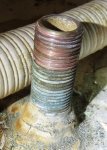
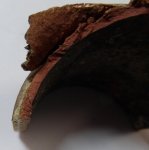
We have heard it said that you just need to look for the copper red color on the through hull. But unless brand new they will all be de-zincified on the surface and showing a copper red color. What we need to know if how deep it is. You can use a knife or file to scrape the exposed surface of the flange and check the depth of the red before you get to bright yellow of the brass. But that still does not prove what its like inside where it normally fails. The best test is “the hammer test”. Give it a tap on the side with a medium weigh hammer. If it breaks off it was close to failing so needed immediate replacement anyway. If it does not break it is OK for now. We don’t know if it’s half corroded away but at least we know its not 99% gone. This test has proven quiet successful and I don’t know of any other way it can be done without removing the through hull for analysis. This should be done on every haul out, once the boat is 2 or 3 years old or earlier it the through hull looks suspicious in any way. It’s best not to do it in the water although I have done it when I was particularly worried about the condition just prior to a long distance deliver. When we did break one off in the water we could at least say it was easier to sort it out with the boat on the dock than it would have been for the skipper in the middle of the Atlantic.
http://mymoorings.com/Notes/Data/Domino/HTML/SA192007.pdf
TESTING THRU’HULLS
We have heard it said that you just need to look for the copper red color on the through hull. But unless brand new they will all be de-zincified on the surface and showing a copper red color. What we need to know if how deep it is. You can use a knife or file to scrape the exposed surface of the flange and check the depth of the red before you get to bright yellow of the brass. But that still does not prove what its like inside where it normally fails. The best test is “the hammer test”. Give it a tap on the side with a medium weigh hammer. If it breaks off it was close to failing so needed immediate replacement anyway. If it does not break it is OK for now. We don’t know if it’s half corroded away but at least we know its not 99% gone. This test has proven quiet successful and I don’t know of any other way it can be done without removing the through hull for analysis. This should be done on every haul out, once the boat is 2 or 3 years old or earlier it the through hull looks suspicious in any way. It’s best not to do it in the water although I have done it when I was particularly worried about the condition just prior to a long distance deliver. When we did break one off in the water we could at least say it was easier to sort it out with the boat on the dock than it would have been for the skipper in the middle of the Atlantic.
Last edited: