Anyone with practical experience of changing 1970s IOR sail plans?

Ulysses II

Member
Joined
30 Aug 2018
Messages
34
Visit site
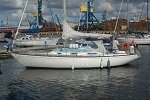
I have a mid 1970s Centurion 32 and have been reading up on the pros and cons of the masthead rig with its sizeable genoa and relatively small mainsail. For the racing fraternity, there is a lot of technical discussion about when this rig arrangement works well and when it is not ideal. However, I also came across an interesting comment that, for cruising, it was not that uncommon for a longer boom to be fitted to accommodate a larger mainsail, so that a smaller and more easily handled foresail could be used. While I don't have any real intention of going down that route, I would be interested to hear from anyone who has practical experience of that approach. Did the mast and rigging set up need to be altered substantially and how did sailing characteristics alter?
 
I have an interest in this too, but no experience to offer.
I assume that having a longer boom would bring the Centre of Effort further aft and so increase weather Helm., but do not know how significant the effect would be.
 
I think you are wrong about the rig of the Centurian. The design is from 1969 and the IOR started in 1969. There were 2 rigs offered on the Centurian and the most popular was the shorter rig. The sail plans available via google show a normal long footed mainsail, definitely not the very short foot on IOR racing yachts in the late 70's or early 80's. If your mainsail is much shorter than the boom, then you could increase it. You may need to alter the rake of the mast slightly to ensure the rudder remains on the centreline.

I can remember seeing the first Centurian just after she was first launched in Ostend harbour with the builder on board. My parents were very smitten, but we had just fitted out a Northerny 34 - a Holman design. However they could not afford one.
 
Would a fully battened mainsail with an extended roach curve give a bit more mainsail area without the cost of changing boom as well as sail? Depending on backstay angle, might get extra area higher up but further forward than a longer boom.
 
I have a very similar boat and, as dunedin suggested, I went along with the sailmaker who suggested more roach in the new, fully battened main. I think it may help in light airs, bearing in mind that few people will fly the huge No 1 foresails used back in the day. It's marginal though and a bit of extra roach looks nice anyway.

With roller furled genoas the racers will do all they can to avoid furling them and you see these tiny mains reefed and full headsails being used in very fresh conditions. These relatively narrow, long keeled hulls seem to cope, where a more highly strung vehicle might be a distinctly skittish proposition.
So, I don't think you would necessarily badly upset the balance of the boat but it would be a costly experiment and any improvements might be marginal

I have reduced my headsail overlap a lot, which makes a much more comfortable sail and can't say it's a problem in cruising mode, in fact it probably also helps in terms of overall performance over the wind range.

.
 
Different boat but I have a Twister with a 1 meter taller mast and boom to suit. Re-rigged by the previous owner to get her going earlier. it does that but as the mast is stepped in the original position I can't balance her on full main once the wind is above 12 kt. So that's when i put the first reef in which gives the original main sail area and a bit more than original Genoa. She's good like this to 20kt.
So just be aware you may have the same which will lead to either more reefing or putting up with a bit of weather helm.

I din't mind it as it gives me something to do and I don't race. If I did I'd hammer the other Twisters :)

just to add that this rig was drawn by kim holman and known as the Med Rig. His brother didn't like it apparently.
 
Different boat but I have a Twister with a 1 meter taller mast and boom to suit. Re-rigged by the previous owner to get her going earlier. it does that but as the mast is stepped in the original position I can't balance her on full main once the wind is above 12 kt. So that's when i put the first reef in which gives the original main sail area and a bit more than original Genoa. She's good like this to 20kt.
So just be aware you may have the same which will lead to either more reefing or putting up with a bit of weather helm.

I din't mind it as it gives me something to do and I don't race. If I did I'd hammer the other Twisters :)

just to add that this rig was drawn by kim holman and known as the Med Rig. His brother didn't like it apparently.

I think you will find that the increase in weather helm above 12kts of wind is due to heeling of the boat. For most boats this is far more significant than the balance of jib to main area, mast position versus keel position. The "balance" only being significant in light winds with no heel.
Re rig type. There is a very common old but good design 22fter called a Space Sailer 22 around here. Typical fin keel mast head rig. A friend bought a new hull some time back and fitted a fractional rig from a Soling. The mast mounted further forward. A huge main sail and smaller fractional jib. Now he is a good sailer but the performance difference was amazing. Plus the convenience of no baby forestay to get the jib around and much easier winching in the jib. A nice boat that has come back to our club after several owners but sadly not eligible for the SS22 association competition.
For myself for a variety of reason (old age mostly) I have gone back to a reduced level of racing my fractional rig TS. This involved giving up spinnackers and the genoa jib. I have been going out with much less sail than before and generally amazed how little difference a smaller sail plan makes with much less concern re reefing or jib changing.
perhaps OP should simply go for a smaller jib. ol'will
 
My experience of the Twister showed that the boat could be heeled lee rail under and still feel perfectly balanced on the helm, so I suspect the weather helm referred to is due to the shift in the centre of effort of the sail plan due to the taller rig/larger main. If I recall comments about “Helix” the three quarter rigged Twister (basically an enlarged “Stella” rig) she needed her mast stepped with no rake at all to overcome weather helm.
 
I think you will find that the increase in weather helm above 12kts of wind is due to heeling of the boat. For most boats this is far more significant than the balance of jib to main area, mast position versus keel position. The "balance" only being significant in light winds with no heel.
Re rig type. There is a very common old but good design 22fter called a Space Sailer 22 around here. Typical fin keel mast head rig. A friend bought a new hull some time back and fitted a fractional rig from a Soling. The mast mounted further forward. A huge main sail and smaller fractional jib. Now he is a good sailer but the performance difference was amazing. Plus the convenience of no baby forestay to get the jib around and much easier winching in the jib. A nice boat that has come back to our club after several owners but sadly not eligible for the SS22 association competition.
For myself for a variety of reason (old age mostly) I have gone back to a reduced level of racing my fractional rig TS. This involved giving up spinnackers and the genoa jib. I have been going out with much less sail than before and generally amazed how little difference a smaller sail plan makes with much less concern re reefing or jib changing.
perhaps OP should simply go for a smaller jib. ol'will
i think I've found it isn't. ;-)
 
If you put a fractional rig on it you'll have to step the mast further forward. Big job: small reward. I have a masthead rig. I've settled on a 140% Genoa for club racing and a 105% for family sailing. I also changed the main sail shape slightly by increasing the roach a small bit which allowed me to raise the gooseneck slightly and get rid of the droopy low boom that is a feature of 1970s IOR boats. You'll get good usability without too much hacking at the rig if you just adapt it to your personal needs
 
Thanks for the replies and interesting points. Concerto is right that the Centurion was designed at the end of the 1960's - it's mine that was built in the mid 70's. They are now reassuringly affordable! His reply prompted me to look again at the on-line data sites. Looking at sail plans for the Contessa 32, Centurion and Sigma 33, the Centurion sits in the middle in terms of ratio of main to foresail area. So it seems that the mainsail wasn't as reduced as later IOR designs. However, I wonder whether shorter booms might have been fitted on later yachts when the position of the traveller was moved forward (keeping up with fashion?). Looking at photos on line does suggest that boom length isn't consistent.11-HEAVENLY-BODY - Copy.jpgPhiléas - Copy.jpgNOMAD5.jpg
On weather helm - my understanding is that large genoas generate some weather helm due to the centre of effort being further aft than for a reefed or smaller foresail. Therefore, a smaller headsail and larger main won't necessarily make much difference.
It sounds as if there is merit in adapting to cruising by using a smaller genoa and a mainsail with a little more roach.
 
Thanks for the replies and interesting points. Concerto is right that the Centurion was designed at the end of the 1960's - it's mine that was built in the mid 70's. They are now reassuringly affordable! His reply prompted me to look again at the on-line data sites. Looking at sail plans for the Contessa 32, Centurion and Sigma 33, the Centurion sits in the middle in terms of ratio of main to foresail area. So it seems that the mainsail wasn't as reduced as later IOR designs. However, I wonder whether shorter booms might have been fitted on later yachts when the position of the traveller was moved forward (keeping up with fashion?). Looking at photos on line does suggest that boom length isn't consistent.View attachment 102616View attachment 102618View attachment 102619
On weather helm - my understanding is that large genoas generate some weather helm due to the centre of effort being further aft than for a reefed or smaller foresail. Therefore, a smaller headsail and larger main won't necessarily make much difference.
It sounds as if there is merit in adapting to cruising by using a smaller genoa and a mainsail with a little more roach.
Thank you for your comments confirming my thoughts.

If you are going to change your mainsail, then I would recommend a fully battened one as they are far easier to set well and hardly flog at all. Also add a stakpack for the mainsail if you do not already have one. My Fulmar has a ¾ rig, but when I replaced the sails I had a fully battened mainsail and 130% genoa (not 150%). The new sails made such a difference to performance due to new sail cloth compared to the old Hood sails with tightly woven dacron that were 14 years old.

PS If you have not already bought a yacht, then for similar money you could buy a Westerly Fulmar. A classic design and a generation later in hull design. If you need any advice on the Fulmar let me know as I am a BoatLine member for the class. Fulmar - Westerly-Wiki
 
Last edited:
i think I've found it isn't. ;-)
I think that’s very much about the hull shape - for typical AWBs from the 90s onwards and ever more extreme then weather helm and heeling are completely linked, but of course increased by having too much main compared to jib. The contrast to a wooden boat I sailed years ago with a lot sheer and narrow bow and stern is enormous. That had a very long boom back over the cockpit to 8 feet behind it and weather helm was all about sail balance there.
 
Top