Antifouling Removal

hunter323

Well-Known Member
Joined
16 May 2010
Messages
131
Visit site
The time has come......... I would appreciate forumites opinions/experiences re the above. The BAHCO 665 scraper has some very good reviews on Amazon has anybody used one? Are there any power tools that can be used. Advices gratefully received Mike
 
I did a 22 ft rib on a trailer at home using international antifoul stripper, took 4 days to strip and re-apply. I still have the mental scars and it took a year before the drive way was back to normal despite using a plastic sheet. If I ever have to do it again I will pay the man the money to slurry blast it.

Pete
 
These threads are popping up everywhere now - must be the season. I've done my 40 ft monohull with the Bahco 665 and was suitably delighted with it. Used 1.5 blades in total (they're reversible). I also tried the Proscraper, which wasn't bad either and has the advantage of having a hose/vacuum attachment, but I preferred the second handle on the Bahco and did 99% of the work with that. Key point for me was to keep the AF wet - softens it up and greatly reduces dust. I've documented the whole ordeal here: Top and Bottom cleaning.

As for power tools, an oscillating tool with a scraper attachment has been mentioned positively elsewhere.

Good luck!
 
If you are young and fit, go for it! If not, don't.

I gave it a try with a scraper similar to the Bahco (£10 Ebay) and decided it was the wrong decision. I too would now rather pay to have it blasted.

If you do, I suggest you get paper disposable overalls and a face mask for yourself, and a plastic tarpaulin to catch the crud.
 
The Bahco type scrapers have often been reported as good manual scrapers for the job.

I know someone who successfully used an old plane iron, kept sharp.

There used to be a Bosch scraper with a reciprocating chisel action which was apparently quite good , but it is obsolete having been replaced by the oscillating "multitool" type.

316765pse180eset-z.jpg


Lidl ( and Aldi?) sometimes offer a similar scraper to the old Bosch type , but I have not seen it ( them) recently

main.jpeg


If you see either of the above probably worth investing in one
 
Last edited:
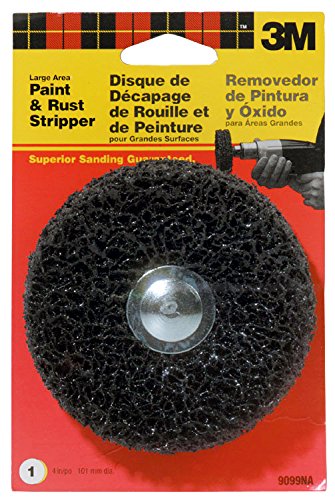
Gave up on the Lidl scraper and used a 3M strip disc/angle grinder instead:

That looks like something that going to create a lot of toxic dust! How on earth do you contain it? Full tent and dust extraction equipment.?
 
Last edited:
It does look likely to produce lots of dust. I'll stick with my old Bosch tool as it takes little effort to use and doesn't produce much dust.


It's a pity that it isn't made now but the Lidl item does look very similar and likely to have a forwards and backwards action. Modern multi-tools I've seen have a side to side action and I don't think that they will work very well. I could be wrong as I've only tried one once as a cutting tool, not antifoul removal.
 
Last edited:
Practice in Oz is simply to use a high pressure water jet and collect the rubbish. Most, many or some - not sure, will hire out the equipment but its an awful job and we pay for an operator who does it more quickly than we can. For our 38' cat, which has always had an abalative AF, takes a couple of hours and leaves the surface available for immediate re-painting (once it dries), though we go over the hull with hand scrapers as they can miss small, tiny, areas. Yachts are water blasted as soon as they are removed from the water. You could use a domestic high pressure water blaster. If you use a hard AF you will develop an increasing layer of old AF, which seems to be a good reason to use an ablative, and to remove that hard layer you would need to use scrapers (and I cannot think of a more hideous boat task) or water blast with abrasive (soda etc).

Jonathan
 
I have just done my first AF. Following advice from local 'experts' I thoroughly cleaned with a pressure washer as soon as it was out of the water. Then used a hand scraper to get the Barnacles off which was fine. A electric scraper I borrowed tended to spray the muck everywhere. But my shipyard at the marina only charge for the lift and give me 5 days on the hard free but I have to properly clear the mess up. Left it a day to dry. Then used an orbital sander to get the rest of the gunge off. Touched up the nooks and crannies with a small hand scraper. Taking my time and being thorough it was fine apart from the fact I ached for a week afterwards of course.
Cheers Mick
 
Certainly an awful job. Suggest trying a few sample areas to get a feel for how long it will take by hand. Then double it.

One comment I'd make. Stripping is only part of it. If you've scraped then you'll have to sand the hull to generate a key. You then have to apply two coats of primer and you'll need more anti-foul than usual because you're applying to bare hull. If you have an iron keel it will need grinding with a flappy wheel and then require two coats of epoxy primer.

So by doing the removal yourself you're only saving a part of the overall cost.

And the grouting in your shower will go blue.
 
I assume these are safe to use on grp?
They are not safe to use for removal of antifouling as they create large quantities (as has been posted) of toxic dust. It is the conception that boat owners may be using such things that drives the elfin safety mob to demand that antifouling be withdrawn from retail sale and restricted to application by professionals. Who will not be cheap, nor necessarily any good.
 
Certainly an awful job. Suggest trying a few sample areas to get a feel for how long it will take by hand. Then double it.

One comment I'd make. Stripping is only part of it. If you've scraped then you'll have to sand the hull to generate a key. You then have to apply two coats of primer and you'll need more anti-foul than usual because you're applying to bare hull. If you have an iron keel it will need grinding with a flappy wheel and then require two coats of epoxy primer.

So by doing the removal yourself you're only saving a part of the overall cost.

And the grouting in your shower will go blue.

I must admit that I've always been lucky removing antifoul and found it pretty painless and dust free. Just a pity that Bosch stopped making the tool I use. No blue in the shower either, just some dust (more like grit) on disposable overalls and a little on arms. However, that cleaned off easily long before I got near a shower.

Sanding wasn't a problem either as is was just a matter of quickly roughing up the gelcoat over traces of primer still left in places. I think this part only took a couple of hours.

I didn't grind back with the keel as the existing epoxy was perfect and not damaged by the chisel. I did put about 6 coats of primer (mainly because that what I had lying around at the time). The hull only got 2-3 coats.

I did need to use extra antifoul as you mention. More expense, as you say, but it needn't be a drawn out dreadful job if you find the right tool. Unfortunately, the Bosch chisel doesn't work on soft antifoul and I'd have to agree that would be pretty dire to remove.

I hope that OPs antifoul is nice and brittle, not soft and gummy.
 
I used a product called BegonAuntyfowel, just rub it on and one hour later all the fouling just melts away. But that was in a dream. The living nightmare was worse, four days and a bad neck later and it was really only ready for a new coat, not exactly back to bare hull- a 20' boat too, not exactly large. I did have copper coat on one boat and this worked well in terms of easy to clean but not much better in terms of fouling. Can't we just Teflon coat our boats?!
 
If you get back to a 'clean' hull and have completed all the surface preparation then: apply one coat of a hard AF, any colour you like (or maybe a colour you do not like) then apply an ablative compatible AF on top, 2 or 3 coats, of your favourite colour . Applying the ablative ensures that AF build up is minimised, so you will not need to go through the stripping exercise for 10 or 20 years. The hard AF in the contrasting colour simply indicates when the ablative has worn off but still leaves you a short time of active protection before you need to re-coat.

When you pressure wash down to recoat you then blast until you can see the hard AF.

It sounds so easy when you write it down - but as indicated its the worst task for a DIY boat owner.

Jonathan
 
They are not safe to use for removal of antifouling as they create large quantities (as has been posted) of toxic dust. It is the conception that boat owners may be using such things that drives the elfin safety mob to demand that antifouling be withdrawn from retail sale and restricted to application by professionals. Who will not be cheap, nor necessarily any good.

Agree entirely, I'm looking for something to strip off old headlining glue without grinding into the grp and wondered if these may be suitable.
 
Top