
Anti foul vs Copper coat vs Silic one ?

A sail boat. Tried a section with silic one for one season. It fell off mostly. Redid it the next season paying special attention to the prep (just in case I had been slack) and same result.

Tried it on prop too using the prop kit. Watched as, after launch, within yards of the crane dock, it all was left in my wake as I motored back to my berth.

Ah OK, that makes sense. I coated the whole hull in one go - I'm not surprised it fell off if you only did a section of the hull - the instructions do state this I beleive.

It's really for higher speed boats, the blurb states 7 or 8 knots as a minimum from memory. I cruise at 20 knots so not much sticks to it.

It is good for boats that sit in water all year round, I have an annual lift and hold to service the engine and check the coating.

I like the fact that over a season there is no degradation in speed which is what happened with me when my traditional AF was tired. Just a little growth will increase fuel costs and in some cases prevent a boat getting on the plane at all.

I also like the fact that I'm not adding toxic chemicals to the environment - I have no doubt the rules will tighten over time.

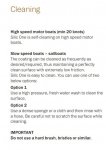
Edit - just seen that the guidance has changed regarding minimum speed for self cleaning - its now 20 knots...
 

Attachments
  • silic.JPG
    silic.JPG
    50 KB · Views: 9
Last edited:
These threads are a bit like an anchor thread, in that what works for some folks doesn’t work for others....
I‘ve got two boats: an AWB in Greece and a MAB in UK.
The AWB has Coppercoat, which has been on her since new: I renewed it at the 14 year point. Following the instructions it was an easy job to do, albeit tiring as the old coating needs rubbing back well to provide a good key for the new coats. The boat is moving every few days through the season and stays reasonably clean: jet wash at the end of the season is enough. We spent a winter in San Carles de La Rapita which is notorious for fouling. There was nothing on the bottom apart from a light covering of slime.
The MAB lives in a mooring in Mylor and has conventional antifoul, generally the cheapest the local chandlers has on offer. She gets 2 coats before launch. Most years this works fine, with little or no growth despite spending much of the summer unused. The downside is needing to repaint the hull every year. I did think about using CC on her a couple of winters back when we scraped the hull clean of old antifoul but the weather conditions were too uncertain.
Anyhow, never bothered doing the money calculation it’s the wash and go for the CC that works for me.
 
I have a bilge keeler on a drying mooring and I've tried most of the conventional antifouls and Coppercoat. Nothing works, though, to be fair, the CC instructions do say that it isn't suitable for sitting on the mud, and I only put it on because a mate was doing several boats and had just enough left over to do mine. I now scrub off maybe three times a year, at a cost of around a tenner a time, which does work. Another friend had CC in Chichester Marina and it did seem to work well there.
 
Seacoat Technology | Silicone Foul Release Bottom Paints

Have a look at this stuff. We had it on out workboats and it was pretty good unless the boat sat off charter then a quick pressure wash in dry dock and we were away again.
It’s a lot harder than the hempel product.

copper coat is great as you say as long as it’s applied properly, and your hull is dry enough, or you go to town with the epoxy under coats. It’s great advantage over a silicon system is it actually deters fouling! But nothing is impervious!
Who sells it in uk? I couldn't find anyone.
 
Thanks for the replies so far this makes for interesting reading.
I have a planing boat, single engine which after a being in the water for a few months with little movement due to lockdowns the performance was terrible and unable to get on the plane.
I asked the marina prior to washing the hull during lift out to take photographs of port starboard and aft this was after 8 months immersion but also to remember the uk had a very hot April as well as subsequent months which may have contributed to the slime.
The boat had 2 good coatings of Hempel anti foul in late March and was launched in May within the 3month time frame
Nothing unusual about what you are experiencing. Boats like yours do not like being left unused and any growth on the hull will kill performance. in my experience Copper Coat keeps cleaner than conventional antifoul. Rarely get weed on the waterline nor barnacles, just a light slime, even though the boat is in all year round. The fouling on the drive and prop needs looking at. Normal to coat the drive with Trilux which keeps most of the growth off and usually lasts a summer season. You can also try it on the prop, but it is difficult to get it to stick and suspect it might get washed off over time. I used to use it on my saildrive prop and it lasted fairly well, although I have now changed to Velox which is superb. You could use this on both the drive and prop, but it needs very careful preparation to get back to the original factory paint before applying the primer and top coats.
 
Hu Tranona - the drive was done in trilux 33 the props are less than 2 years old and have a coating on from volvo which previous lift out took 15min to clean each prop
Jon
 
Hi - So after having my boat lifted early Jan after being launched late May last year after 2 fresh coats of Anti foul and very little use which resulted in a build of slime and poor performance
I am thinking in 2022 of changing from anti foul to either Copper Coat or Silic One.
I know there has been a few discussions on Copper coat and from what I have seen on you tube Coppercoat has to be applied correctly or its not worth bothering with.
Silic one have have very little knowledge of.

So I am looking at something with little maintenance i.e anti foul after every 2 seasons.

So what is recommended ?

Jon
I have used all 3 systems on my motor boats, and each have benefits.
The difficulty with anti foul is the desire by most marine authorities to reduce copper salts leaching into the environment. You may have noticed that your anti foul dosen't last as long as it used to - this is because it has less copper salts in it! Its advantage is it's cheap. Commercial grade anti foul will still last 2 years but it is no longer legal for leisure boaters to buy it or apply it.
I had Cuprotect (similar to Copper coat) on a 37' semi displacement boat I owned 11 or 12 years ago. It was applied professionally - hull completely cleaned back to gel coat, then expoxy coat and finally Cuprotect, all inside a paint shop so clean and temperature controlled. It was excellent and probably very similar to Coppercoat in terms of performance, with no weed or barnacle/mussel etc adhesion, only slime. This was power washed off at the start of each season when it was lifted to change anodes. I sold the boat 3 years after application so I don't know its long term performance, but would have expected it to work for at least 7 or 8 years. I believe the manufacturers of this product exited the leisure boat market and concentrated on commercial, probably due to complaints by leisure boat owners about the product not adhering properly or working well. This is almost certainly due to inadequate preparation and a sub optimal application environment. I can't be certain of the cost, but probably £3,000 - £3,500.
My current boat (45' planing hull) had silicone fouling release applied 7 years ago and is still working. Fuel consumption improved by 7 % and maximum speed increased by 1.5 knots to 27.5 knots. Application technique is critical in terms of hull preparation, temperature, timing between coats, airless sprayers etc. It also has to be sprayed in an enclosed, tented environment as boat yards and spray shops in particular don't like silicone! The hull suffers from substantial soft fouling build up (it is fouling release not anti foul) over the winter months which makes a lift and hold for a powerwash essential. Without this the boat will only achieve 16 /17 knots.
I might sail between 40 and 100 hours per year, which is only just enouth to keep the hull clean. Light fouling - slime and weed is usually removed after travelling at 8 -10 knots. If you keep moving (at least perhaps 10 miles, once a week) the hull stays perfectly clean. This is the reason why the largest players like International Paints don't target the leisure boat sector - there would be too many complaints. The cost of this application was approximately £8,000.
 
I have used all 3 systems on my motor boats, and each have benefits.
The difficulty with anti foul is the desire by most marine authorities to reduce copper salts leaching into the environment. You may have noticed that your anti foul dosen't last as long as it used to - this is because it has less copper salts in it! Its advantage is it's cheap. Commercial grade anti foul will still last 2 years but it is no longer legal for leisure boaters to buy it or apply it.
I had Cuprotect (similar to Copper coat) on a 37' semi displacement boat I owned 11 or 12 years ago. It was applied professionally - hull completely cleaned back to gel coat, then expoxy coat and finally Cuprotect, all inside a paint shop so clean and temperature controlled. It was excellent and probably very similar to Coppercoat in terms of performance, with no weed or barnacle/mussel etc adhesion, only slime. This was power washed off at the start of each season when it was lifted to change anodes. I sold the boat 3 years after application so I don't know its long term performance, but would have expected it to work for at least 7 or 8 years. I believe the manufacturers of this product exited the leisure boat market and concentrated on commercial, probably due to complaints by leisure boat owners about the product not adhering properly or working well. This is almost certainly due to inadequate preparation and a sub optimal application environment. I can't be certain of the cost, but probably £3,000 - £3,500.
My current boat (45' planing hull) had silicone fouling release applied 7 years ago and is still working. Fuel consumption improved by 7 % and maximum speed increased by 1.5 knots to 27.5 knots. Application technique is critical in terms of hull preparation, temperature, timing between coats, airless sprayers etc. It also has to be sprayed in an enclosed, tented environment as boat yards and spray shops in particular don't like silicone! The hull suffers from substantial soft fouling build up (it is fouling release not anti foul) over the winter months which makes a lift and hold for a powerwash essential. Without this the boat will only achieve 16 /17 knots.
I might sail between 40 and 100 hours per year, which is only just enouth to keep the hull clean. Light fouling - slime and weed is usually removed after travelling at 8 -10 knots. If you keep moving (at least perhaps 10 miles, once a week) the hull stays perfectly clean. This is the reason why the largest players like International Paints don't target the leisure boat sector - there would be too many complaints. The cost of this application was approximately £8,000.

I applied Silic one on a sunny day in March without any problems. It certainly doesn't need a temperature or humidity controlled tent just a good weather forecast. Cost around £300 for materials for a 7 metre sports cruiser. For higher speed boats it does work well. I like the fact there is no reduction in speed over a season.
I recorded about a 5% reduction in fuel consumption and top speed increase of a knot.
 
Wow just wow many thanks for the replies there is something to be said about all the options it would appear that silic one is good for boats going over 6 knots so maybe ideally suited to a mobo - coppercoat as discussed earlier only good if and only if the prep work is done correctly and is suited to both sial and mobo (althougth Ive only seen youtube videos on sail boats with coppercoat )
so that brings me back to the good old anti foul - maybe I am getting ahead of myself because of my disappointment on performance due to slime and foul build up which would point towards the boat not moving as much due to lockdown anhd the hot weather - which previous years of ownership the boat has had the same anti foul regime without as much of the build up of slime/foul.

so far and until I can get to the boat the anti foul has not started to flake off - I do intend this year to apply 2 more coats (tier system/lockdown pending) and see how she performs then make an informed decision.
Many thanks so far
Jon
 
On my post engine repair sea trial in mid December I got her up to 14 knots which considering she was used for only ~ 40 miles last year and not at all since August was amazing (fresh in the water after treatment 18.5 knots). Most seasons my props foul by early August, preventing her getting on the plane at all, so I remain optimistic.

Certainly the hanging gardens of babylon are not present this year.
 
MoBo. Always afloat.Tidal river.
There can be very little that has not attached itself to the hull of my boats over the years.
Weed of all types,slime, weird coral growths, mussels and barncules both big and small.
All anti fouling paints applied, always appeared to last longest and be most effective, when my boats were moored on mud berths.
Here on the East coast, experience suggests that the water conditions appear to have more influence on just how long any anti foul remains effective, than the type of A/F applied
Lift at least once a year to change anodes and check stern gear,average 150 engine hours per year both winter and summer use.
Past three boats on all tide pontoons with speeds of up to 2-3 knots in both directions during springs.
One period when for nearly two seasons only a light covering of slime on the bottom , and another year when boat simply would not plane 2-3 months after lift out and A/F.
My present boat had been Coppercoated but the previous owner had overcoated it with conventional eroding antifoul.
Its still under there somewhere.
 
Sailing Yacht, prepared with CC, always on the move, sailed a decent number of miles, the owners were very pleased. not expecting to change to other AFs and hoping for a good few years.


I was lucky and notified I could have access to the yachts and went to have a look. Normally the yachts would be lifted in Sydney, being a rough half way point, but that year the lift was dispensed with (making detailed viewing of the hulls less convenient). I was able to look at some of the hulls, underwater, from the pontoon. I was able to take some underwater images. One of the yachts had had an encounter with something underwater and its rudder had been shipped and lying on the pontoon - it was 'as clean as a whistle'.

This all seems to indicate that if you have the correct substrate, apply correctly and use your yacht, ie sail it - it will stay clean.

Its, apparently, not a secret but application (and reading the instructions) is strongly recommended (but sometime ignored,' we know best' and 'we know how to apply resins' being a common failure mechanism).

Instead of soda blasting a recommended mechanism to clean the hull is this stuff:

STRIPPER FOR ANTI-FOULING | Peter G's Marine Products

About which I know no more than is detailed in the link.

I am, very, sorely tempted.

Jonathan
 
That stripper may, or may not work, but it is a tiresome and messy and you have to dispose of the mess it creates.

Blasting is the way to go, particularly if you have an iron keel to do as well. Still messy, but with proper sheeting and a careful operator the mess can be contained and disposed of safely. Big plus for blasting is that it is quick. I had my iron keel done last year and it took less than 2 hours from start to the first coat of epoxy. Less critical on lead keels or GRP like your cat. A skilled operator will adjust the blast to get the finish you want - just removing AF is lighter blast than preparing for osmosis treatment where blisters are present. However you may still uncover surface defects in the gel coat so may have to do some filling and fairing before coating. You stand a better chance of success where you are because of your better ambient conditions. Fortunately when I did my keel it was in the middle off a heat wave and perfect for both the epoxy and Coppercoat.

As you can see I am a fan, with my only reservation being the difficulty of getting it to stick to iron. Even though my original coating was done inside, in summer on a boat straight from the factory, rust patches appeared after only 2 years and by year 5 enough to need completely redoing. However the original coating was done after grinding off the factory protective coating rather than blasting. The hull and rudder are fine and the fouling minimal as others have reported. one thing you do have to watch is when the boat is lifted the slime under the strops needs to be washed off immediately as if it dries it is really hard to remove. Guess how I found that out!
 
In the grand scheme of things galvanising a keel would not be expensive, nor on most yachts (prior commissioning) would it be difficult. I don't know how yachts are commission for. say, the UK - but here they arrive with the keel on pallet.

I imagine for many yachts this will simply add a cost that the volume boat builder would cringe at - seeing volumes slipping due to the extra cost. But in view of Tranona's comments - maybe a thought.

Jonathan
 
Difficult to galvanise a keel of that size and weight - never seen it done. The keel comes from the factory with an epoxy coating which I am told works fine with conventional AF. You are right many boats come with the keel separate because of the air draft. However my 33 has a shallow (relatively) 1.5m keel so it was attached. Started build on a Monday, finished on Friday, documents emailed and faxed over on Monday, paid for on Tuesday and in Southampton the next Sunday. In the shed on Monday for Coppercoat and a couple of other jobs. As I said they ground off the coating and applied the recommended epoxy primer. Dirty horrible job - I watched them do some of it. In retrospect I should have insisted on blasting.
 
Here in the east coast mud, it is reckoned that copper coat is a wast of money. Where the boat sits in the mud each tide it gets plastered in a thin layer of mud preventing the copper coat doing a thing. The copper coat that is exposed around the water line and for about a foot down it works but that doesn't justify the expense of coating the whole hull.
Now if silicon prevented the mud from sticking that would be interesting, it is a devil to remove even when still wet. It is the hardest part of preparation for antifouling the hull.
 
Difficult to galvanise a keel of that size and weight - never seen it done. The keel comes from the factory with an epoxy coating which I am told works fine with conventional AF. You are right many boats come with the keel separate because of the air draft. However my 33 has a shallow (relatively) 1.5m keel so it was attached. Started build on a Monday, finished on Friday, documents emailed and faxed over on Monday, paid for on Tuesday and in Southampton the next Sunday. In the shed on Monday for Coppercoat and a couple of other jobs. As I said they ground off the coating and applied the recommended epoxy primer. Dirty horrible job - I watched them do some of it. In retrospect I should have insisted on blasting.

We would need someone from CC or ABS to quote but I think they supply CC to some yacht builders as 'original equipment' or as an owner option. If 'normally' you need to grind off the coating of the keel, to apply CC, it would be sensible to have the keel supplied, uncoated. Being cast it is going to rust, in between casting and installation (or near timing of installation). I'd guess the keel would need to have some surface cleaning - but galvanising seems a sensible option to explore - if there is a galvanised who can cope with the weight (they galvanise steel beams - I don't think size would be an issue.

We don't have many shallow draft here - our yachts are delivered (I assume as deck cargo) and then trucked to the point of commissioning. Cats are simply craned into the water - and motored - but they have beam as the constraint, not air draft.

Jonathan
 
The constraint on height is because the boats are transported by road and the issue is bridge clearance. Specialist transporters are used that get the keel as close to ground level as possible. Deep (2m+) keels are common so larger boats (40'+) may come without keels. The Bavaria factory is right in the middle of Europe, just about as far from the sea as you get, but they build boats up to 65' all od which leave by road.

Not aware of any production builder that offers CC as a factory option, although many small volume or custom builders do. Most boats are sold through dealers who arrange for the coating to be done by a local contractor. In my case I dealt with the contractor direct and the boat was delivered direct to them. I know several people who have successfully applied it themselves to existing boats. Two were done in our club last year. Some scrape the hull but others spend the money on blasting, particularly if they have an iron keel. It is popular where I live, perhaps because the manufacturer is located less than 30 minutes drive away - and the product is very effective in our local waters.
 
Top