Another antifoul question

sogood

Well-Known Member
Joined
26 Dec 2014
Messages
333
Location
Kerry, Ireland
Visit site
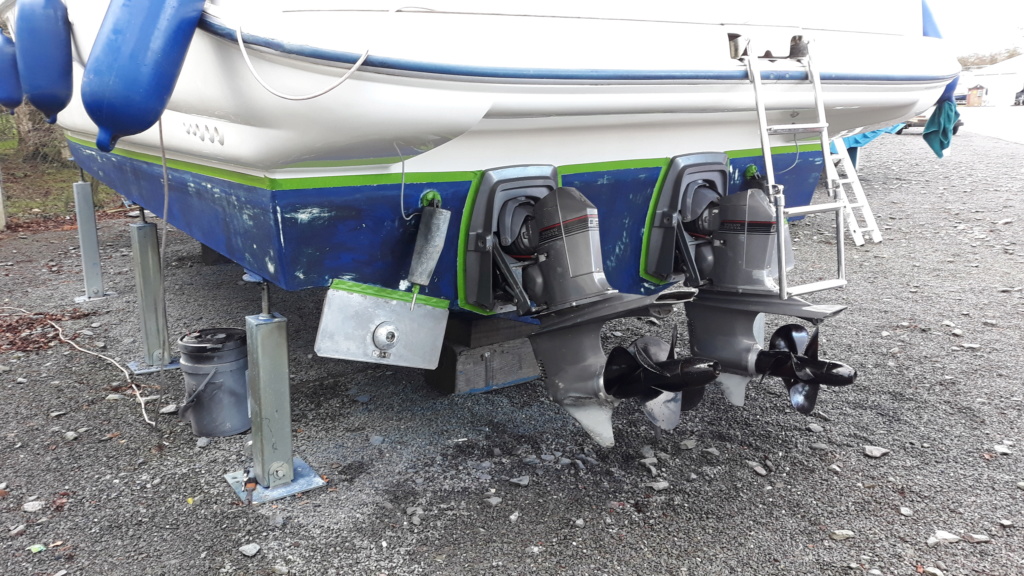
My recently acquired Sealine has been previously antifouled with the blue self eroding variety, which needs to be redone, as its showing a lot of patchiness etc.
I want to use a harder antifoul, such as Hempel Tiger extra (as I have lots of it!) with the appropriate primer.
So, do I have to remove all of the old antifoul, right back to clean gel coat, or would it be OK to clean it back, by wet sanding/ scrubbing and proceed from there? Any thoughts much appreciated.
 
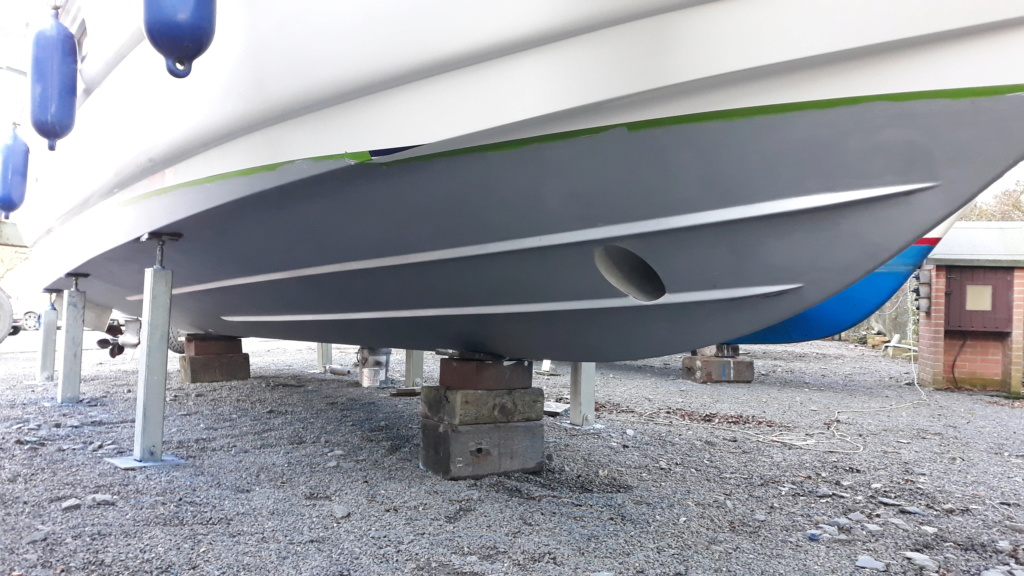
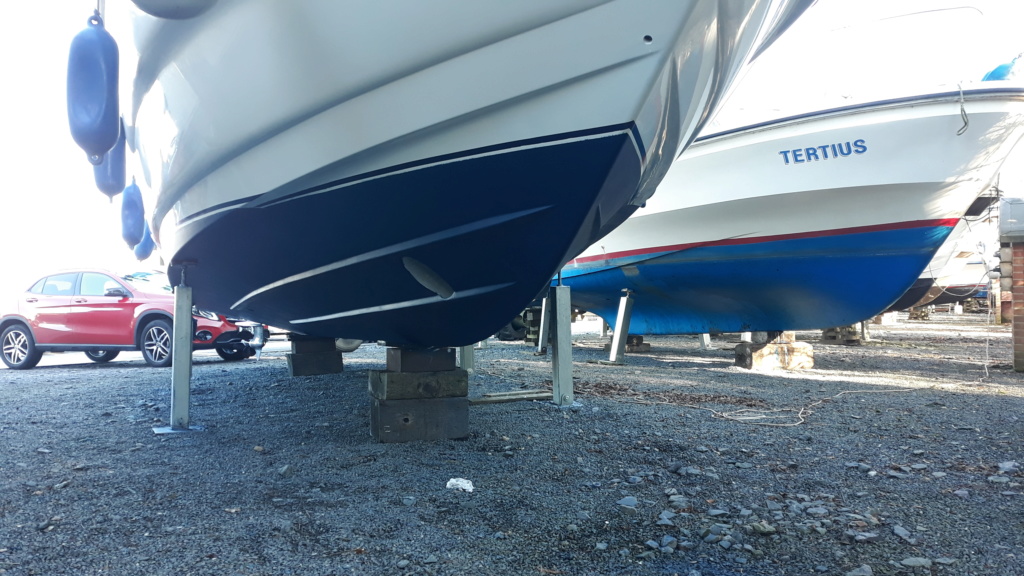
Not knowing what the previous antifoul was I used primer / barrier coat before applying the new antifoul.
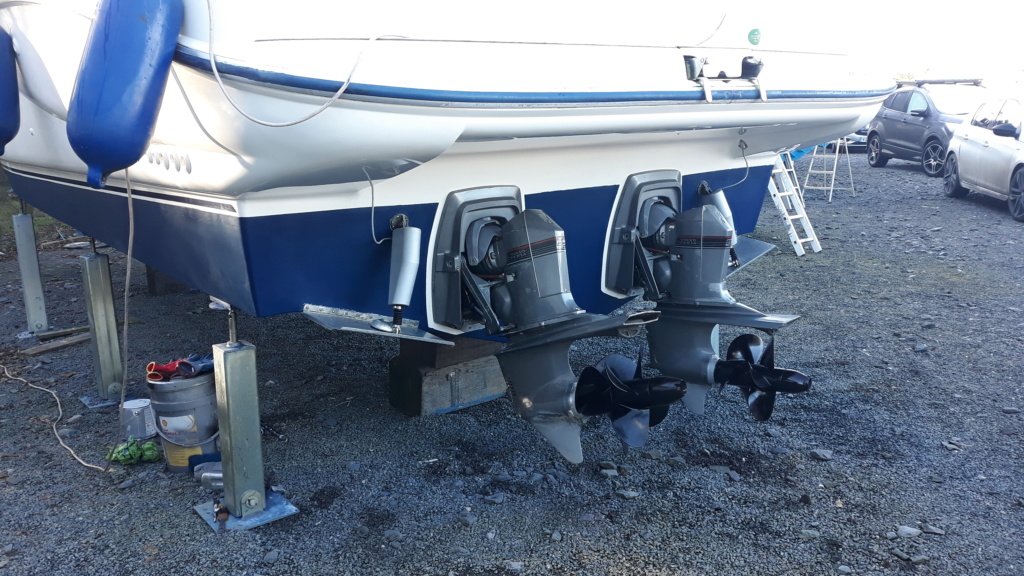
I first wet sanded (tried dry but it was very messy) enough to create an even surface and until the white GRP started to show through in places.
I had intended to use hard antifoul but people talked me out of it.
I used Seajet paint but not sure that's relevant .
Whether this will work remains to be seen as the boat had been nowhere since it was re-launched.


.

.

.
.
.
 
Thanks. I don't know exactly what the current antifoul is, but it looks just like yours in the first picture. Hopefully others will chime in. Nice job by the way.
 
Thanks. I don't know exactly what the current antifoul is, but it looks just like yours in the first picture. Hopefully others will chime in. Nice job by the way.
I don't think you can tell what the existing antifoul is unless you have a written evidence.
The preparation for the antifouling was by far the hardest part.
 
Unfortunately I have no idea as to the specific type of the current AF. I imagine if I remove the surface off it, then I should be good to apply my primer. I appreciate that there's not much point in applying anything on top of an active self eroding paint.
 
My approach was to abrade every square inch to make a key for the primer.
Not sure it matters if the old antifoul has active ingredients or not. The seajet primer I used is made specifically for painting over old antifoul.
 
Unfortunately I have no idea as to the specific type of the current AF. I imagine if I remove the surface off it, then I should be good to apply my primer. I appreciate that there's not much point in applying anything on top of an active self eroding paint.
You should find advice about preparation , and priming if required , on the new antifouling manufacturer's website.

If you are going to use Tiger Xtra see Hempel"s Paint Manual, in particular page 20 which tells you about the preparation ad priming of a soft anti-foul before priming and antifouling with an erodible or hard anti-foul.
https://www.hempel.co.uk/~/media/Global/files/yacht/brochures/2017/PM-UK-2017_final.pdf

Follow the advice of the paint manufacturer referring also to the data sheets for the particular products you choose

I have no idea what sort of boat a Sealine is but note that Tiger Xtra is an erodible anti-foul which may be suitable for a displacement cruiser but maybe not for a high speed craft for which a hard ant-foul might be a better choice

Remember that anti foul often has a maximum time between application and immersion, as well as a minimum. See the data sheet for these times. It probably will not be worth while applying new ant foul this year. There is no way the current travel restrictions will be lifted until a vaccine has been developed and tested and the majority of the population vaccinated
 
Last edited:
I have no idea what sort of boat a Sealine is but note that Tiger Xtra is an erodible anti-foul which may be suitable for a displacement cruiser but maybe not for a high speed craft for which a hard ant-foul might be a better choice

A Sealine will be a planing hull cruiser and depending on the model capable of around 30 knots .
I expect most people don't exceed 25 knots.
Eroding antifoul is a wise choice if river based , which many boats are even though designed as a sea boat.
Eroding antifoul can be okay up to 30 or 40 knots depending on the makers data sheet.
 
Thanks all. The boat in question is a Sealine 218 powered by a volvo ad31, rated at 130hp. Cruising speed would be about 30 knots. I'm saltwater based and the immersion time is within 6 months or more, of application.
Its currently on the hard at my home, about 3km from my local harbour, where I have my mooring. No problems/restrictions regarding access or launching, so the current covid situation won't impact me too much. I'm fact I hope to do lots of social distancing on the bay. Work has gone pear shaped (I drive tour coaches) so I'll have plenty of time to kill. I'll look into the manufacturers website for more details. Thanks again for the responses.
 
F.w.i.w. I have been painting over the top of previous years eroding antifoul for years... almost always different types... I don't bother abrading, I may consider it in the next year or two as it's a bit lumpy in places... I just make sure any loose product is removed, it's pressure washed already from end previous season so I know it's clean, and just slap two coats of the latest jollop on... to be fair, it's a small old sail boat so not as important to get a smooth surface... but there'll be plenty of other opinions along I'm sure.. as we've all got plenty of spare time on our hands.. :D

PS. Don't apply any paint before checking the makers guidelines on how long it will last out of water... that varies between weeks and months depending on make...
 
The primer/barrier coat should go straight onto the underlying AF, whether it is or was hard or an ablative. it will only require sanding if it is 'rough' or flaky. Given you have the time - I'd sand it back - but its an awful task.

I have to wonder why do you have an excess of Hempel Tiger? Just curious.

Most of the AF companies do a range of AF to suit different hull speeds - sometimes under the same name. We use a Jotun commercial product Sea Quantum which comes in 4 grades, for vessels stationary, low speed vessels, tugs and the like, medium speed (which we use) and a high speed version. They are all ablative - if used at the appropriate speeds.

So - if you use an ablative designed for yachts my guess is you will remove the coating fairly promptly at the speeds you suggest.

Be generous with the coatings - if your are bit parsimonious and eke out the paint - it will not last long.

Jonathan

I did a long term test of 10 different AF some years back for Practical Sailor in America (which is why we use Jotun's Sea Quantum (it and Hempel's Globic were the best). I don't recall which but 2 of the paints did react with each other - so use primer (its cheaper than making a mistake). Sea Quantum and Globic are both meant to be professional use only and Europe is very keen that amateurs don't have access.

On yachts the leading edges and waterline tend to wear fastest. Before you start sanding check where the current AF is thin and if you judge the thinning is due to 'wear' then make sure you give those areas an extra coat, or 2 - or you will see the same patines in the future.
 
Last edited:
Top