Anchoring - Tandem vs V

zoidberg

Well-Known Member
Joined
12 Nov 2016
Messages
6,946
Visit site
Must confess - I'm an anchoring geek. I've dragged a few times over the years, but not recently. Oh yes, I've served my time, but I'm always interested in others' perspectives.

Reading the latest edition of 'Heavy Weather Sailing' I note a firm enthusiasm for In-Line Tandem Anchoring. Reading stuff here, and in 'Practical Sailor' Magazine, I note the direct opposite. 'HWS's Dave Rideout and 'PS's Thinwater/Drew Frye are - it seems - diametrically opposed. ( Tandem Anchoring - Practical Sailor )

Heavy weather expert Skip Novak is adamant that one very heavy anchor, on long scope, with lots of very heavy chain .... is the answer to very heavy wind on a very heavy boat.

I try to translate that, as we all do, into the places I/we are likely to find ourselves in e.g. Helston River in an Easterly blow..... New Grimsby Sound in a shifted NW gale.... Oban Bay when a SW'ly blow becomes a NW'ly storm.
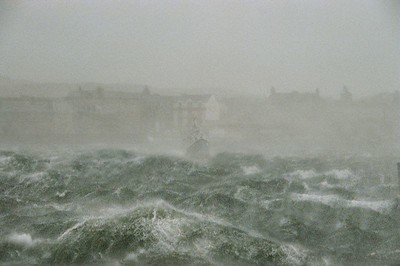

52592916755_dbb9aa611d_w.jpg


Earlier this year, numerous cruising boats prepared for a forecast 'blow' in the Isles of Scilly. Many became seriously unstuck.

Now, I happen to have TWO Fortress Fx-16s plus a Spade 80 - all larger than recommended for my 3500kg long-keeler - plus appropriate excessive rodes. So far, I'd think I could accommodate most circumstances, given some time to prep my arrangements.

What do you think?
 
Most, all, anchor tests are based on a straight line pull, usually or almost exclusively, in same direction in which the anchor was set. If you simulate this, or part of this, with a small anchor and then redirect the tension, say through 30 degrees - maybe like a veering yacht, then the anchor tends to capsize or actually capsizes, and can lose its hold - it drags. If you introduce a bit of chop you will, particularly if at poor scope, reduce the hold of you anchor simply because the tension is in the set direction but the anchor is being continuously lifted and the shank simply acts like a big lever.

If you touch your anchor, dive on it, in a bit of chop or when your yacht is veering then you will find it 'twitches', twitching will liquify the seabed in immediate proximity to the fluke (again it lowers hold).

All of these factors can contribute to an anchor dragging - minimise these effects - and your anchor is less likely to drag.

Skip Novak is right, long, heavy chain minimises these negative effects --

But sometime we don't have lots of heavy chain, we don't have room to deploy all the chain we have (because we arrived late, the anchorage full, as the 'lots of heavy chain' destroyed our sailing performance. ) :).


I recall the Yacht master examination:

Its blowing 30 knots how much chain do you deploy?

answer; Xm

The wind increases to 40 knots how much chain do you deploy

answer Xm + Ym

The wind increases to 50 knots.....

answer Xm + Ym + Zm

Where precisely are you getting all this chain?

From the same place you are getting all this wind..... :)

Lots of heavy chain is one answer, but it is not entirely appropriate to all yachts in all circumstances.

It depends.

Many yachts in the Scilly Islands, see link to article below, listened to the forecast, considered their options, retrieved their anchor(s) and went somewhere where there was more shelter and less wind - they did not suffer. Forecast strong wind events usually offer much notice and are sufficiently accurate on which to base a sensible decision. Maybe someone who followed, and advocates, that action might comment.

Anchoring is being in the right place and being proactive.

This is not always an appropriate policy

It depends.

Yachts veer because of some characteristic of the yacht, take the windage off the bow (the dinghy, furled sail) and you will reduce veering.

Reduce the weight in the ends, that unused anchor chain, that big (unnecessarily big) outboard on the transom and you will reduce the seesaw hobby horsing lifting of the anchor shank.

Anchor in a 'V' or use a bridle and you will reduce veering.

Add elasticity to your rode, nylon, and you will reduce snatch loads and have less need to carry and deploy lots of, heavy, chain.

Carry, and use, shore lines - they are not only for Patagonia.

Those red bags, like a spinnaker turtle, are shore lines
IMGP5637.jpeg

The laundry basket, full of shore lines and this yacht had more shore lines in sacks at the mast.
IMG_6372.jpeg


IMG_6368 2.jpeg

There are many ways to skin a rabbit - but few master even one way - old skills are being lost. There are many 'ways' to anchor - not restricted to heavy chain nor anchoring in a 'V' or 'Fork'.

There was a forecast storm outside this anchorage, bullets were working their way down the ravines and between the trees. The bullets had sufficient impact to break a swivel. Josepheline has deployed 2 anchors of the bow and has one shoreline and Blaze has one anchor and 2 shore lines. If anyone had arrived seeking shelter our immobility meant there was room for more. Location, Refuge Cove, Wilsons Prom, Bass Strait)

Tasmania On route 08 118.jpeg

Think outside the box.

Thinwater, and maybe Noelex (who has a marvellous underwater image) will be along soon and describe why tandem anchors do not work (and as they are unsuccessful - why a 'V' is a better option).

Some of these links may be behind a paywall - (which pays for the testing)

Deep Anchors Stay Put in Moderate Yawing - Practical Sailor

Yawing and Anchor Holding - Practical Sailor

Tandem Anchoring - Practical Sailor

Lateral Thinking & Anchoring - Practical Sailor

Storm tactics at anchor: Surviving gales in Scilly - Yachting Monthly

Safety at Sea: Surviving a Powerful Storm in the Med

This last article is educational, it tells you what went wrong - and some of the kit that failed came from reputable suppliers.

Jonathan
 
Last edited:
I don't fancy a long thread debate. I will say this:
  1. Most, more than 99% of the time in most places, a single good anchor is the best solution. Simple, reliable, tangle free, and ... how most anchors were designed to be used. Although I have tested tandem rigs many times for many reasons, I can only think of a few where it was probably needed (anchored in pudding where one anchor, even of good size, would not withstand a storm load, and several times anchored over hard pan while diving and a single anchor would not hold still.) But not in several years. It is a very unusual need.
  2. In-line tandems and V-tandems have their place, but they are very different in function, and each makes sense in a different setting. They are not alternatives for the same situation. As a rule, they are ONLY for situations where (1) will not work. For example, in-line tandems can make sense for bottoms such as shingle or hard pan where an anchor cannot bury. All you have is friction and hooking, and more friction and more hooks are helpfull. V-tandems can make sense in very soft bottoms, in situations where swing room is greatly limited (canals), or where reset is uncertain due to bottom conditions and the tide or wind shift will be very strong. That said, the better solution in ALL of these cases, particularly if a storm is coming, is to move to a better location with better holding.
  3. There are also situations definitely not to use twin anchors. If the anchors can bury in the bottom an in-line tandem will actually reduce holding. Yup, I've tested this many times. It prevents them from setting properly and unseats them when the wind shifts. A V-tandem can be a problem in crowded harbors, because it affects swing and because if someone up wind drags it greatly increases the chance rodes will foul. In these cases you really need to go back to (1).
As for all of the complications related to rigging and tales of tangles, like flying a chute, this is just a matter of practice. I have set a V-twin many dozens of times, and once learning the proper methods, neither setting nor recovery added more than a few minutes to the routine. I learned a lot of short cuts and safety measures. (I set the twin to stabilize the boat while test pulling anchors over a variety of bottoms, some very soft.)

I will also say that you need to practice these methods in fair and then in breezy conditions to master setting and recovery methods before you need to use them in a blow. More rigging complicates things, particularly if mistakes are made, and there are a fair few possibilities. Without practice you will likely only make things worse.

Have fun! :)[popcorn]
 
Unrelated,a friend on his Tahitian carried a massive fisherman anchour made from three parts which was carried in the bilge he copies it from a drawing in one of Dixon Kemps yachting manuals,good last resort or if you had to leave the boat unattended
 
Noelex is an infrequent visitor.

Not wanting to steal his thunder this is what he said previously and backed it up with images. If an image is worth a thousand words - I wish I had more images to my name.

Adding a second anchor to the main anchor.

Post 4

Make of it what you like.

I like a 'v' or 'fork' - its does what it says on the box, manages yawing.

Jonathan
 
I have some experience in anchoring, and not always in calm placid conditions. Normally we anchor with a single, fairly heavy (20 kg, or equivalent, on an 11m boat), type selected to suit the seabed, using an all chain rode. We carry three main anchors, all of different types.
Occasionally, we will lay out a second anchor, hopefully at about 30°. This one will have a short length of heavy chain, with the rest often stretchy climbing rope. This Vee form works well for us, partly just in terms of reassurance. (A major problem in anchoring in strong winds, is that you know that you're anchored, and not moving, but you don't know how much more grip you have in reserve). You only find out how good a grip you've had, when you try to retrieve the anchor.
A lot of boats sheer about at anchor, some quite excessively, and in strong winds where all the chain is clear of the seabed, this means that the pull on the anchor varies in direction, tending to loosen its grip. Two anchors in a Vee, means that while the actual load on each anchor will vary, as the boat swings from side to side, the angle of pull on each anchor will remain constant.
There are ways for reducing the amount of veering, yawing, swinging about, that a boat will do, but that's a whole new subject, and not relevant here.
When laying out a second anchor in a Vee, it might be done using the dinghy, but more often in our case, by motoring ahead and out to the side, to drop the anchor. In all cases we will fit a buoyed tripping line to the second anchor. This is partly so that we can see where it is, particularly useful in a veering wind, but essentially, so that we can if necessary, slip it, and concentrate on retrieving the main anchor, before returning to pick up the second.
To get back to the original question, I have no experience in anchoring with two anchors in tandem. I cannot see any sense in it. The load can only be shared between the two anchors, if one or both are dragging. The problems of retrieval are fraught. What distance apart would you attach the anchors in relation to the depth of water?

In an earlier post, thinwater talks about a "V-tandem". Well, that's a new one to me. Any tandem that I've ever seen, had two wheels, one directly in front of the other. My understanding of anchoring with two anchors in tandem, means just that - one anchor in front of the other, on a single rode. There may be a difference in the use of terminology here, but it confuses me. So what's a V-tandem? A tricycle?
 
In an earlier post, thinwater talks about a "V-tandem". Well, that's a new one to me. Any tandem that I've ever seen, had two wheels, one directly in front of the other. My understanding of anchoring with two anchors in tandem, means just that - one anchor in front of the other, on a single rode. There may be a difference in the use of terminology here, but it confuses me. So what's a V-tandem? A tricycle?

Beware - there may be a paywall

But its in here

Tandem Anchoring - Practical Sailor

Toward the end of the article there are some drawings of the different rigging used in various 'tandem' arrangements

Jonathan

PS You do not have 'some' experience in anchoring - you have a lot, no need for modesty

:)

Jonathan
 
Beware - there may be a paywall

But its in here

Tandem Anchoring - Practical Sailor

Toward the end of the article there are some drawings of the different rigging used in various 'tandem' arrangements

Jonathan

PS You do not have 'some' experience in anchoring - you have a lot, no need for modesty

:)

Jonathan
Thanks for that. Yes, I've had a quick skim through it, and it does refer to V-tandem, but I still don't see what the word "tandem" contributes to a Vee, but that's the US of A.
 
In the vast majority of anchoring situations we rely on our Rocna, sized according to its recommendation, chain and a snubber. In gusting winds yawing can be annoying and tiring, and may contribute to dragging. Where this is likely to continue for some time we deploy our Fortress in a V, which halves the yaw angle making life aboard considerably more comfortable. Article and a video here Fork mooring
 
Thanks for that. Yes, I've had a quick skim through it, and it does refer to V-tandem, but I still don't see what the word "tandem" contributes to a Vee, but that's the US of A.

My understanding of tandem anchoring was the same as, or similar, to yours - 2 anchors one behind the other on one rode, or one continuous length of rode (commonly or exclusively) chain. Noelex' pictures show the down side the other being how do you deploy, later retrieve. A 'V' or 'fork' is so much easier (and the disadvantage of the 2 rodes tangleing is reduced on a cat - as you deploy one rode off the centre line (where the bow roller is located) and one rode of an actual bow - which in our case allows a 3m separation.

Jonathan

PS - you drove me to look it up - and, as usual, you are correct.

Tandem refers to an arrangement of one behind the other. :)
 
Having haunted these pages for a 'wheen o' years' and lain to anchor here and there over 50-odd years, I'd come to a conclusion similar to that indicated by NormanS and Vyv Cox in #7 and #11..... Drew Frye in #3..... and more than a few others. I was more than a little surprised by the contrary emphasis in Edition 8 of 'Heavy Weather Sailing' - and that's why I raised the issue here.

I'm also aware of the helpful perspectives in the work published by Professor Alain Fraisse, including info that - in big wind - one's anchor rode is likely to have negligible catenary and be subject to big snatch loads by pitching. So, I've bought into Jon Neeves' enthusiasm for one or more lo-o-ong nylon snubbers.

It's many years since I identified that the weight some folks carry about in the bilge as 'angel' or 'chum' is better off converted into extra chain that can be deployed if urgently needed.

Storm Evert produced a very busy night, trashing multiple anchored and moored boats in the Isles of Scilly and elsewhere, and Ken Endean's excellent article for YM covers the lessons well. A good friend, cruising there with his lady, made the uncommonly prudent decision ( for him ) to head off early to the east, and tucked himself right up the top of the Truro River on the lee side of a nearly-new pontoon outside the Heron Inn at Malpas. Now that is a style of seamanship I firmly endorse! :cool:
 
I imagine this depends a lot on where anchoring. If in remote Patagonia then V anchors and shore ropes are probably the way to go. Add a tandem anchor as well, as should be carrying at least 5 anchors down there and no use in the locker.

But in crowded English South coast or Mediterranean waters, there is likely to be limited space amongst all the other boats. One boat setting twin anchors in a V is simply likely to get hit by their neighbour when the wind swings. And good luck setting a linear tandem anchor …. or worse trying to lift both mid storm when your neighbour drifts down onto you.

As Neeves said in post #2, things like the Isles of a Scilly storm were very well forecast and the best anchor was undoubtably a pontoon in Falmouth. Staying in a busy place with a storm forecast is always hostage to fortune, as no matter how good your own gear / expertise, the damage is often done by boats interacting with each other.

Just like a question at a recent CA webinar - Q - What is the best anchorage in a severe storm in the Outer Hebrides? A - Mallaig Harbour.
PS. For those who don’t know the Scottish West coast, Mallaig is a well sheltered (except from the N) and scenic harbour on the Scottish mainland.
 
We are currently anchored in Green island, Antigua. We are behind a reef so we don't get any waves. We just get chop from the 200 metres or so of open water and the odd bit of swell that makes it over the reef. In the last few nights we have had squalls to 44/45 kts on three occasions. We sit on a Spade anchor at 4:1 scope of a size recommended by the manufacturer with a 12 metre snubber and we don't move. The holding is good once set. I could add more scope but experience has told us that in this location we really don't need to. We have sat out a 55kts squall at 5:1 scope here in the past. The anchor just digs in deeper.
If we were in a more exposed location we would set a pair of anchors in a Vee. We have found that setting the second anchor on all nylon rode at about 8:1 and ensuring that it shares the load with the anchor set to chain, it's very effective. We carry 100 metres of 18mm nylon for this task. The secret for us seems to be the two different rode types. I can see the argument that two anchors laid to chain would not share the load so well. You would load up one or the other most of the time. The huge stretch in the nylon in our set up ensures we have more evenly loaded anchors. I was taught this method by a friend who used to sit out hurricanes in the Bahamas. A guy with a huge amount of heavy weather anchoring experience.
 
I imagine this depends a lot on where anchoring. If in remote Patagonia then V anchors and shore ropes are probably the way to go. Add a tandem anchor as well, as should be carrying at least 5 anchors down there and no use in the locker.

But in crowded English South coast or Mediterranean waters, there is likely to be limited space amongst all the other boats. One boat setting twin anchors in a V is simply likely to get hit by their neighbour when the wind swings. And good luck setting a linear tandem anchor …. or worse trying to lift both mid storm when your neighbour drifts down onto you.

As Neeves said in post #2, things like the Isles of a Scilly storm were very well forecast and the best anchor was undoubtably a pontoon in Falmouth. Staying in a busy place with a storm forecast is always hostage to fortune, as no matter how good your own gear / expertise, the damage is often done by boats interacting with each other.

Just like a question at a recent CA webinar - Q - What is the best anchorage in a severe storm in the Outer Hebrides? A - Mallaig Harbour.
PS. For those who don’t know the Scottish West coast, Mallaig is a well sheltered (except from the N) and scenic harbour on the Scottish mainland.
I have absolutely no experience of crowded English South Coast, and fairly limited experience of anchoring in the Med, having done most of my sailing in the relatively uncrowded waters of the West Coast of Scotland and the Isles.
Having clawed out of Mallaig, many years ago, in an old "Straight 8", when an unexpected NWly gale caught us out early one morning, I have a rather jaundiced view of Mallaig in bad weather.
With the exceptions of Stornoway and Lochboisdale, I avoid pontoons in bad weather, preferring to anchor in one of the many sheltered anchorages with which we are blessed. There are now more and more pontoons in Scottish waters, but some are by no means safe or comfortable in all wind directions.
I have occasionally anchored with lines ashore, but always prefer to make the lines fast to the anchor chain, ensuring that the join is well below keel level. This ensures that although the boat is moored, it will still lie head to wind.
 
I imagine this depends a lot on where anchoring. If in remote Patagonia then V anchors and shore ropes are probably the way to go. Add a tandem anchor as well, as should be carrying at least 5 anchors down there and no use in the locker.

But in crowded English South coast or Mediterranean waters, there is likely to be limited space amongst all the other boats. One boat setting twin anchors in a V is simply likely to get hit by their neighbour when the wind swings. And good luck setting a linear tandem anchor …. or worse trying to lift both mid storm when your neighbour drifts down onto you.

As Neeves said in post #2, things like the Isles of a Scilly storm were very well forecast and the best anchor was undoubtably a pontoon in Falmouth. Staying in a busy place with a storm forecast is always hostage to fortune, as no matter how good your own gear / expertise, the damage is often done by boats interacting with each other.

Just like a question at a recent CA webinar - Q - What is the best anchorage in a severe storm in the Outer Hebrides? A - Mallaig Harbour.
PS. For those who don’t know the Scottish West coast, Mallaig is a well sheltered (except from the N) and scenic harbour on the Scottish mainland.
There are thousands of uncrowded anchorages in the Mediterranean. All of my fork mooring experience, maybe 5 - 8 per year, has been in the Med
 
st or Mediterranean waters,
There are also more weather related matters. WRT the Atlantic, in the Mediterranean strong/violent weather may be well forecast (say Mistral or Bora), but many times it is not, violent convective episodes can develop in a matter of hours. Last Summer Corsica MCS caused huge destruction and took 99% of people by surprise, several tens of boats were sunk or stranded ashore. Smaller thunderstorms like Neveras in Croatia may quickly develop (usually in the middle of the night), wind from 0 to 40/50+kt in a matter of seconds then back to zero maybe half an hour later.
So, should one believe in tandem anchoring, either he uses it all the times when anchoring even in the clearest and windless day, or he will have to trust his single anchor as when such rapid phenomena arrive there is no time to do any weighing lifting dropping tandeming V-ing or changing anything.
 
There are also more weather related matters. WRT the Atlantic, in the Mediterranean strong/violent weather may be well forecast (say Mistral or Bora), but many times it is not, violent convective episodes can develop in a matter of hours. Last Summer Corsica MCS caused huge destruction and took 99% of people by surprise, several tens of boats were sunk or stranded ashore. Smaller thunderstorms like Neveras in Croatia may quickly develop (usually in the middle of the night), wind from 0 to 40/50+kt in a matter of seconds then back to zero maybe half an hour later.
So, should one believe in tandem anchoring, either he uses it all the times when anchoring even in the clearest and windless day, or he will have to trust his single anchor as when such rapid phenomena arrive there is no time to do any weighing lifting dropping tandeming V-ing or changing anything.
You don't need tandem anchoring routinely in my opinion unless you have no engine. My pal sailed for 20 years with no engine but he deployed two anchors as an insurance policy.
From what I saw of recent events in Corsica, even moorings were dragging. Its more luck than judgement in those conditions. It doesn't matter if you have the biggest storm anchor possible if somebody drags in to you and sinks your boat
 
Top