Anchor dragging...

Interesting (though JD's question might provide the answer).

I have had two threads, 'Dragging of Anchors' and more recently an update imaginatively called 'Dragging of anchors 2'

In both threads no-one admitted to or described their 'modern' anchor dragging - except because it was caught in a Supermarket trolley, crab pot or tin can and surely you know when you catch a supermarket trolley and re-anchor. Now I was surprised that no-one had dragged their anchor, at all, and this thread suggests 'slightly' differently.

If modern anchors are so reliable surely there is less need for an anchor alarm :). In fact are anchor alarms not a bit like life rafts - jolly useful if you need one, but no-one actually needs one :)

I appreciate the concept that an anchor alarm is free, its accurate so why not use it - but surely after a few nights at anchor when the alarm does not sound and then 100 further nights when the alarm does not sound - you get used to it not alarming you and its value of giving you a good night's sleep slowly, or rapidly diminishes.

Jonathan

In over 50 years of coastal cruising, where the only means of staying put over night is anchoring, I have never used an anchor alarm, but then I use a tried and tested design of anchor, and what some light weight boat people, would call, heavy chain. ?
 
In over 50 years of coastal cruising, where the only means of staying put over night is anchoring, I have never used an anchor alarm, but then I use a tried and tested design of anchor, and what some light weight boat people, would call, heavy chain. ?


I suppose that after 50 years of coastal cruising you might also know what you are doing :)

So don't underestimate skill, or knowledge.

Some lightweight boat people would NOT call your chain 'heavy' but 'very heavy'. Heavy chain for heavy boats, lighter chain for lighter boats. Horses for courses or appropriate equipment for the design of the yacht.

Jonathan
 
Last edited:
....

NormanS: No big waves, that's why I choose the spot. 1-1,5m at the most. I will see what comes up with the anchor. Maybe I really caught something.
.....
1 metre waves are pretty big in terms of the amount your 5m, 20mm polyester snubber is going to stretch.
Frankly, in a 35knot wind forecast, you need to find some proper shelter.
But a very long nylon rode would absorb more wave movement and reduce the peak loads on the anchor.
 
Regarding scope, this just out by the wonderful SV Panope >

Which actually tallies up closely with this graph after adjusting for imperial & chain not in water. 9.2m depth is about 3.5:1 scope

H6Gmg62.png


Y axis scope, x axis depth to roller , force horizontal to just lift the last link off the sea bed,
Equal force scope

Also, the energy of a moving boat is proportional to the velocity squared, so twice as fast, 4 times the energy you need to get somewhere else to stop the boat. E=1/2MV²
Try to keep the boat speed down when veering around in the gusts is a very good thing :cool:
 
1 metre waves are pretty big in terms of the amount your 5m, 20mm polyester snubber is going to stretch.
Frankly, in a 35knot wind forecast, you need to find some proper shelter.
But a very long nylon rode would absorb more wave movement and reduce the peak loads on the anchor.

I get it. It wasn't the best spot after all. I got the anchor back now, nothing on it, had to free it first though, motoring around in a circle. I will attribute this mishap to bad choice of place, too much fetch, high and steep waves and the snatch loads that came with it, too much windage on the boat, wrong snubber material and insufficient length, and being in too shallow water, counteracting the catenary effect. All easily fixed and avoided next time. Some lessons learnt. Thanks for all the valuable input everyone.

Enjoy the west coast of Corsica in the Mistrale...

I bet that can be pretty nasty. I'm staying east of Corsica for now.

Regarding scope, this just out by the wonderful SV Panope >

Which actually tallies up closely with this graph after adjusting for imperial & chain not in water. 9.2m depth is about 3.5:1 scope

H6Gmg62.png


Y axis scope, x axis depth to roller , force horizontal to just lift the last link off the sea bed,
Equal force scope

Also, the energy of a moving boat is proportional to the velocity squared, so twice as fast, 4 times the energy you need to get somewhere else to stop the boat. E=1/2MV²
Try to keep the boat speed down when veering around in the gusts is a very good thing :cool:

Good idea to get a riding sail.
 
That was an interesting experiment by Panope, but I strongly dispute the measurements of distance moved.are we really supposed to believe that a force of 1000lbs doesn't cause the tree to bend? If you want to measure the extension in length taken up by catenary, you need to have two immoveable attachment points, not a tree and a truck.
The angles, however, were probably realistic, but the length measurements, - not at all convincing.
 
@Neeves

Interesting thoughts on the reverse catenary of the chain , the increasingly upward angle of the shackle and the consequent increasing force applied to the anchor trying to rotate it upwards and hence defeating its ability / tendency to dive or even travel subsurface horizontally!
In your intertidal tests at what sorts of depths in various substrates have you found that a well set anchor can dive to? Lets say a 25kg anchor, what is a 'good' depth? It appears to me the question is how do we get it there and still maintain a straight line on the rode between the end of the shank and the bow roller, accepting that that line needs to be at as low an angle to the seabed as feasible.
 
@Neeves

Interesting thoughts on the reverse catenary of the chain , the increasingly upward angle of the shackle and the consequent increasing force applied to the anchor trying to rotate it upwards and hence defeating its ability / tendency to dive or even travel subsurface horizontally!
In your intertidal tests at what sorts of depths in various substrates have you found that a well set anchor can dive to? Lets say a 25kg anchor, what is a 'good' depth? It appears to me the question is how do we get it there and still maintain a straight line on the rode between the end of the shank and the bow roller, accepting that that line needs to be at as low an angle to the seabed as feasible.

When most modern anchors set the shackle end of the shank bury roughly simultaneously and as the anchor buries the shackle (and some chain) buries together. As the anchor progressively buries the anchor rotates slowly and the shackle buries less quickly than the toe. Even if the rode is horizontal at the seabed immediately in front of the anchor the shackle angle will slowly increase.

If you want to minimise the effect then you could use a bigger anchor - but then the shackle angle stays near horizontal because it is not buried so deeply - and to me this is a poor outcome. A shallow set anchor has more shank (and fluke) exposed and if the wind veers you have a bigger lever arm tugging the anchor sideways and the vertical effect of the buried shank is less able to resist sideways forces. You also have less chain buried and buried chain resists movement of the rode imposed by the yacht.

Eventually the anchor dives sufficiently deeply it travels through the seabed, with the fluke at approximately 10 degrees to the horizontal - it has reached ultimate hold or it has reached its holding capacity. Most anchors address the seabed with the fluke at 30 degrees and it would normally dive to about shank depth (so the lowest part of the fluke will be as deep as the shank is long) before it reaches ultimate (in sand). If the fluke/seabed angle is not 30 degrees, like a Mantus -at 16 degrees the anchor will drag much more quickly. (Note on ultimate depth of diving - there is a crude relationship for most anchors between size and shank length). The actual depth to which your anchor dives depends on tension (windage) and seabed shear strength (in mud the anchor will be much, much deeper).

The only way of improving nature (or science) is to reduce the size of the rode, the shackle, the swivel and the chain. The chain is usually fixed - its expensive to down size chain (and gypsy) but you might be able to use a smaller shackle (a Crosby G209 a instead of the more commonly available shackle) and you can certainly get rid of the swivel.

However the ultimate lesson is that modern anchors are much less influenced by scope (the ratio). The reason they have higher hold than older designs is because they continue to develop hold even though the shackle angle increases. Instead of losing sleep over scope - change the shackle and get rid of the swivel (use a boomerang - make one at home yourself from 2205 duplex (you can make one in a couple of hours).

None of this is original thought. Danforth used to sell one or some of their products with a wire strop 'permenantly' swaged on - for this very reason. Oil rigs use wire rodes or HT chain (primarily because they are lighter) but also because the anchors set more deeply. There is a huge volume of University research on the effect of chain size on anchor performance (some University researchers have built careers round the technology).

How to boomerang your anchor right back at you - MySailing.com.au

Jonathan
 
Last edited:
I get it. It wasn't the best spot after all. I got the anchor back now, nothing on it,

The fact there was nothing on the toe when you retrieved the anchor does not mean there was nothing there in the seabed. If the 'contaminant was something larger, a water logged branch, it will still be there.

Don't agonise over the experience - as you document in your post simply be cognisant of the various factors and try to minimise the potential impact of each and every one. Anchor threads seem to develop to a point where people must wonder how they have survived considering the factors against them - don't worry, ignore the fear factors - get out there and enjoy the simplicity and security of anchoring. Most people anchor and don't think twice (it comes to them naturally) and in the grand scheme of things people with modern anchors DO NOT DRAG.

If you have the right size of anchor, if its a reputable modern anchor, if you steer clear of 'seas' (waves and chop - and remember at high tide a gentle swell at low tide can become steep), look for shelter and a decent seabed - all simple stuff, deploy a sensible amount of chain, use a snubber - you will be fine. Riding sails, hammerlocks, two anchors are useful to have in your bag of tricks - but most of the time unnecessary.

Get out an enjoy it!

Jonathan
 
Last edited:
Always interesting to follow. A few thoughts.

  • At some amount of chain--say, 200'--the benefit of adding more chain tapers off in any practical sense. Someone will mention cutting, but after you have 200 feet of chain out, I'm guessing the rope tail is no where near the bottom in many cases. You're in deep water.
  • Panope did not discuss the intermediate case of rope with 20-40 feet of chain. There will be some catenary and some stretch.
  • A mixed rope-chain rode will NOT be under the same peak tension as an all chain rode. Panope implied this when he talked about snubbers, but did not go into the effect of lower rode tension on the required scope at the bottom. Put another way, a rope-chain rode will have less than 1/2 the peak tension of all-chain in shallow water with some wave action. I know this from testing. The corollary is that the chain rode will lift as quickly as a rope/chain rode, depending on the exact numbers you chose. In fact, I have watched this. 40 feet of chain, for example, will with less wind than 20 rope/20 chain, because the force on the chain will be double. 40 feet of chain with a 15-20' snubber, will stay on the bottom in even more wind, having both weight AND elasticity. It does not have to be either-or.
Don't get me wrong. There is a lot to like about all-chain with a snubber. I'm just commenting on the math.
 
The problems with a mixed rode are:

Your length of chain is fixed, how do you decide what is the best compromise on length.

The rope needs to be strong enough, needs to have the strength of the chain, and this means you will compromise (or sacrifice) elasticity.

Unless you are very strict the rope is retrieved first and sits, festering, in the bottom of the locker with the chain happily rusting on top.

If you have decided, say, that 30m of chain is ideal then when you deploy 35, of rode you will effectively have no elasticity at all.

If you have optioned a smaller sized HT chain then it is very difficult to have a mixed rode, as the textile portion is simply too large to fit a windlass sized for the smaller chain and splicing will be a real challenge

The fall back, of course, is that you also have s snubber (which seems to defeat part of the advantages of the mixed rode) and you need to find a way to attach your snubber to rope (quite possible but lacks the options of attaching a snubber to chain).

Mixed rodes were invaluable when you could not afford a full chain rode or could not afford a windlass or your yacht would suffer from the weight of a full chain rode. Many of these restrictions have been overcome, we have relatively cheap and reliable electric windlass and with cheap (and dependable) Chinese chain costs have reduced, relatively. We also have access to cordage, almost as if it is, made to be used as a snubber. We can buy high tensile chain, of a smaller size than would be recommended) off the shelf and it need cost no more per meter than the recommended size.

The reasons for the mixed rode might have been lost with other developments and an increase in, spare. disposable income. Personally I'd option a smaller and higher tensile longer rode, an electric windlass and a snubber (though if you have a windlass and need new chain - costs are higher than if you can option for a yacht to be commissioned..

The advantage of today's snubbers are that they can be tailored to the specific yacht, and conditions.

Jonathan
 
Last edited:
If you are going to anchor in 1m waves, you are going to need probably more than a metre of 'give' in the rode, to reduce the wave-cyclic pull on the anchor to a survivable level. Possibly several metres. That's on top of the 'pre-load' stretch caused by the wind. But you need a big reserve of tensile strength.
That adds up to requiring either a lot of heavy chain for catenary or a pretty long length of fairly strong nylon or other stretchy rope.
The nylon is the only semi-practical answer. If you say it might have a working stretch of 10%, then to have a reserve of strength you want to be using maybe 5%.
Half of that might be used by the pre-load of the wind. So your couple of metres of wave-induced stretch in the rope becomes a few % of 50 or 100m of nylon.

I have watched yachts anchored thus, it works, but I don't think anyone was sleeping through it. More like waiting for enough tide to enter a sensible harbour.

You can use a thinner, shorter snubber and operate it at risk of breaking, because it's in parallel with chain, but if it breaks you're not in a nice situation.

Basically there are limits to where it's sensible to anchor a small boat.
You can push those limits a bit with the optimal gear, but the weather can always get worse!
Maybe the great performance of modern anchors is encouraging people to push their luck.
 
The fact there was nothing on the toe when you retrieved the anchor does not mean there was nothing there in the seabed. If the 'contaminant was something larger, a water logged branch, it will still be there.

Don't agonise over the experience - as you document in your post simply be cognisant of the various factors and try to minimise the potential impact of each and every one. Anchor threads seem to develop to a point where people must wonder how they have survived considering the factors against them - don't worry, ignore the fear factors - get out there and enjoy the simplicity and security of anchoring. Most people anchor and don't think twice (it comes to them naturally) and in the grand scheme of things people with modern anchors DO NOT DRAG.

If you have the right size of anchor, if its a reputable modern anchor, if you steer clear of 'seas' (waves and chop - and remember at high tide a gentle swell at low tide can become steep), look for shelter and a decent seabed - all simple stuff, deploy a sensible amount of chain, use a snubber - you will be fine. Riding sails, hammerlocks, two anchors are useful to have in your bag of tricks - but most of the time unnecessary.

Get out an enjoy it!

Jonathan

I'm conscious that still something could have tripped it. I understand that a place with less fetch would have been more sensible. I will certainly not give up anchoring, but I might go into port next time with a F8 forecast. It's clear that anchoring at this windspeed is not comfortable, what I wanted was to have a reference as to how much the anchor could take.

Maybe the great performance of modern anchors is encouraging people to push their luck.

... and this is probably true. Anyways, this thread made me realize a couple of things and for that I am thankful.
 
The problems with a mixed rode are:

Your length of chain is fixed, how do you decide what is the best compromise on length.

The rope needs to be strong enough, needs to have the strength of the chain, and this means you will compromise (or sacrifice) elasticity.

Unless you are very strict the rope is retrieved first and sits, festering, in the bottom of the locker with the chain happily rusting on top.

If you have decided, say, that 30m of chain is ideal then when you deploy 35, of rode you will effectively have no elasticity at all.

If you have optioned a smaller sized HT chain then it is very difficult to have a mixed rode, as the textile portion is simply too large to fit a windlass sized for the smaller chain and splicing will be a real challenge

The fall back, of course, is that you also have s snubber (which seems to defeat part of the advantages of the mixed rode) and you need to find a way to attach your snubber to rope (quite possible but lacks the options of attaching a snubber to chain).

Mixed rodes were invaluable when you could not afford a full chain rode or could not afford a windlass or your yacht would suffer from the weight of a full chain rode. Many of these restrictions have been overcome, we have relatively cheap and reliable electric windlass and with cheap (and dependable) Chinese chain costs have reduced, relatively. We also have access to cordage, almost as if it is, made to be used as a snubber. We can buy high tensile chain, of a smaller size than would be recommended) off the shelf and it need cost no more per meter than the recommended size.

The reasons for the mixed rode might have been lost with other developments and an increase in, spare. disposable income. Personally I'd option a smaller and higher tensile longer rode, an electric windlass and a snubber (though if you have a windlass and need new chain - costs are higher than if you can option for a yacht to be commissioned..

The advantage of today's snubbers are that they can be tailored to the specific yacht, and conditions.

Jonathan

Yeah, that's about right.

You left out the physical challenge of handling rode and anchors without a windlass once the anchor hits about 30 pounds. That is probably the biggest boat show selling point for a windlass. It's just easier.
 
... I understand that a place with less fetch would have been more sensible. I will certainly not give up anchoring, but I might go into port next time with a F8 forecast. It's clear that anchoring at this windspeed is not comfortable, what I wanted was to have a reference as to how much the anchor could take....

Perhaps the most important lesson in seamanship is knowing the limits of safety, comfort, and what could cause damamge that just aint' worth it. It takes time, and all of us will admit to a few episodes of hubris. We've read too many stories of daring do and felt we had match that experience. Or, as the saying goes...

Good judgment comes from experience.
Experiences come from poor judgment.


We've all had "experiences." It really helps to be well beaten early in your career, like The Old man and the Sea, preferably without dying or getting shipwrecked. I was lucky enough to have my "experiences" on a beach cat, when they didn't cost much. I still have some broken beach cat prts, including a snapped mast, in the backyard. I tell myself I keep them for parts, but I think they are actually there as a visual reminder.
 
The problems with a mixed rode are:

Your length of chain is fixed, how do you decide what is the best compromise on length.

The rope needs to be strong enough, needs to have the strength of the chain, and this means you will compromise (or sacrifice) elasticity.

Unless you are very strict the rope is retrieved first and sits, festering, in the bottom of the locker with the chain happily rusting on top.

If you have decided, say, that 30m of chain is ideal then when you deploy 35, of rode you will effectively have no elasticity at all.

If you have optioned a smaller sized HT chain then it is very difficult to have a mixed rode, as the textile portion is simply too large to fit a windlass sized for the smaller chain and splicing will be a real challenge

The fall back, of course, is that you also have s snubber (which seems to defeat part of the advantages of the mixed rode) and you need to find a way to attach your snubber to rope (quite possible but lacks the options of attaching a snubber to chain).

Mixed rodes were invaluable when you could not afford a full chain rode or could not afford a windlass or your yacht would suffer from the weight of a full chain rode. Many of these restrictions have been overcome, we have relatively cheap and reliable electric windlass and with cheap (and dependable) Chinese chain costs have reduced, relatively. We also have access to cordage, almost as if it is, made to be used as a snubber. We can buy high tensile chain, of a smaller size than would be recommended) off the shelf and it need cost no more per meter than the recommended size.

The reasons for the mixed rode might have been lost with other developments and an increase in, spare. disposable income. Personally I'd option a smaller and higher tensile longer rode, an electric windlass and a snubber (though if you have a windlass and need new chain - costs are higher than if you can option for a yacht to be commissioned..

The advantage of today's snubbers are that they can be tailored to the specific yacht, and conditions.

Jonathan
We have 200ft of 10mm chain with 160ft of 25mm anchorplait permanently spliced on to the chain. The anchorplait doesnt live in the bottom of the chain locker. Our chain locker is under the front deck locker so we keep the anchorplait in a builders bucket in the deck locker above the chain locker. It does mean we need to take the cover off the chain locker( two thumb turns) so we can feed the anchorplait down in to the chain locker so it can come out through the pipe. The reason we use such heavy rope is for its chafe resistance.
Our windlass can deal with rope and chain so no problem with recovery. It works well and we rarely need to deploy the rope but when we do, the weight of a 30kg anchor, 200ft of chain and some rope makes for a comfortable night at anchor.
We have anchored in 120ft of water with this set up no problem.
It does take a long time to pull it all up though, even with a powerful windlass?
 
Without being disrespectful to the OP, I cannot ever see me being anchored in 4m, with 1 - 1.5m waves. In that depth of water, waves of that height would be breaking or at least very steep.
 
Perhaps the most important lesson in seamanship is knowing the limits of safety, comfort, and what could cause damamge that just aint' worth it.

That is very true and I forgot it for a moment. Luckily I came away without any damage. A visual reminder is not a bad thing.

Without being disrespectful to the OP, I cannot ever see me being anchored in 4m, with 1 - 1.5m waves. In that depth of water, waves of that height would be breaking or at least very steep.

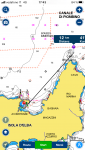
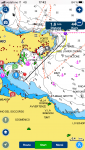
You are right, the waves got very steep. I didn't think they would build up that much. The wind came in from where the bay is open and so there was much more fetch than I had anticipated. I thought the land to the North would protect me but it didn't. I attach screenshots from Nacionics for better understanding. The wind came from around 40 degrees and I was anchored at the blue mark. Does my reasoning make sense?

2CDB9F22-7517-4B29-9A23-0D2560D20F4C.png
CB26BF7D-3814-4295-81E3-DDBE90532F99.png
 
Top