
Am I paranoid about dirty diesel /diesel bug?

hoped4

Well-Known Member
Joined
30 Jul 2006
Messages
150
Location
Sailing Med. Home Hove
Visit site
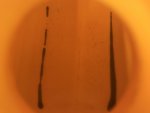
This is what the bottom of my 20l spare diesel can looks like. Photo taken through the spout of the can, shows two brown lines ...Looks sort of like Balsimic vinegar in olive oil. Should I be worried / use the fuel / invest in a decent fuel funnel/ or throw it away responsibly? The fuel has been in the can about 7 weeks. Since then I have refuelled my main tank twice. I treated it with Fuel clear M68 when I put it in and again when I saw this a couple of days ago. Am I being paranoid or is this a genuine concern.?
 

Attachments

  • 7A96D47F-10E7-4164-AE50-C95938EE26F6.jpg
    7A96D47F-10E7-4164-AE50-C95938EE26F6.jpg
    314.5 KB · Views: 0
This is what the bottom of my 20l spare diesel can looks like. Photo taken through the spout of the can, shows two brown lines ...Looks sort of like Balsimic vinegar in olive oil. Should I be worried / use the fuel / invest in a decent fuel funnel/ or throw it away responsibly? The fuel has been in the can about 7 weeks. Since then I have refuelled my main tank twice. I treated it with Fuel clear M68 when I put it in and again when I saw this a couple of days ago. Am I being paranoid or is this a genuine concern.?

As I've experienced the wonders of diesel bug at first hand, I'd say you're not being paranoid. If you're treating the fuel with biocide, it should be OK.
 
Mine looked like that at the beginning of the season. When you next top up your tank, leave an inch of fuel in your can. Give it a good swill around and pour away responsibly. Remember, though, that the inside of your fuel tank looks like that, too. I would think about giving that a clean out over next winter.
 
From the way it forms a sharp boundary with the rest of the liquid, that looks very much like contaminated water, hoped4. It could have come from the fuel supply, or condensation in the can, and there's probably no telling whether the contamination occurred before or after you bought it. If your overall fuel consumption is modest, it's an argument for letting fuel settle in a can before offering it to the boat, and for treating it as soon as you buy it. It might be worth checking future cans of fuel a day or so after purchase.
 
Not being paranoid, however this is telling you that there are traces of water in your fuel. My preference is prevention by keeping the fuel dry by regular polishing and thoroughly greasing the filler cap threads, because apart from refuelling this is the number one point of entry for water into your tanks.

I run my polishing pump on each tank for an hour each month and always after refuelling. I don't use fuel treatments unless I notice a strong build up of crud either in my polishing separator or prefilters.
 
Thanks for all the suggestions - will continue to treat fuel when I fill up, dispose of the small amount of contaminated fuel responsibly, grease my filler cap and look at having the main tank cleaned as its 10 years old. I think this may have been condensation in the spare can as I have refuelled the boat a couple of times since buying this and haven’t had any water in the pre filter. Additionally, I have just serviced the engine and the pte-fuel filter cleaner than last year.
 
Our boat has been in France for almost 10 years. Most Brits here are REALLY paranoid about the local diesel. 3 years ago, I pulled out our filter and water separater for the 1st time! Both were spotless! I leave our steel tank full over winter with added biocide.
I never use any additives at other fill ups.
 
Last edited:
Be as paranoid as you can!
At the beginning of 2017 I tried to start my engine after having left the boat ashore over 2016.
Nothing and nothing too much to see other than the Cav filter was a little dirty.However nothing was coming out of either the drain taps under the tanks or the pipes.
Attaching the engine to a two gallon outboard tank and it ran ok.
Both tanks were full of sludge and also as it turned out 40 years of dirt blocking up the sumps and the fuel outlets.
One tank was half empty and the other was full -thats about 35 gallons.
I managed to get one tank cleaned out before my seasonal business began in the spring of that year.
I finally knocked the other one on its head yesterday!
The outboard tank is now plumbed in as a reserve feeding in inbetween the inline cav filter and the engines onboard filter.
So what did I do wrong.
I left the tanks part full without any treatment.
So be paranoid as I will be in future.
 
Don't over estimate what the treatment will do for you.
Read the blurb for e.g. Fuel Clear.
The biocide has a shelf life of typically a couple of years.
But treated fuel should be used within months or even weeks.
https://www.fuelcare.com/m68.html

What we do is to take reasonable measures to check for water in the fuel, and remove it.
Also we simply avoid storing fuel for long periods for no good reason.

I'd just leave the dregs in the can, and take a look in the tank.
A sample from the bottom of the tank with a Pela oil extractor or similar is a good start.
There will always be a bit of water.
The trick is to keep it down to limits, like very much less than your filters can cope with.
 
Top