Graham_Wright
Well-Known Member
Most references are to field excitation. Is this standard? Tony Brooks shows the "ignition light" connection to the rotor.


Most references are to field excitation. Is this standard? Tony Brooks shows the "ignition light" connection to the rotor.
Traditionally the ignition warning light provided the current for the initial excitation of the field coil which is the rotor. Once the machine is "up and running" it supplies its own field current via the field diodes and the regulator
Tony Brooks diagram shows the basic setup up
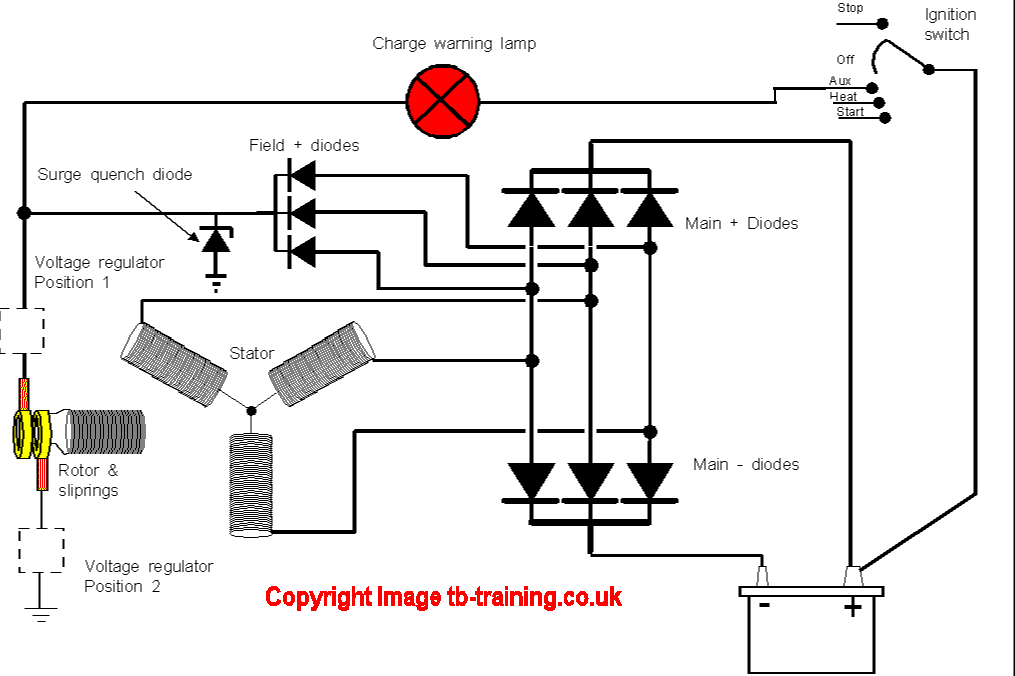
Probably should have put that in as a link to avoid copyright infringement


As a matter of interest, how is the alternator "excited" if there are no ignition warning lights? The only lights on my dash panel are to show when the glow plugs are on but no other lights, there is a warning buzzer which warns of low oil pressure/high water temp/no charge, this does sound until the engine fires would that serve the same purpose?
As a matter of interest, how is the alternator "excited" if there are no ignition warning lights? The only lights on my dash panel are to show when the glow plugs are on but no other lights, there is a warning buzzer which warns of low oil pressure/high water temp/no charge, this does sound until the engine fires would that serve the same purpose?
Field does rotate in an alternator, inducing voltage into the stator encased in the outer shell. Opposite way round in a dynamo.
Bottom set of main output diodes are the wrong way round. Cathodes should face upwards to conduct on -Ve cycles.
Yes - you'll be in trouble with Tony!
However, the diagram is wrong. Clue - diodes.
Field I thought was stationary?
Field does rotate in an alternator, inducing voltage into the stator encased in the outer shell. Opposite way round in a dynamo.
Bottom set of main output diodes are the wrong way round. Cathodes should face upwards to conduct on -Ve cycles.

Yes - you'll be in trouble with Tony!
However, the diagram is wrong. Clue - diodes.
Field I thought was stationary?


