Air in fuel lines, Racor setup, 4 cylinder diesel

oak123

New Member
Joined
17 Dec 2014
Messages
8
Visit site
Ok, so to be precise, I don't own a yacht so I'm mainly going here because I've been reading about similar setups with the Racor fuel/water separator with the spin-on-bowl setup on your diesel engines. What I have is actually a loader that I upgraded the engine to a Kubota V1505 (4 cylinder diesel). Its commonly used in generators, and Kubota tractors but I have it installed in a tractor (custom). So technically I have a yacht, but it only runs on land. (Now if you're buying this part of the story, read on).

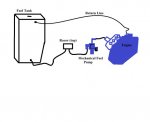
So, I purchased and installed the Racor R12T, 10 micron,15 GPH, 4 port setup (but only using 2 ports). I attached a schematic of what my fuel system setup looks like. Image also shows the input output ports. So, initially I had some minor problems with the barbs, O-ring on bowl, and vent plug o-ring leaking on the filter. I applied thread sealant on barbs, got a bigger o-ring for the bowl (Napa), and replaced the vent plug o-ring on the vent. At this point I lost all my faith in Racor, so I pressure tested the filter in a bucket of water to see if there were any more leaks. Everything checked out so I reassembled everything and ran the engine. Saw some bubbles coming up through the return line and decided that I was probably missing something. I installed a clear line from the mechanic lever pump to the injection high pressure pump to see if there was an air bubbles coming from the suction side. A small stream of bubbles were traveling from the mechanical pump. I thought it was a bad diaphragm so I replaced the mechanical pump with a new one. Same problem persists. (this is a fairly brand new engine with about less than 100 hours).

Diagnosing the mystery air problem further, here is what I came up with:

Running engine at idle: I inspected the 1/4" fuel line going from the Racor filter to the mechanical pump. No air bubbles. Then I checked the clear tube going from the mechanical pump to the injector pump, small stream of air bubbles.

Running engine at higher RPM's: No air bubbles after Racor filter, also, no air bubbles after the mechanical pump.

So to conclude, it seems like the air is being formed/sucked only at lower RPM's. I thought that maybe turbulence was being formed at the mouth of the metal tubes coming from the mechanical pump, but this wouldn't make any sense if the RPM's change. Another problem with this engine is that it vibrates a lot more at lower RPM's. Thus, it seems like when I find the "sweet-spot" at higher RPM's, I also lose the air bubbles. There is also a constant supply of air bubbles traveling to the tank, this maybe due to the way I have my tank designed. Any thoughts, input, suggestions will be appreciated because at this point I'm at a complete loss...
 

Attachments

  • Labels.jpg
    Labels.jpg
    91.3 KB · Views: 1
  • FuelSchematic.jpg
    FuelSchematic.jpg
    19.2 KB · Views: 1
Running engine at idle: I inspected the 1/4" fuel line going from the Racor filter to the mechanical pump. No air bubbles. Then I checked the clear tube going from the mechanical pump to the injector pump, small stream of air bubbles.

Running engine at higher RPM's: No air bubbles after Racor filter, also, no air bubbles after the mechanical pump.

I'd suspect the joint where the pipe from the Racor meets the fuel pump. Air leaking in at idle, but maybe the extra suction at higher revs seals the pipe on to the hose barbs.
 
>So, initially I had some minor problems with the barbs, O-ring on bowl, and vent plug o-ring leaking on the filter. I applied thread sealant on barbs, got a bigger o-ring for the bowl (Napa), and replaced the vent plug o-ring on the vent. At this point I lost all my faith in Racor

We had two Racor filters and neither leaked if yours did you should have sent it back and got a replacement, it's too late now with the changes you have made.
 
The clear pipe is on the pumped (positive pressure side) of the lift pump. The air bubbles must come from up stream, inlet to pump, filter, pipes etc.

Have you tried missing out the Racor? Or introducing a clear section of pipe upstream of the filter?

My diesel Saxo was the same, though there the injection pump was also the lift pump, IIRC, and pulled air in via a dodgy pressure relief hidden at the back of the filter block until 'poxied up two years ago..
 
I'd suspect the joint where the pipe from the Racor meets the fuel pump. Air leaking in at idle, but maybe the extra suction at higher revs seals the pipe on to the hose barbs.

This is what it appears to be doing. Although, I don't see any fuel leaks at higher rpms if it is sealing...?
 
The clear pipe is on the pumped (positive pressure side) of the lift pump. The air bubbles must come from up stream, inlet to pump, filter, pipes etc.

Have you tried missing out the Racor? Or introducing a clear section of pipe upstream of the filter?

My diesel Saxo was the same, though there the injection pump was also the lift pump, IIRC, and pulled air in via a dodgy pressure relief hidden at the back of the filter block until 'poxied up two years ago..

I will be trying this out next. At least it will rule out the Racor filter out of the equation. Will post an update to see how this goes.
 
I will be trying this out next. At least it will rule out the Racor filter out of the equation. Will post an update to see how this goes.

Why try this? You've said there are no visible bubbles in the pipe from the Racor to the pump. Therefore, the air isn't getting in to the Racor.
 
Why try this? You've said there are no visible bubbles in the pipe from the Racor to the pump. Therefore, the air isn't getting in to the Racor.

True. I will check the inlet on the suction side. Unless these air bubbles are so small that I can't see them shoot up through the clear tube? I also didn't mention one other thing. I don't know if, or how this can affect the mechanical pump, but I have a 1/4" fuel line from the tank going to the the Racor, and then to the mechanical pump. The mechanical pump inlet is a 5/16" tube. So when I ran a clear fuel line from the Racor to the mechanical pump, I have to force its way over the bigger diameter inlet nozzle. Now I don't if there should any problems with this, but my initial thought was I could test the system without the Racor filter with the correct tubing size all the way back to the tank...
 
I checked the inlet side. I removed the screw clamp and looked at the pattern made by it on the hose. I noticed there appears to be a small section that isn't by clamped down by the screw clamp right behind the screw. So I got a second screw clamp and clamped it on the opposite side. I started up the engine and it appears as if the bubbles have subsided some. Upon further investigation, I found that there are a small group of tiny bubbles sitting right towards the top lip of the outlet port. It seems like some of these build up and take off down the clear tube, but there's also other ones that are coming from the center of the outlet, they are more sporadic and are slightly bigger than other the small tiny ones which are sitting at the top of outlet. When I raise the RPM, the bubbles will go away and occasionally, there will be that one air bubble that will shoot through.

Anyway, your help has given me more confidence with this air leak problem. All input is greatly appreciated! I hope that I can finally put this problem to rest soon.
 
Kind of hijacking this thread a little, so sorry for that, but can anyone recommend a good source of clear fuel line for diesel fuel and some decent jubilee type clips for fuel lines. I am thinking its about time my lines were checked and/or replaced but my experience with high street clips and clamps has usually ended in tears.
Interesting thread though oak123, as if I do need to replace any lines, I may have similar issues.
 
The solution starts with diagnosis. I had a mysterious air leak and traced it by producing a short piece of cylindrical clear perspex drilled through and tapped to fit into a tee. At the upper end there is a bleed screw.

This I introduced at various points in the fuel feed and enabled me to find the bubbles.

Simple but very effective (and safer than transparent hose).
 
I have the same set-up. No problems at all with it, but I do have some ideas of the potential pit-falls.

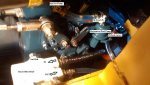
First, although it sound like nit-picking, despite the label in your photo it's not a Racor 12T, it's a Racor 120(1), into which you insert/attach cartridges of various filter grades, the most popular of which is the 10u one, the Racor 12T. You're far from the first person to read the 12T wtitten on the cartridge and call the whole assembly that. I'm perhaps jumping to conclusions, but not knowing this despite having recently installed it may imply that not all the Racor installation advice may have been followed - maybe it wasn't included in the box.

1. Racor filter housings use NPTF threads (the F stands for Fuel, not Fine). Elbows or hose tails to this thread are quite hard to get hold of in the UK - I imagine easier in the US - but one can get hold of them with difficulty and sometimes a wait of several weeks for them to come into stock. They are in the Wade catalogue with the identifier 'API' in the part number. Are you absolutely 100% sure you are screwing NPTF fittings into the cast Aluminium housing of the Racor 120 filter? If not, and you've used parallel or, worse, BSP threads they'll both destroy the threads in the Aluminium and make a poor seal.

2. The best way, by far, to attach flexible hoses to the filter is by a compression coupling as this allows one to remove all torsional strain from the hose assemblies,and allows the joint to be undone and redone as often as you like.

Picture of what I like below. The elbow is NPTF on the end with the longer thread, and BSP the other. No need to have an elbow if you prefer straight, that's just what I have in my photo.

P1010265.JPG


3. The hoses therefore need to be terminated in a very short length of rigid pipe, on which one puts the nut and olive of the compression fitting. Terminations to a hose should be swaged unless in emergency. You can buy pre-made up lengths of swaged fuel hose from eg ASAP, or you can get a local hydraulics firm to make them to order.

4. The function of a jubilee clip is not to make a seal. Its sole job is to retain the hose in place. The 'barbs' on the tail make the seal. Over-tightening jubilee clips makes them seal worse, not better. Use of jubilee clips is deprecated for fuel and even more so for gas.

5. The Kubota engine has metric unions, 8mm on mine, so I have 5/16th pipe and compression fittings on the filter end and 8mm compression fittings on the engine end: a hell of a palaver making up that hose! Edit: it looks however as if you go direct to the lift pump from the Racor, so won't have this added complication of the mixed US, British and Metric unions.

(1) http://www.asap-supplies.com/search/racor/racor-120at-diesel-spin-on-fuel-filter Notice how the unused ports are blocked off with tapered plugs.
 
Last edited:
I'd suspect the joint where the pipe from the Racor meets the fuel pump. Air leaking in at idle, but maybe the extra suction at higher revs seals the pipe on to the hose barbs.

Check the seals, thinking about the system available to me, we have copper pipes running from tank to racor then from racor to mechanical pump then on to the injectors. perhaps the plastic piping is not up to the job.

Seals would be the first thought tho check all the usual suspects for tightness.
 
Last edited:
I'm glad you brought this up as this would explain my initial problems with my hose barbs leaking. I used just plain old 1/4" NPT hose barbs. Obviously, I should have researched the topic well before hand as they are not the same as you describe. Because I could not find NPTF (not NPTFemale, but NPTFuel), I applied a good portion of teflon tape and thread sealant and tested the Racor filter unit up to 30 PSI before reinstalling again. I went back to the black rubber hose from the Racor to the mechanical pump. After air bleeding the system, at low RPMS I have no air bubbles, and at high RPM I will get an occasional air bubble. I suspect the air is caused by the clear plastic tubing I used to test for the air leak problem and I was being sucked somewhere on the fittings. Its also interesting when I make a sudden throttle change from low to high, I will get some air bubbles in the line. At this point, I will continue monitor the fuel lines. I still get a stream of air in the return line (not sure why), but overall, the input is a lot better than it was. I don't understand why Racor would use NPTF threads on their filters, it doesn't make any sense and it makes it a pain to even finding these fittings...


I have the same set-up. No problems at all with it, but I do have some ideas of the potential pit-falls.

First, although it sound like nit-picking, despite the label in your photo it's not a Racor 12T, it's a Racor 120(1), into which you insert/attach cartridges of various filter grades, the most popular of which is the 10u one, the Racor 12T. You're far from the first person to read the 12T wtitten on the cartridge and call the whole assembly that. I'm perhaps jumping to conclusions, but not knowing this despite having recently installed it may imply that not all the Racor installation advice may have been followed - maybe it wasn't included in the box.

1. Racor filter housings use NPTF threads (the F stands for Fuel, not Fine). Elbows or hose tails to this thread are quite hard to get hold of in the UK - I imagine easier in the US - but one can get hold of them with difficulty and sometimes a wait of several weeks for them to come into stock. They are in the Wade catalogue with the identifier 'API' in the part number. Are you absolutely 100% sure you are screwing NPTF fittings into the cast Aluminium housing of the Racor 120 filter? If not, and you've used parallel or, worse, BSP threads they'll both destroy the threads in the Aluminium and make a poor seal.

2. The best way, by far, to attach flexible hoses to the filter is by a compression coupling as this allows one to remove all torsional strain from the hose assemblies,and allows the joint to be undone and redone as often as you like.

Picture of what I like below. The elbow is NPTF on the end with the longer thread, and BSP the other. No need to have an elbow if you prefer straight, that's just what I have in my photo.

P1010265.JPG


3. The hoses therefore need to be terminated in a very short length of rigid pipe, on which one puts the nut and olive of the compression fitting. Terminations to a hose should be swaged unless in emergency. You can buy pre-made up lengths of swaged fuel hose from eg ASAP, or you can get a local hydraulics firm to make them to order.

4. The function of a jubilee clip is not to make a seal. Its sole job is to retain the hose in place. The 'barbs' on the tail make the seal. Over-tightening jubilee clips makes them seal worse, not better. Use of jubilee clips is deprecated for fuel and even more so for gas.

5. The Kubota engine has metric unions, 8mm on mine, so I have 5/16th pipe and compression fittings on the filter end and 8mm compression fittings on the engine end: a hell of a palaver making up that hose! Edit: it looks however as if you go direct to the lift pump from the Racor, so won't have this added complication of the mixed US, British and Metric unions.

(1) http://www.asap-supplies.com/search/racor/racor-120at-diesel-spin-on-fuel-filter Notice how the unused ports are blocked off with tapered plugs.
 
... I don't understand why Racor would use NPTF threads on their filters, it doesn't make any sense and it makes it a pain to even finding these fittings...

They are American, so using an American thread is natural. As to why US threads are different from the rest of the world; that's a mystery.

However also in defence of Racor, there are, in my personal opinion, only two decent ways to attach a pipe fitting to a machined Aluminium block such as a filter housing:

1. A tapered male fitting into a tapered female threaded hole, where the seal is due to the thread form itself, perhaps locked with thread-lock

or

2. A parallel male fitting into a parallel female threaded hole, whereby the fitting is screwed all the way in so the seal is between the shoulder of the fitting and the Aluminium housing, using a copper or fibre washer (or, perhaps better, an O ring) to achieve the seal.

NPTF is a good example of #1.

To buy them in the uk, try http://www.supremeplumb.com. Not always in stock, but they can get them. WADE-2025/API was the part number I ordered, but have a look at the Wade catalogue for other /API parts.
 
Last edited:
I understand what you're saying. However NPT and NPTF are both tapered threads. Because NPTF thread is more shallow at the peaks and crests, it allows a dry seal to form. But these are for high pressure rating. Our fuel systems are rated around 10psi or less. I don't know about other fuel filters, maybe this is how it is on most systems. I believe radiators in cars also ha e the NPTF hose fittings. Before purchasing the Racor 120T, I contemplated on getting their new edition plastic units. I figured I was doing myself a favor by getting a solid aluminum housing instead of the plastic one. I feel that in most cases these fuel filters are already located in a very well protected area (ex. Inside the main framework next to engine) and don't require the aluminum housing, rather a more simpler, easy to use, mount and install would seem more prevalent. Oh well, you live and learn. :)

Edit: its possible that racor (and others) uses NPTF possibly to prevent users from using Teflon and potentially having that get clogged up in their fuel system...?


They are American, so using an American thread is natural. As to why US threads are different from the rest of the world; that's a mystery.

However also in defence of Racor, there are, in my personal opinion, only two decent ways to attach a pipe fitting to a machined Aluminium block such as a filter housing:

1. A tapered male fitting into a tapered female threaded hole, where the seal is due to the thread form itself, perhaps locked with thread-lock

or

2. A parallel male fitting into a parallel female threaded hole, whereby the fitting is screwed all the way in so the seal is between the shoulder of the fitting and the Aluminium housing, using a copper or fibre washer (or, perhaps better, an O ring) to achieve the seal.

NPTF is a good example of #1.

To buy them in the uk, try http://www.supremeplumb.com. Not always in stock, but they can get them. WADE-2025/API was the part number I ordered, but have a look at the Wade catalogue for other /API parts.
 
Last edited:
Top