
AGM batteries, not impressed. What’s your view?

henryf

Well-Known Member
Joined
31 May 2007
Messages
4,761
Location
Uxbridge
www.911virgin.com
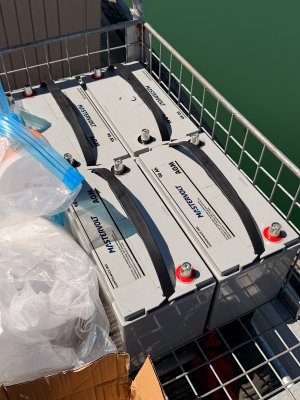
When we spaced the boat we paid a bit more to have AGM batteries. Within the first season I noticed the capacity was greatly diminished to the point where they were useless. The suggestion was made that this wasn’t the first time it had happened and maybe during the build process the batteries were being fully discharged and this was leaving them damaged.

A new set of house batteries were fitted under warranty. I know we haven’t run them down because our Vircru monitoring system keeps historic data. Last season with the batteries 2 years old I noticed they were getting weak again. I’ve just replaced them with lead acid batteries. We were getting 30-45 minutes with a bit of house drain before the battery alarm went off.

Am I just unlucky or are AGM batteries crap for house batteries? The writing on the case refers to high cranking capacity but obviously house batteries don’t need to throw out high current over a short period.

I’d love to use lithium and have a massive battery storage capable of power a/c and so on via an inverter but that requires a huge re-design so for the moment it’s just a case of enough capacity to serve a sensible 24 volt load at anchor over night.

Henry
 

Attachments

  • IMG_5137.jpeg
    IMG_5137.jpeg
    578 KB · Views: 25
  • IMG_5137.jpeg
    IMG_5137.jpeg
    578 KB · Views: 25
Not my experience at all p exactly the opposite. The advantage of AGMs over LA is potentially many more cycles anything up to double, but at least 60%, faster charge acceptance and lower self discharge and a price premium of 30-40%. Hence the popularity for house batteries. My last boat bought new with AGMs (relatively cheap automotive stop/start type rather than you expensive Mastervolt) was sold after 6 years regular cruising use with the batteries still performing as well as at the beginning. Typical life in light leisure use is 10-12 years.

However, your usage pattern probably different but maybe not enough to kill the batteries after 2 years. Mastervolt do not publish their cycles profile but I would guess it is something like 700 - that is you can discharge down to 50% SOC 700 times. difficult to see how you could do that in 2 years unless you are living on board - and only recharging when the bank is below 50%.

Suspect you need to find out more about your pattern of usage, which your Victron might give you . If treated the same way LA would last little more than half the time of AGMs, so the problem is unlikely to be with the battery type.
 
The Lifeline 260ah AGM batteries I had on my previous boat were excellent. Still going strong after fifteen years. They're not cheap but a seriously good product.
 
Interesting. I will see what happens with the replacement LA batteries. I’d say we normally get 4-5 years out of a set of batteries. We tend not to drain the batteries very low. Maybe they are kept too well charged?
 
We've got agm batteries on our boat and they've been great, no issues at all.

They've been fully drained once or twice per year, but Always left them connected to the shore power and charging when we're not using the boat
 
I,ve bought last year two commercial duty lead acid truck batteries and they are going really strong . The shop does not sell to private but if you are running a company ... no problem .

That said : Had on my last boat twin agm,s and they were ok but definitely nothing special .
 
I had a spare battery, 110ah agm, that i left in the garage un used for many years. Couldnt believe it that when i charged it, it seems to work fine.
Seems they work pretty well for me.
 
4 to 5 years is ok in my mind. Having tried several options, I now consider batteries as consumables. The AGMs that I tried were no better than sta dard lead acid so like jrudge, I just buy the cheapest Varta lead acid that I can find. For the Princess , you should find the Varta J1 or J2 will fit and available anywhere. Difference between J1 and J2 is the position of the terminals .
 
My battery supplier said the cheap sealed lead acid will cost half the price and last just as long, I know of many cases where expensive branded AGM batteries have failed at a young age, sealed lead acid have always served me well and have lasted at least 5 years that I know of but sold boats at that point.
 
Ended up with calcium technology Enduroline batteries from Tayna. Delivered quickly and well packaged. Used them in the past to good effect and sensibly priced.

Fit was perfect (EXV115).
 
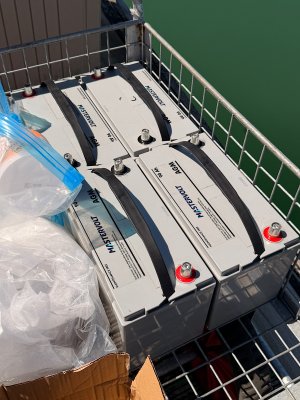
When we spaced the boat we paid a bit more to have AGM batteries. Within the first season I noticed the capacity was greatly diminished to the point where they were useless. The suggestion was made that this wasn’t the first time it had happened and maybe during the build process the batteries were being fully discharged and this was leaving them damaged.

A new set of house batteries were fitted under warranty. I know we haven’t run them down because our Vircru monitoring system keeps historic data. Last season with the batteries 2 years old I noticed they were getting weak again. I’ve just replaced them with lead acid batteries. We were getting 30-45 minutes with a bit of house drain before the battery alarm went off.

Am I just unlucky or are AGM batteries crap for house batteries? The writing on the case refers to high cranking capacity but obviously house batteries don’t need to throw out high current over a short period.

I’d love to use lithium and have a massive battery storage capable of power a/c and so on via an inverter but that requires a huge re-design so for the moment it’s just a case of enough capacity to serve a sensible 24 volt load at anchor over night.

Henry
Why a huge re-design ?
 
Ended up with calcium technology Enduroline batteries from Tayna. Delivered quickly and well packaged. Used them in the past to good effect and sensibly priced.

Fit was perfect (EXV115).
My calcium set caused an unforeseen problem until I found it and solved it.

About 15 years ago I had an aftermarket bow thruster installed professionally which had its own battery bank
I only found out recently that the charge system for the bow thruster was just a split charge relay to the main battery bank.

It worked fine until I installed the calcium batteries which need a slightly higher charge voltage

It meant that they took all the charge for the bow thruster so that the bow thruster didn’t get anything

I solved it by using a separate feed directly off the charger and it all works well now.

I mention it just in case you have any lead acid batteries remaining in your system
 
Don't forget tp change the charge/float settings in your battery charger if you change battery type.

Our boat domestic batteries were forever gassing when left on shore power trickle charge. I found the Cristec charger set to AGM though I had basic LA. Flicked a dip switch to set LA profile and the gassing stopped.
 
Why a huge re-design ?
Possibly as a UK coded vessel would need to comply with all of the latest coding rules?
Lithium is not a drop in solution on any boat, albeit neither is it complex.
But also OP would need to check his insurers are happy - again being coded vessel may have less insurance options if his insurer is one of the grumpy ones.
 
I would check the weight of those calcium batteries. A friend once told me that a quick check of the weight of a lead acid battery will give a good indication as to it's quality. Compare the weights of the different brands. Some of those "so called" leisure batteries are half the weight and are useless for a boat like yours.
That is why I stick to Varta. On the other hand , no need to buy expensive marine grade ones like the Master volt ones in your first post.
 
I would check the weight of those calcium batteries. A friend once told me that a quick check of the weight of a lead acid battery will give a good indication as to it's quality. Compare the weights of the different brands. Some of those "so called" leisure batteries are half the weight and are useless for a boat like yours.
That is why I stick to Varta. On the other hand , no need to buy expensive marine grade ones like the Master volt ones in your first post.
I too evaluate batteries on kg/£
 
I would check the weight of those calcium batteries. A friend once told me that a quick check of the weight of a lead acid battery will give a good indication a⁴s to it's quality.

I agree . Like mentioned above my best battery i ever bought was meant for an excavator and not a boat .
 
Top