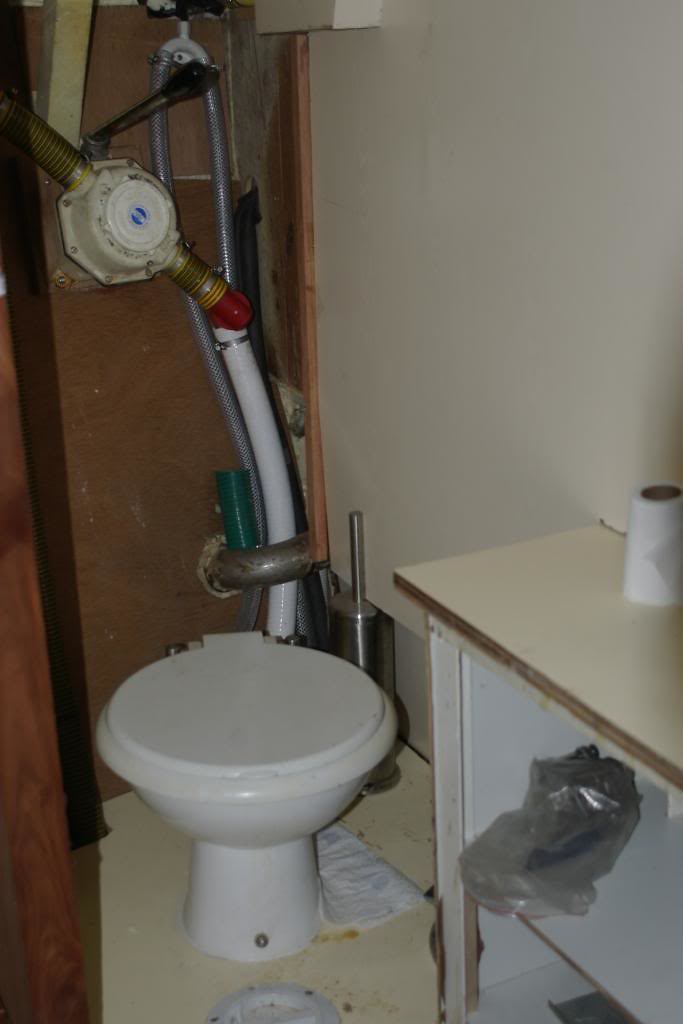
Aft cabin toilet

Agreed which is what holding tanks are so good for in idyllic anchorage - the distance varies depending on different countries rules but practically that is fine and all disappears quickly as long as you follow the Greek model and bin the paper for later disposal.

We find that provided minimum water is used to completely flush then a holding tank will last one person about 10 days although we are never anchored in the same place so long. We have two heads and two holding tanks.

My holding tank is 35 liters but now I have used lead ballast (instead of iron) I could easily increase the volume to (say) 60 liters
 
I had a feeling this thread would open the composting toilet can of worms (or can of ... something worse!).

We've also gone for one of these composting toilets for our aft (second) head. We don't have space for a large enough holding tank (which, ultimately, is still a container full of the brown stuff) and our home marina is locked-in and charges £10 per pump out!

We went for the Air Head over Natures Head for various reasons - most specifics of which, not particularly helpfully, I can't recall. But lots of background research indicated that it had better build quality (especially the stainless fittings) and more usable features (especially the 'flap' mechanism and the design of the pee bottle).

We haven't put it to the test yet as it is still sitting in the storage unit while our refit continues, but the quality seemed good. It should for a £1000 bucket!

Appreciating that they aren't for everyone, we felt it offered a lot of advantages for us - no holding tank and associated plumbing (removing the old 'Med size' one fitted previously was nasty enough for me to conclude 'never again'), you don't need to use the pee tank (so the grossness of that needn't apply), the stuff does compost if used properly by all accounts, it feels like sitting on a normal loo, etc. etc.

What does need to be considered, though, in relation to the OP's question is the bulk of the unit! I had to cut away some of the factory moldings/floor in the head and re-build them closer to the contours of the hull to make space for it (which would have been the same for any floor-, rather than pedestal-, mounted head). It is quite tall, so expect dangling legs if you are using any sort of plinth (and this in turn might affect the all important aim into the two tanks!) and you need space for the crank handle and vent hose one one or other side:

airhead-front-dimensions.png
standard-side-dimensions.png


Will provide a full 'review' once we've commissioned it next season - I'm sure we can't wait to hear all about it. I'll be sure to upgrade my image hosting for those high-res pics!!! ?
 
My holding tank is 35 liters but now I have used lead ballast (instead of iron) I could easily increase the volume to (say) 60 liters
You won’t regret the extra at all - it means you don’t have to choose between leaving an anchorage when you really don’t want to or quietly emptying the tank after dark and hoping the fishes have eaten it all long before it drifts down to your unfortunate neighbours.

Onething I really really wish was fitted was some means of knowing how full it is, and therefore how long you have got, and most importantly don’t do what we did which was have a guest enthusiastically flushing a few days worth through the breather pipe, half into the water and half into the dinghy which was tied along side so the rest of us could go swimming from the stern. For obvious reason a sight tube is not a nice thought and little float switches (which I bought a few of) can get clogged unpleasantly too.
 
Last edited:
Wow, only 35 litres holding tank capacity? I'm having new toilets installed along with a holding tank and have slight apprehension at 150 litres, maybe I can breath a sigh of relief ?
 
We have a 112 litre holding tank, and freshwater flushing electric loo. Three of us on board. Day 12 of a strict quarantine in the port police dock in a marina in Cyprus. We have had to have two pump outs , each one after 6 days use.
Mind you, the executive chef has been feeding us rather well:):):):)
 
Wow, only 35 litres holding tank capacity? I'm having new toilets installed along with a holding tank and have slight apprehension at 150 litres, maybe I can breath a sigh of relief ?
We have a 150 litre holding tank which lasts two people about 4 weeks, as long as you don't put everyday pee in it.
 
I had a feeling this thread would open the composting toilet can of worms (or can of ... something worse!).

We've also gone for one of these composting toilets for our aft (second) head. We don't have space for a large enough holding tank (which, ultimately, is still a container full of the brown stuff) and our home marina is locked-in and charges £10 per pump out!

We went for the Air Head over Natures Head for various reasons - most specifics of which, not particularly helpfully, I can't recall. But lots of background research indicated that it had better build quality (especially the stainless fittings) and more usable features (especially the 'flap' mechanism and the design of the pee bottle).

We haven't put it to the test yet as it is still sitting in the storage unit while our refit continues, but the quality seemed good. It should for a £1000 bucket!

Appreciating that they aren't for everyone, we felt it offered a lot of advantages for us - no holding tank and associated plumbing (removing the old 'Med size' one fitted previously was nasty enough for me to conclude 'never again'), you don't need to use the pee tank (so the grossness of that needn't apply), the stuff does compost if used properly by all accounts, it feels like sitting on a normal loo, etc. etc.

What does need to be considered, though, in relation to the OP's question is the bulk of the unit! I had to cut away some of the factory moldings/floor in the head and re-build them closer to the contours of the hull to make space for it (which would have been the same for any floor-, rather than pedestal-, mounted head). It is quite tall, so expect dangling legs if you are using any sort of plinth (and this in turn might affect the all important aim into the two tanks!) and you need space for the crank handle and vent hose one one or other side:

airhead-front-dimensions.png
standard-side-dimensions.png


Will provide a full 'review' once we've commissioned it next season - I'm sure we can't wait to hear all about it. I'll be sure to upgrade my image hosting for those high-res pics!!! ?

Thank you for your post: I'm finding it really helpful and timely. I am currently wondering where to put another "bulkhead" (For'd wall of toilet) and the height of the toilet will influence that decision.

Your choice of Air Head over Nature's head will probabkly influence my choice as well.:)
 
I would go for a chemical toilet for the second toilet as there are more options for emptying it. I.e. at a chemical toilet disposal point, down a mains sewage connected toilet, or, if no, or appropriate chemicals have been used, over the side in open water as per emptying holding tank.

When we were in marinas or anchorages on the Clyde I was glad I didn't have to think about taking the boat out or go round to the pump out.

I not sure how many of the marinas we visited had pump out facilities. Tarbet had I know for sure but I never saw it used.
 
Last edited:
I would go for a chemical toilet for the second toilet as there are more options for emptying it. I.e. at a chemical toilet disposal point, down a mains sewage connected toilet, or, if no, or appropriate chemicals have been used, over the side in open water as per emptying holding tank.

When we were in marinas or anchorages on the Clyde I was glad I didn't have to think about taking the boat out or go round to the pump out.

I not sure how many of the marinas we visited had pump out facilities. Tarbet had I know for sure but I never saw it used.
My issues with chemical toilets are firstly the chemical smell, secondly that I don‘t think they add anything to a holding tank plus sea flush, but mostly that as we move from country to country I really don’t want to have to find new supplies of chemical when the sea is out there to do the same job.
 
I want to put a floor in the aft cabin but while I want to maintain maximum headroom I have to avoid fouling a steering cable.

The steering cable has a slight upward incline to the quadrant. Why don't I follow that? The floor doesn't have to be horizontal? (I really wonder if people would notice?)
 
I did have sloping side floors in my rear cabin each side of my central bunk but changed it as it proved uncomfortable.

I finally fitted a step it make it easy to get into the bunk which was higher than a domestic bed from the base floor level

Does depend on the angle of slope.
 
I did have sloping side floors in my rear cabin each side of my central bunk but changed it as it proved uncomfortable.

I finally fitted a step it make it easy to get into the bunk which was higher than a domestic bed from the base floor level

Does depend on the angle of slope.
Roger I'll watch the slope and make sure it is not too much.

I tried to google some images of yacht aft cabins but could only find large (60ft+) yachts and they use steps.

The double berths are undoubtedly built over the top of the steering quadrant.

I'm going to have to fit a step for my double berth as it is higher than normal too.

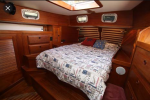
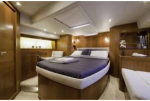
Screenshot_2020-11-26 sailing yacht aft cabin - Google Search.pngScreenshot_2020-11-26 sailing yacht aft cabin - Google Search(1).pngScreenshot_2020-11-26 sailing yacht aft cabin - Google Search(2).pngScreenshot_2020-11-26 sailing yacht aft cabin interior - Google Search.png
 
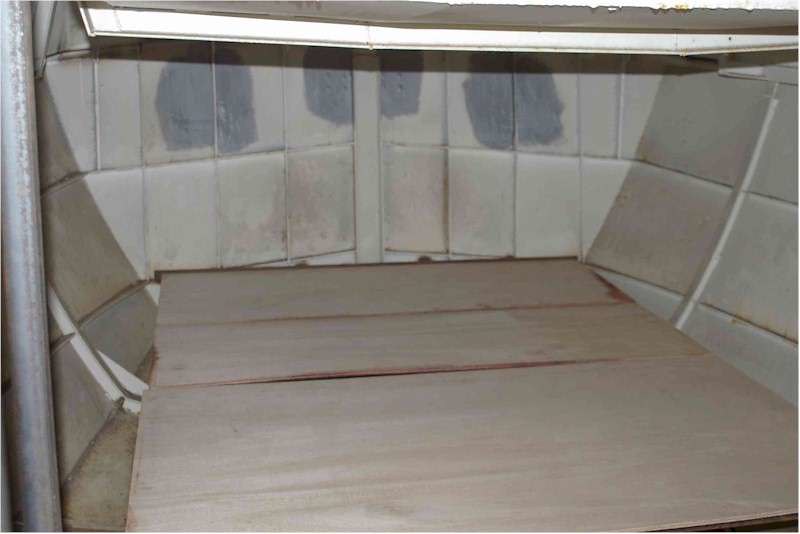
This is the basis of the queen size bunk/bed in my aft cabin.

36046374826_8eafeac4e7_c.jpg


As can be seen the aft sealed bulkhead is not much wider then the bed so I could not fit much storage at the sides compared modem wide stern boat.

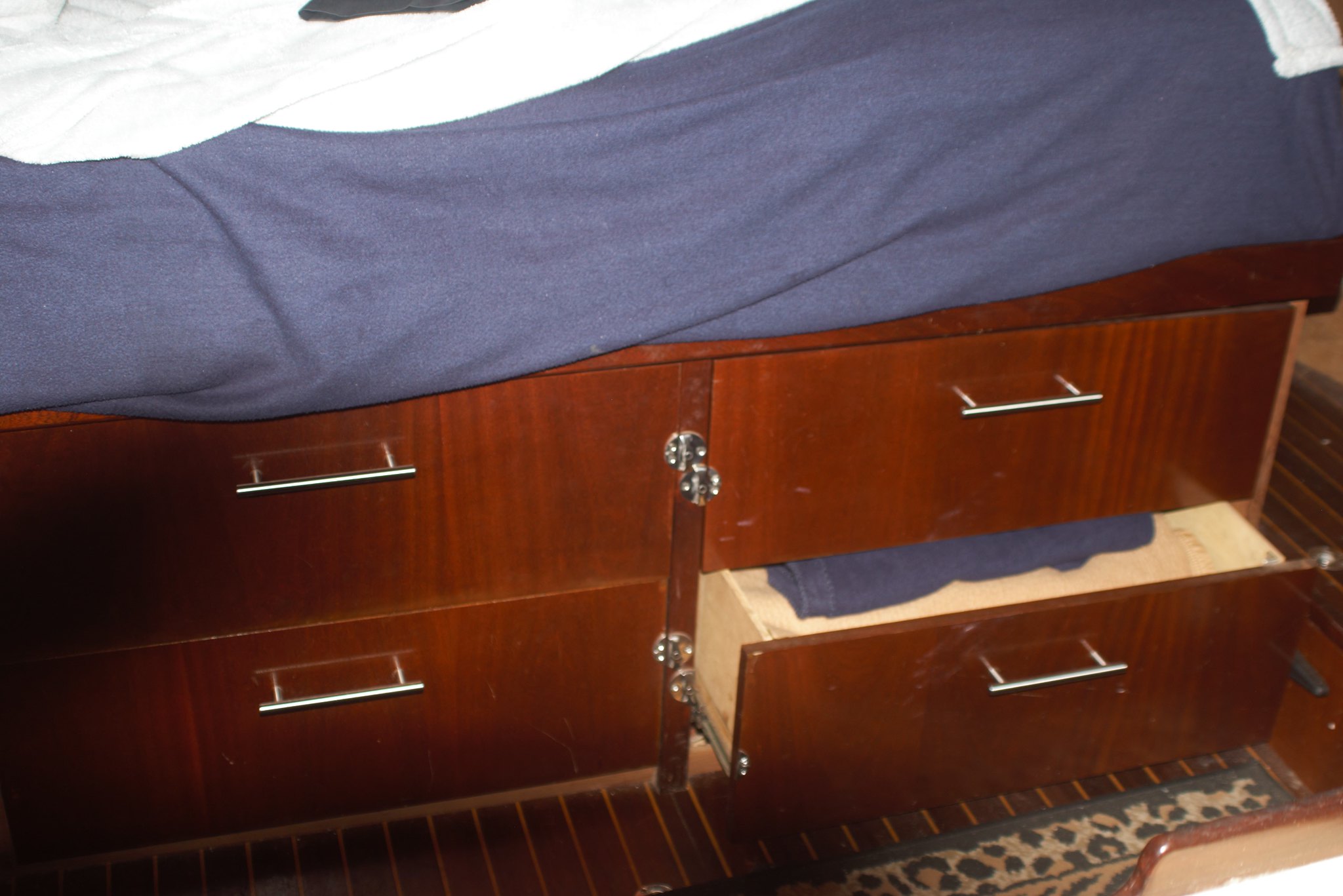
Under the bed is and air conditioner everapitor , a black water tank and storage drawers.

40069773912_76d80efff1_k.jpg


On the extreme left is a small section of the raised floor by the side of the bunk/bed and the corner of the sink can be seen at the lower corner

The aft head on the port side during construction

35696727350_f0c5929bbf_b.jpg


A valve just below the head selects output to either sea or waste tank. The sink is to the left of the picture under the steps to the cockpit

36086441475_da6388c6c2_b.jpg


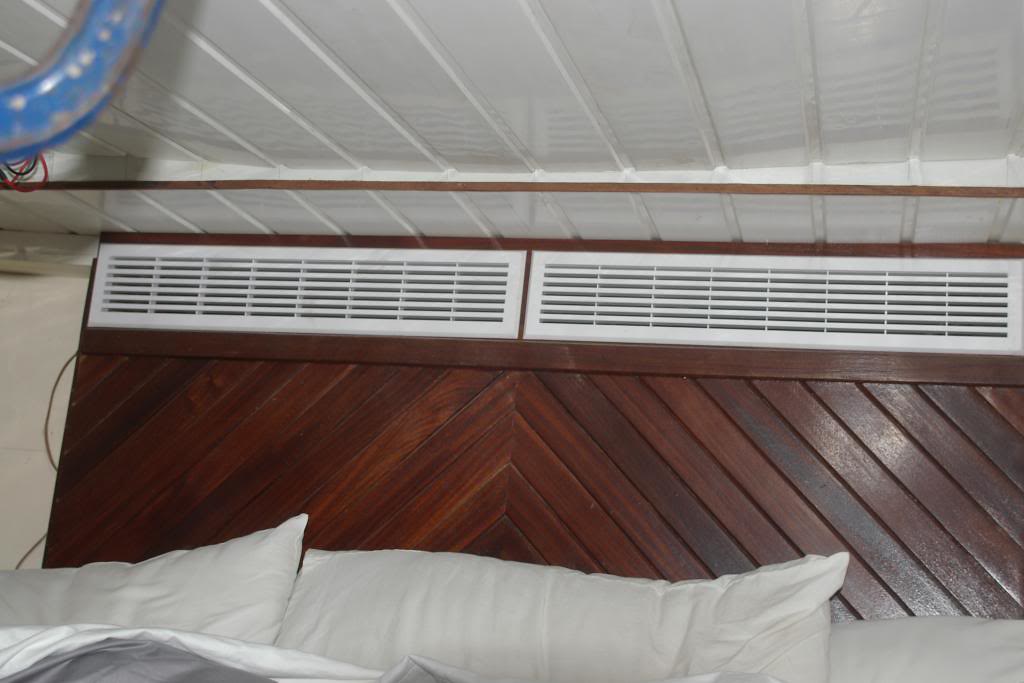
The queen bed headboard and aircon vent above.
 
My issues with chemical toilets are firstly the chemical smell, secondly that I don‘t think they add anything to a holding tank plus sea flush, but mostly that as we move from country to country I really don’t want to have to find new supplies of chemical when the sea is out there to do the same job.

If you are talking about the variety that is a glorified bucket with a seat you are right, horrible things.

I would have thought a composting toilet would have more odour, not to mention difficulties with storing the sawdust or whatever it uses, and disposing of the greater quantity of solid waste.

I do not think our Porta Potty smells. The waste is in a tank sealed by a blade. On top of the blade sits a small amount of water from the flushing reservoir which contains a different relatively dilute non pungent chemical.

There are different chemical manufacturers Some of their potions smell more than others, the dilution also obviously has an impact. I would have thought chemicals are reasonably easy to get hold of in many countries, the concentration means it is not necessary to carry a large amount especially when it is being used as a second toilet. In extremis you don't really need to use chemicals in them at all and we don't if we are expecting to have to empty over the side in open water.

I suppose you can get a bit of a whiff when the waste tank is emptied but for me the convenience outweighs the minor problem and the smell is not particularly unpleasant.

They add to a holding tank plus sea flush in some circumstances. E.g. where you don't want to have to move the boat simply to empty a full holding tank and for us with a trailerable boat, when we are on the hard.
 
Top