brian48
New Member
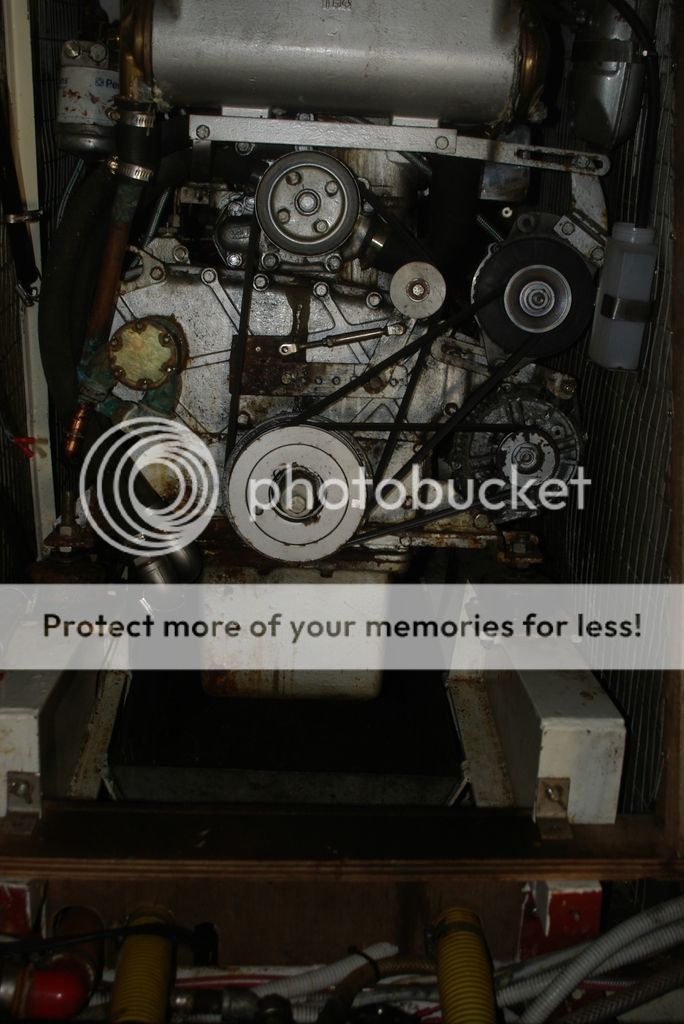
Can anyone advise me on a permanent solution to keeping my second alternator attached to my engine block? I have a Yanmar 4JH3 TBE with a 175 amp Leece Neville (Prestolte) 24 volt alternator attached as a second alternator. Needless to say this alternator is a seriously heavy lump which takes some driving. It is controlled by an Adverc. Despite the size of the alternator I have never seen the adverc call for more 70 amps charging which at 24 volts is perhaps about 2 - 2.5 Kwatts with losses. The drive is by double vee belts from the engine crankshaft. The alternator is mounted on a fabricated 12mm steel plate bracket (not Yanmar) which is bolted on to he front of the engine (originally with 4 M8 bolts ) and onto the top of the engine with 2 more M8 bolts. (Steel screws into aluminium alloy castings.) I bought my boat 8 years ago when it was 8 years old and had 900 engine hours. On my first long trip, with quite a bit of motoring needed, my routine check of the engine compartment revealed 2 loose bolts and some oil under the engine. These were from the alternator bracket to the front of the engine. When I put them back it was obvious that the threads in the aluminium engine block (actually it is the drive train cover plate) were all but gone. I stuck them in with yaksh** and it held until we reached port.
I found a Yanmar technician and we took off the alternator and bracket. As always on boats it was in a pretty inaccessible position. The drive train cover plate with the 4 tapped holes could not be easily removed from the engine (said to 2 -3 man days work) However between the 4 tapped holes was a round 10 cm opening in the cover plate giving limited access to the other side of the tapped holes. The solution was to put long grub screws through the holes with nyloc nuts inside, reinstate the bracket, then another nyloc nut outside tightened against an allen key in the grub screw.
This held for 400 hours but I have just found 2 sheared grub screws with nylocs under the engine. The grub screws had fatigued through (not helped by the grub screws being a bit short and the allen key recess being inside the nut when tight).
local technician here in Turkey has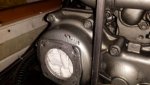
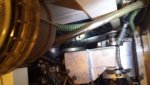 made a temporary repair with some studding but it was not possible to get any serious grunt on the nuts. I am also not really happy with nylocs inside the engine near the drive train.
My thinking for the proper repair is : longer high tensile grub screws if I can get them, aerotight nuts, long allen keys to get serious tension on the grub screws to reduce chances of fatigue.
However I would welcome any comments or alternative suggestions.
I hope these pictures work as it makes it much easier to understand.
I found a Yanmar technician and we took off the alternator and bracket. As always on boats it was in a pretty inaccessible position. The drive train cover plate with the 4 tapped holes could not be easily removed from the engine (said to 2 -3 man days work) However between the 4 tapped holes was a round 10 cm opening in the cover plate giving limited access to the other side of the tapped holes. The solution was to put long grub screws through the holes with nyloc nuts inside, reinstate the bracket, then another nyloc nut outside tightened against an allen key in the grub screw.
This held for 400 hours but I have just found 2 sheared grub screws with nylocs under the engine. The grub screws had fatigued through (not helped by the grub screws being a bit short and the allen key recess being inside the nut when tight).
local technician here in Turkey has
made a temporary repair with some studding but it was not possible to get any serious grunt on the nuts. I am also not really happy with nylocs inside the engine near the drive train.My thinking for the proper repair is : longer high tensile grub screws if I can get them, aerotight nuts, long allen keys to get serious tension on the grub screws to reduce chances of fatigue.
However I would welcome any comments or alternative suggestions.
I hope these pictures work as it makes it much easier to understand.