aahhhhhh... injector pipe cracked...

Buy 'dropped' ring a spanner and a combination spanner of the relevant size at a local flea market, two mins with angle grinder and you've got the right tools.

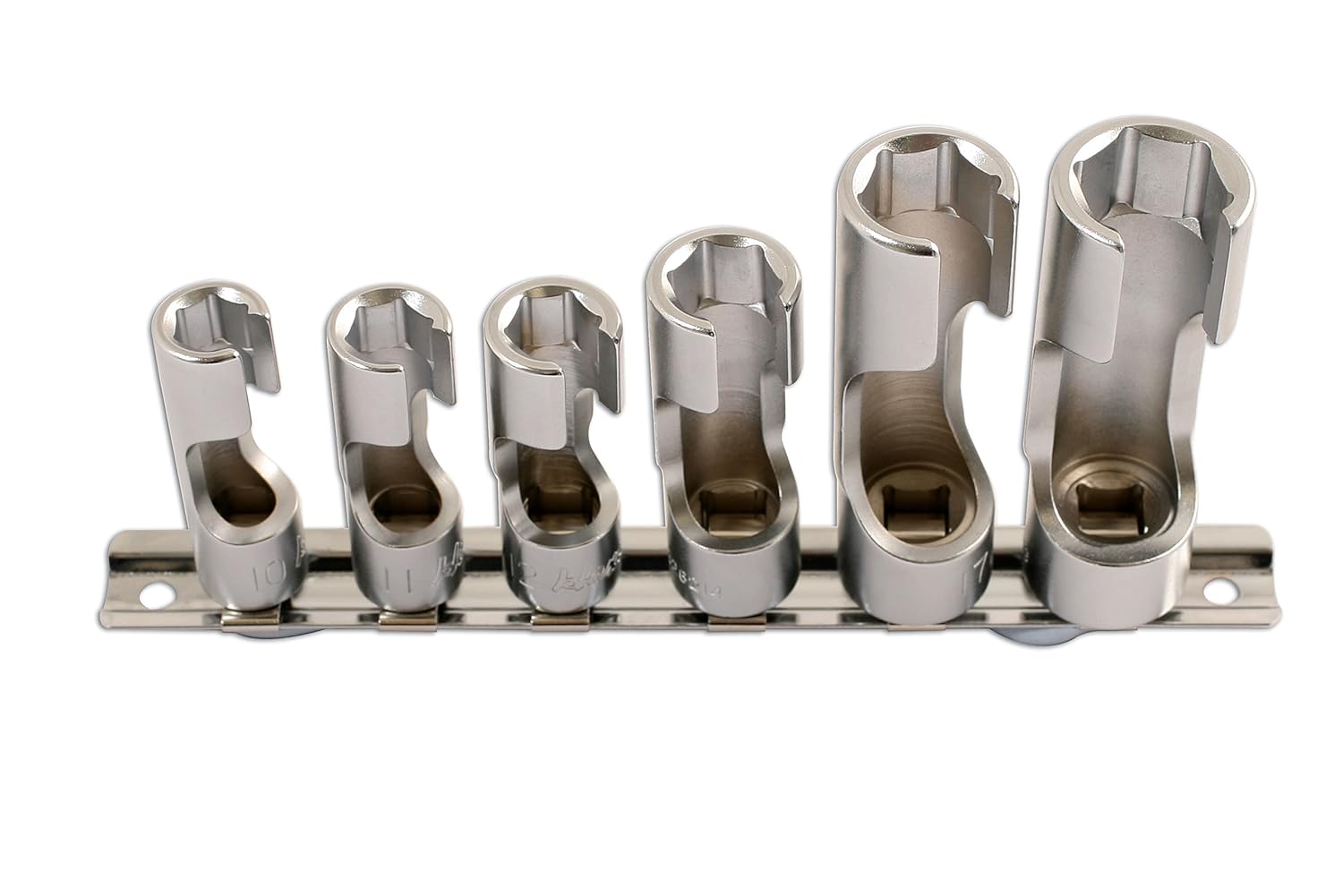
Err not quite. You got a good tool for rounding the corners off though, even though doing just that has got me out of a pickle a time or two. I can't live without my difficult access sockets, esp on 6bt injector pipes.
 
Buy 'dropped' ring a spanner and a combination spanner of the relevant size at a local flea market, two mins with angle grinder and you've got the right tools.

Yes already "made" one of those, very good for doing AS TINKICKER says, too much removed they do not fit proper, too little and if you force the issue they spread and still round off the nuts. Got a proper one now. LOL
 
Err not quite. You got a good tool for rounding the corners off though, even though doing just that has got me out of a pickle a time or two. I can't live without my difficult access sockets, esp on 6bt injector pipes.

I'm surprised, I've got a few of different sizes I've cut thin slots in to slip over injector pipes or brake pipes on cars and never rounded a flare nut.
 
Some you win, some you lose. Just saying a flare nut spanner is considerably different to your average ring spanner in construction. Most used to be hex types, but now you can get bi hex types in the flank drive format. Your average 12 point ring spanner cut down is not a reliable tool.

I too have used normal rings with slots cut in with success, I have also had failures, which is why I invested a considerable amount of money in the correct tools for the job.

This is a public forum and I try to ensure any comments or advice I give are best practice :) I never do it to belittle someone else's contribution (unless it is dangerous advice) and am not trying to make you look bad.
 
Last edited:
This is a public forum and I try to ensure any comments or advice I give are best practice

Good advice is just that "advice" forum member can make a decision on if they want to take it.......or not.

Keep the "good" (best practice) advice coming. We have to remember that many on here are not engineers and may never have used tools in anger before buying a boat.

Tom
 
Some you win, some you lose. Just saying a flare nut spanner is considerably different to your average ring spanner in construction. Most used to be hex types, but now you can get bi hex types in the flank drive format. Your average 12 point ring spanner cut down is not a reliable tool.

I too have used normal rings with slots cut in with success, I have also had failures, which is why I invested a considerable amount of money in the correct tools for the job.

This is a public forum and I try to ensure any comments or advice I give are best practice :) I never do it to belittle someone else's contribution (unless it is dangerous advice) and am not trying to make you look bad.

I wasn't offended at all, just a little surprised, I appreciate the comment, I take the point that using a modified ring will give a bi-hex which are never as good as a single hex. I try to buy secondhand Britool, Snap-on, Facom, Elora etc, much better than cheap new rubbish.
 
Err not quite. You got a good tool for rounding the corners off though, even though doing just that has got me out of a pickle a time or two. I can't live without my difficult access sockets, esp on 6bt injector pipes.

TK do you mean crow's feet?

John G
 
I try to buy secondhand Britool, Snap-on, Facom, Elora etc, much better than cheap new rubbish.

FYI, I bought some cheapo Silverline ring spanners the other day off Amazon - in unusual sizes for a particular job - and they're beautifully crafted and able to put up with endless hammering while remaining unbend and unmarked. Was very surprised.

Am also writing this to flag-up the thread...
 
Can someone please explain the Dover Dorset engines please, what are the differences and how do you tell?


HEN015_2_-450.jpg


the one at rear is a DOVER the timing case is different, as for anything else I cannot assist.
 
Latestarter - some of your info is incorrect. Quite a few parts are interchangeable between dorset & dover engines, and the marine hybrid engine was dover block (which gave better coolant circulation) with dorset head, not the other way around. Dover rods enable use of higher compression dover pistons??? A range of compression ratios was available for dorset motors, from 16:1 down to around 13:1 for racing. These engines smoke badly with the standard 15.7:1 turbo pistons - you suggesting you go higher on a 15psi boost? You'll have the world's supply of head gaskets used up. Con-rods are the same anyway - except for a choice of lengths in .003" increments.

Blow me down I just go away for a few days and..............

The field trail vehicles I was responsible for were installed in Ford D Series with hybrid Dorset block/Dover hybrids. Neff the kitchen manufacturers and Ford Europe Distribution were two fleets I clearly remember, having spent many tedious hours wading through fleet repair records. Having spent hours going through this stuff why transport companies purchased this junk I have no clue!

I only remember two part #'s being the same out of parts count of around 600, main bearing caps and flywheel spring to mind, rods were certainly different part #'s and Dover rod only one length. Lond term ago now but thought 15.7 was Dover compression ratio, Dovertec was higher 16.4 possibly??

Yep violently agree regarding head gaskets, Ford purchasing insisted sourcing gaskets from Payen for production however allowed Victor Rhinez for service. We also had major issue with engine Dorset build fixtures which production had to re-design, block tended to droop until head was nailed down which did nothing for long term gasket integrity.

The Dorset 360 had a long history of oil migration behind the dry slip fit liner causing piston nipping. Engineering did a heap of modelling, one option was to use parent bore or revised liners. We requested larger a budget when marketing wanted a 180 hp rating to be formal part of the automotive product plan for the Dover. The 180 automotive rating only happened when Otosan took over the engine, and it did a darn good job in rough and tumble of Turkish truck operation.

Sounds like the colonel is ex Sabre guy, hope he is not Seahorse Marine who never answers emails.
 
No problem. The sockets are a necessity on the Cummins 6BT inj pump if you want to remain sane. Also give you a more accurate torque setting for injector pipe unions than crows feet.

Surprising how few people realise that offset of crows foot spanner effects torque setting. Take a look at Iveco FPT NEF engine exhaust manifold and tell me how torque setting can be obtained.
 
Surprising how few people realise that offset of crows foot spanner effects torque setting. Take a look at Iveco FPT NEF engine exhaust manifold and tell me how torque setting can be obtained.

It would be fairly obviously to anyone that had studied mechanical principles at any level, but of course, that's a minority of people.
 
Top