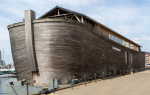
A 'national flag ship' planned to replace Royal Yacht

Status
Not open for further replies.
If I recall correctly it was a Spanishshipyard on the north coast on the ria de Ribedeo that won the contract for building the Antarctic survey vessel” sir Richard Attenborough,a small yard,that has a very skilled workforce eminently suited to build the new british flag ship if required.


Don't you mean David? :rolleyes:
:)
 
The taxpayers would save a fortune and be better defended by sea if HMG would just give all surface ship orders to Mitsubishi. I have heard British and American warship designers enthuse about their ability to build better ships, to the same design specs, faster and cheaper than either the Americans or the British.
 
His list of the ways in which the (British) builders ran rings round the (British) Government, from contract (“Problem was, their lawyers were paid four times what the Government lawyers were paid)”) and spec., to supervisions, to trials, can take an hour. Good listening, though.
Did not the government manage to sign a contract for the QE class of white elephants which meant it would have cost more to cancel the order than have the useless lumps built?
 
Did not the government manage to sign a contract for the QE class of white elephants which meant it would have cost more to cancel the order than have the useless lumps built?
Why, in your opinion, are they White elephants? The opposing view of course is they are the strategic heart of UK defence policy for the next fifty years?

Well actually I reckon we might get moaned at for going there......??
 
And that's why shipyards specialise. Down the road from me at Monfalcone, they churn out cruise ships at the rate of 3 or 4 a year. They have it down to a fine art with modular parts created on site or by suppliers (the cabins arrive as individual units and slotted in. All that needs doing is join the wires and pipes and put the sheets on the bed). A couple of days sea trial and off they go, because everything is a known quantity in terms of stability, fuel consumption, systems... Wartsila produces the engines in Trieste. Fincantieri also produce megayachts. Perhaps HMG would like to give them a call! :unsure:
Exactly the way the big 4 yacht builders assemble their boats which is why they work with minimal commissioning. OK if you are building 10 boats a week to the same design or 4 cruise ships a year, but not for building 2 aircraft carriers every 30 years. I expect the POW will give less trouble than the QE.
 
That’s absolutely right in my (merchant ship building, as buyer) experience. Once you shut down, your team goes in all directions. If you are building continually, people can leave the team and be replaced and the other team members will get them up to speed in no time, while the amount of knowledge and experience in the team is always growing.

It’s a truism that the first ship of a class will have all the mistakes and the last one will have all the components that were knocked back by the supervision team from the sisters.

Building this, at Harland and Wolff in 1993, the only man in the yard who had ever chocked a main engine was the head of the supervision team. True.

View attachment 116767
The RN relearn this every time there is a gap between classes of ship; Yarrow/BAE Scotstoun had got quite good at building T23s by the end, knocking one out every 18 months or so, but all that expensively acquired knowledge was squandered by not just telling them to keep building, at the time there were customers who could have been gulled into buying RN cast-offs or new ones with fewer shiny things. The alternative is various so-called forms of industrial strategy, otherwise known as paying people to twiddle their thumbs. The good ones get bored and seek work elsewhere.
 

Jolly good. But wasn’t there some fellow called Togo, a few years ago?

(I have long enjoyed the description of the British Naval Attaché, on the open bridge of Togo’s flagship at Tsu-Shima, sitting taking notes under a sunshade, such was his confidence in the inaccuracy of Russian gunnery!)

How different the last century might have been, had we resisted American arm twisting and renewed our Treaty with Japan!
 
Jolly good. But wasn’t there some fellow called Togo, a few years ago?

(I have long enjoyed the description of the British Naval Attaché, on the open bridge of Togo’s flagship at Tsu-Shima, sitting taking notes under a sunshade, such was his confidence in the inaccuracy of Russian gunnery!)

How different the last century might have been, had we resisted American arm twisting and renewed our Treaty with Japan!
People write books about what ifs.....

?
 
It would have been better to build three carriers. The argument for the three “through deck cruisers” was, iirc, that two could be in service with one in refit at any given time. I don’t know how this worked in practice but it certainly makes sense to me, and I doubt if the time in refit: time in service ratio has changed very much.
 
It would have been better to build three carriers. The argument for the three “through deck cruisers” was, iirc, that two could be in service with one in refit at any given time. I don’t know how this worked in practice but it certainly makes sense to me, and I doubt if the time in refit: time in service ratio has changed very much.
A year in refit for every two in commission... now I feel a lot better about all the boats I've owned!
 
Depends on how much kit has been ordered and/or installed with maintenance by replacement in mind; a lot of COTS gear can just be unscrewed and a new one screwed in its place. Special, one-of-a-kind unobtanium-clad unicorns like the WR21 turbines in the T45 which RR's bestest ever salesperson convinced some dupe in Bath would be a good idea but have been sold to exactly no other customers, not so much.
It would have been better to build three carriers. The argument for the three “through deck cruisers” was, iirc, that two could be in service with one in refit at any given time. I don’t know how this worked in practice but it certainly makes sense to me, and I doubt if the time in refit: time in service ratio has changed very much.
 
Jolly good. But wasn’t there some fellow called Togo, a few years ago?

(I have long enjoyed the description of the British Naval Attaché, on the open bridge of Togo’s flagship at Tsu-Shima, sitting taking notes under a sunshade, such was his confidence in the inaccuracy of Russian gunnery!)

How different the last century might have been, had we resisted American arm twisting and renewed our Treaty with Japan!
How true !

It was Captain Lord Sempill’s mission to Japan in 1921 that laid the foundations of Japanese Naval aviation. We taught the Japanese pretty much all we knew about the subject, and even showed them the designs for our latest carriers. With the benefit of hindsight, and the impact of Pearl Harbor, it does seem strange that we were quite so open handed, but on the other, this was only 3 years after the Great War, when Japan had proved to be valuable allies.
 
It would have been better to build three carriers. The argument for the three “through deck cruisers” was, iirc, that two could be in service with one in refit at any given time. I don’t know how this worked in practice but it certainly makes sense to me, and I doubt if the time in refit: time in service ratio has changed very much.
The bigger the ship, the more effective and adaptive platform you have. And as steel is cheap and air is free, it’s better to absorb that cost in the beginning, and you will recoup some of the effort with every refit
 
Status
Not open for further replies.
Top