3D Printers

I have just set up my New Snapmaker U1 Tool Changer. Very Pleased I am with it.

This is the Next Generation in 3d Printers me thinks

 
Last edited:
One of my first projects was a thermostat/humidistat/barometric pressure sensor for my Home Assistant using the ESP Home addon.
I used the 8266 (predecessor to the ESP32) - cheap as chips - literally.
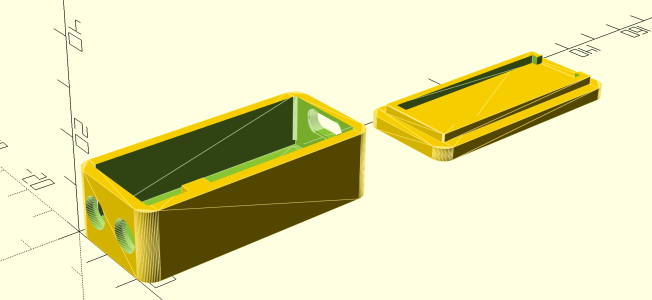
The idea was to build a thermostat/humidistat/barometric pressure sensor that plugs into a 13A socket - like the ESP 32, the 8266 has WiFi so it only needed power.
I designed it around a cheap USB charger so that I didn't have to use any mains wiring.
Designed using FreeCAD - and printed on my Bambu Lab X1C (not now available - IMO, the P2S is currently the sweet spot 3D printer).
Here are some pics of the final design which has been working for nearly 2 years.

View attachment 207323

View attachment 207324

I made several and spread them around the house.
Mike, just curious,
you've fitted them with a battery as I don't see any transformer for mains supply
 
If any of you are interested in Muklti Colour Printing with Minimum waste. The Snapmaker U1 tool Changer at £780 might be the way to go. I just set up mine and initial impressions are very good. Video below which might be helpful to someone

 
Announcement today

FreeCAD Version 1.1has just been fully released.
I've been using it for a few weeks and more so since its Release Candidate versions.
But today, it is finally there.
Lots of new features.

Here are a couple of videos that explain the new features:-


It is fantastic that this technology is available from the Open Source community making it free for all of us to use.
I use FreeCAD a lot.
The more I use it, the more depth I find.
I now "know stuff together" very quickly.

If you want to know more, click this link
FreeCAD: Your own 3D parametric modeler
Or just download and play with it.
It works on all major operating systems.
 
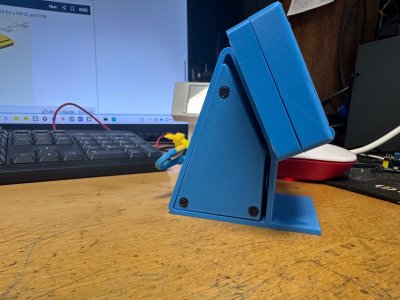
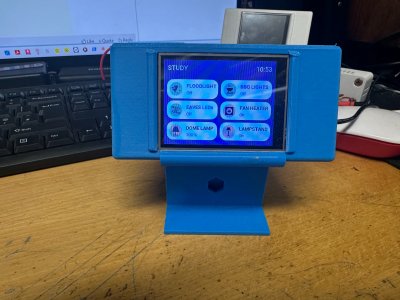
One of my recent projects: 3D Bambu X1C printed case, stand and triangular infill section housing a PicoW/LD2410C radar sensor inside. The touch screen is an ESP32-CYD which I setup in Home Assistant. If presence is detected the screen illuminates to 100% but dims to 10% when no presence is detected. I may install an ESP32-Cam module below to view through the hexagonal pocket in the front of the stand at some stage.....
 

Attachments

  • IMG_5101.jpeg
    IMG_5101.jpeg
    1.3 MB · Views: 8
  • IMG_5100.jpeg
    IMG_5100.jpeg
    1.2 MB · Views: 7
One of my recent projects: 3D Bambu X1C printed case, stand and triangular infill section housing a PicoW/LD2410C radar sensor inside. The touch screen is an ESP32-CYD which I setup in Home Assistant. If presence is detected the screen illuminates to 100% but dims to 10% when no presence is detected. I may install an ESP32-Cam module below to view through the hexagonal pocket in the front of the stand at some stage.....
Thats an interesting project, John.
I use ESP devices but I'm sad to say that I use them inside ESPHome in Home Assistant.
ESPHome runs simple YML files to expose the ESP sensors etc so you don't need to write any specific software.
Cheating but effective.
These ESP devices are as "cheap as chips" - literally.

I chose to add a cheap Android Tablet to my Home Assistant. It works but looses its connections etc whenever an Android update comes along.
I fitted that Android Home Assistant Dashboard before I got into 3D printing - at that time, I bought a wall frame for the Android Tablet.
These days, I would design and make my own tablet frame.
 
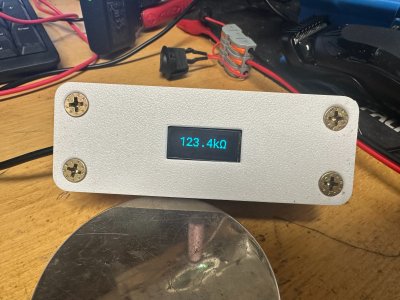
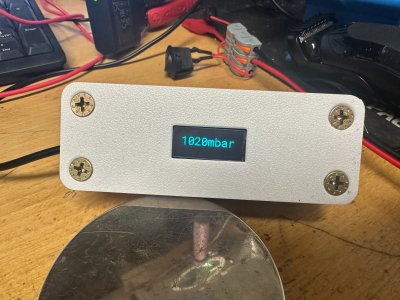
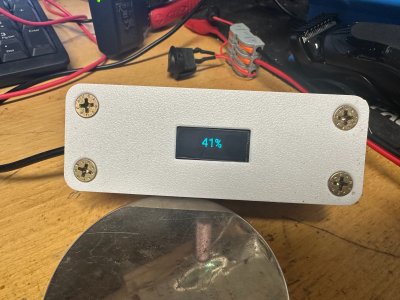
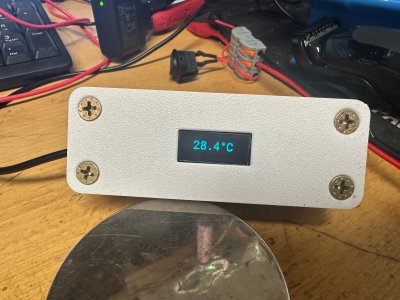
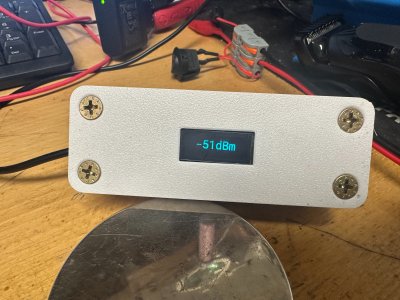
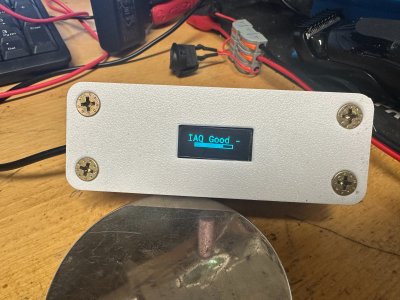
The PicoW is one of my favourites, small and versatile. I have though used lots of ESP32's and 8266's 's setting them up in HA using ESPHome, is probably the easiest route. I also built a cheap OLED display on my desktop that cycles through... well see the images. The Atom Lite ESP32 development board is also a really neat little device and just as easy to setup.

My Bambu X1C is in my study and when printing you do see quite a change in IAQ, although I usually print with the door off unless using ABS..... PLA is used for most things but been using PETG more often recently with good, if not better, results than PLA.... I play around with settings quite a bit but generally just leaving them as standard gives good results....
 

Attachments

  • 1.jpeg
    1.jpeg
    1.7 MB · Views: 3
  • 2.jpeg
    2.jpeg
    1.7 MB · Views: 2
  • 3.jpeg
    3.jpeg
    1.7 MB · Views: 3
  • 4.jpeg
    4.jpeg
    1.7 MB · Views: 3
  • 5.jpeg
    5.jpeg
    1.7 MB · Views: 4
  • 6.jpeg
    6.jpeg
    1.7 MB · Views: 4
The PicoW is one of my favourites, small and versatile. I have though used lots of ESP32's and 8266's 's setting them up in HA using ESPHome, is probably the easiest route. I also built a cheap OLED display on my desktop that cycles through... well see the images. The Atom Lite ESP32 development board is also a really neat little device and just as easy to setup.

My Bambu X1C is in my study and when printing you do see quite a change in IAQ, although I usually print with the door off unless using ABS..... PLA is used for most things but been using PETG more often recently with good, if not better, results than PLA.... I play around with settings quite a bit but generally just leaving them as standard gives good results....
I tend to stick to PLA and ABS.
I always buy the Bambu Filament - it isn't a "rip off" and the RFID tag means very little to set up - just load a roll of filament and press go.

Have you seen that Bambu are now selling 10 rolls of PLA for £92 - just over 9 quid a roll.
You have to buy a single colour for that price but it isn't much more when you buy 6 different mix and match colours.
 
Bambu filiment is over hyped and over priced. Try Deeplee PLA pro it is excellent and a good price

Amazon.co.uk
I've just looked at Deeplee PLA and it seems much the same price ad Bambu - their Black PLA was their cheapest but most of their colours are slightly more.
The great thing with Bambu is the RFID tag. You just load the filament into the AMS and everything is set up automatically. Brcause it "knows" from the RFID tag, when a filament runs out, the AMS will then automatically use a new one if it is loaded.
Bambu could charge premium prices for their own consumables but, IMO, they don't (yet) overcharge for their own genuine parts and consumables.
I have used other manufacturers filament but with Bambu - it just works.
 
Top