
2 bilge pumps one hole t piece

Rhylsailer99

Well-Known Member
Joined
19 Jun 2020
Messages
776
Visit site
I am worried about going into another lockdown during winter and my boat taking on water. I have a manual pump with a fattish pipe and want to.install a automatic bilge pump. What would be the best t piece I could use with 2 pipes of different diameters .
 
Just don't do this please!
I bought a boat like that, a little debris in the non return valves and the bilge water went around in circles until the battery went flat!
Also the NR valve will ruin the perfromance of the auto bilge pupm, which will already be poor due to lifting the water a fair height.

Maybe you could rig the auto pump through a hole in the washboard assuming self draining cockpit? Then passers by would see your boat pumping a lot and phone you.
 
I am worried about going into another lockdown during winter and my boat taking on water. I have a manual pump with a fattish pipe and want to.install a automatic bilge pump. What would be the best t piece I could use with 2 pipes of different diameters .

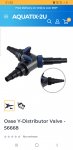
The automatic pump needs a separate skin fitting.
 
I am worried about going into another lockdown during winter and my boat taking on water. I have a manual pump with a fattish pipe and want to.install a automatic bilge pump. What would be the best t piece I could use with 2 pipes of different diameters .

Despite what others say I have an automatic bilge pump and a hand henderson MkV bilge going to the same skin fitting which is above the water line.

Each pump has a separate pipe going up as high as possible to a 180 degree bend then down to the tee which i fitted direct to the valve on the skin fitting.

Doing it this way I get no back flow and as the skin fitting is above the water no possibility of any siphoning.
 
Despite what others say I have an automatic bilge pump and a hand henderson MkV bilge going to the same skin fitting which is above the water line.

Each pump has a separate pipe going up as high as possible to a 180 degree bend then down to the tee which i fitted direct to the valve on the skin fitting.

Doing it this way I get no back flow and as the skin fitting is above the water no possibility of any siphoning.

That's true, no risk of siphoning. But extending the outlet pipe as high as possible restricts the output of the automatic pump (which isn't great in the first place).
 
That's true, no risk of siphoning. But extending the outlet pipe as high as possible restricts the output of the automatic pump (which isn't great in the first place).

Yes but you really do need some way of preventing any back flow if the boat heals and the outlet goes under the water.

As said a NRV can jam open and does restrict the flow.

I have 2 automatic bilge pumps and 3 hand bilge pups with 3 separate outlets.

One of my hand bilge pumps is located next to the helm as required by our safety laws and my setup has been inspected and approved by our government safety authority.

My setup also have solar charging so can be left for extended period of time. I also have a counter on each of the automatic bilge pumps so I can detect if there is any leak and if the leak is getting worse.

An other way is to have the automatic bilge and the manual pumps in series through the one skin fittion but again the combination of the 2 in series can reduce the flow of the automatic bilge pump.
 
Automatic bilge pumps are usually pretty feeble, and need all the help they can get, so minimal head is a good start.

I agree and a seperate skin fitting is the best but the OP asked about using a single outlet as Just described how I did it without the restriction of a NRV.

The best is if your boat has leaks is to find and fix then and not rely on a automatic bilge pump.
 
I am worried about going into another lockdown during winter and my boat taking on water. I have a manual pump with a fattish pipe and want to.install a automatic bilge pump. What would be the best t piece I could use with 2 pipes of different diameters .
If you are that concerned about the risk of going into "lockdown", a word I hate, then get lifted out.
 
If the outflow skin fitting is just above the waterline on the transom, there would be little chance of a back-syphon forming even in heavy seas, and it won't be affected by which tack you are on. You could 'T' in a longish piece of vertical hose to form a syphon break if you really wanted. Both pumps can go straight to the pipe on the skin fitting, one on a 'T' piece. Neither will interfere with the other: the manual pump being a diaphragm pump and the automatic one needing a one-way valve. With a long line and a high lift, a one-way valve is required on the automatic pump because if you didn't have one, the pump would cut out when it emptied the bilge and then the contents of the pipe would drain back into the bilge (assuming a centrifugal pump) , causing the pump to come on again and again, resulting in a rapidly flattened battery (unless you had some way of increasing the hysteresis between on and off).

You could get one of those fancy boat monitors with SMS text alert, to tell you when pump is coming on.

Personally, I would do it differently, and have two skin fittings, one on each side of the boat, opposite the other, enabling me to minimise the run to the draining skin fitting and using the other (on the windward side) to act as the syphon break. Then the pumps would only ever have to pump to the height of halfway between the two fittings before gravity did the rest.
 
Last edited:
Auto bilge pumps do not have to be centrifugal.
You could use a diaphragm pump as used for shower waste,
These tend to cost a lot more.
Not sure I'd trust any pump unattended for months.

The auto bilge pumps which work by sensing the resistance ofthe impeller, cycling it on every few minutes are great in a RIB where there is some water, but useless in a yacht where they run dry and fail by the way. You need a separate float swtich or a pump with built in float switch.

I think the danger of travel restrictions is not zero, and people who live many miles from their boats need to be thinking about the winter.
Any pumps and gadgets you want to rely on, you may need to be testing them now.
 
Remove the risk, take the boat out the water if it has issues remaining water tight.
 
Top