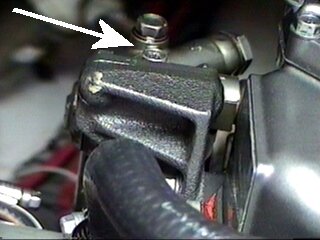
1GM10 Fuel Filter Bleed Screw Not Tightening

sailingjupiter

Active Member
Joined
1 Aug 2006
Messages
45
Location
Lancashire
Visit site
As the title says really. I replaced all the fuel lines recently and so had to bleed them. The bleed screw on the engine fuel filter (secondary?) opened OK but when I re tighten it, it just keeps going. There is a tight spot then it goes loose. If I keep turning, the process is repeated. I have stopped at the tight spot assuming that this is the best point for keeping any air out.

Have got the engine going (eventually) by bleeding all the other bleed points as well. Has happily ran for an hour or so. When I re start within the day it springs to life straight away. But if I leave it overnight it takes very much turning over for it to fire. Mostly it doesn't sound like it is trying. Now this may not be related as when its cold this engine has always been like this. When its warm outside it is much better but not perfect!

Partly the reason for replacing the fuel lines was to try to stop this starting problem as I assumed the old lines were letting air in. Interestingly today I thought I would bleed the problem bleed point before trying to start. Fuel started coming straight away when I operated the priming leaver, so is the screw tight enough?

So to sum up. Is the bleed screw not tightening a problem? Should it tighten up tight as you would expect? Do I need to buy a new housing for the fuel filter (it also has the bleed screw on it). Can anything else be done? Also what is my starting problem if it isn't the air getting in? I have read many 1GM10 threads on poor cold start but none appear to answer my problem. This year I have replaced battery cables with some very big ones, new battery with high cranking amps, replaced fuel lines and had the injector checked and was told it was good and didn't require a service.

Any suggestions much appreciated.
 
A stripped thread on the body of the filter is most likely, due to overtightening of the steel bleed screw on the softer alloy of the filter body at some time in the past. First try a new copper washer (or anneal the old one) to see if this helps, but I doubt it will. I had the same problem with the central bolt, which eventually delivered a neat intact aluminium coil of stripped thread! I bought a new primary filter body, but engineers tell me its easily possible, and much cheaper, to fit a new thread , (? called a "Helical" maybe... I'm sure there will be lots of experts on the forum who will tell you how to go about it)
 
For reasons best known to themselves they make the filter body out of some relatively soft alloy and the bleed screw out of much harder steel. Thus as m'learned friend says the thread strips and it becomes impossible to get a really good seal. I had exactly this problem a year or so back and ended up buying a new filter assembly. It may be possible to restore the thread with an insert or tap it oversize and use a larger screw but for me the most effective solution was just to replace the assembly (£64.91). My engine started reliably after that even when left for a week or more.

(Incidentally I think Biscuit is referring to a primary filter and not to the one on the engine if it's a Yanmar; no central bolt involved in the latter case.)
 
Last edited:
A stripped thread on the body ... ...but engineers tell me its easily possible, and much cheaper, to fit a new thread , (? called a "Helical" maybe... I'm sure there will be lots of experts on the forum who will tell you how to go about it)
Not an expert, but Helicoil is what to ask for. Try a local engineering company (maybe one that does cylinder heads and suchlike). You can buy your own Helicoil kit, which just might be worthwhile:
http://www.justoffbase.co.uk/M6-X-1-0-HELICOIL-THREAD-REPAIR-KIT-44065-Draper-DHCK-MET
Draper (so not the very best, but probably ok), £24.30 for an M6 kit, which is possibly something close to the size you want, can't remember offhand, might be smaller. I think the smaller of the two screws on top of the filter take a 10mm spanner, indicating that the thread is M6, the larger takes a 13mm spanner indicating that it is M8. I think....

bleed2.jpg
 
Last edited:
The same thing happened to me last year. I bodged some flexible gasket sealant around the thread, and the engine ran fine. However... after our first trip of the season I found about a pint of fuel in the bilge. So in the end I had to get a new filter housing.

I'd skip the bodge bit and just get a new filter housing now!
 
Either a helicoil or drill and tap to the next larger size of bolt. You'll have to drill and tap the hole to fit the helicoil anyway. It is a 5 minute job to fit a helicoil if you have a local workshop or garage that will do it for you, rather than buying the kit yourself.
 
As above: To make clear: I was referring to the secondary filter: On my Yanmar2GMF, as well as the bleed screw there is a retaining bolt (I dont know how else to describe it) which had the stripped thread, the effect was the same, leaky fuel and air in the system)
 
Thanks everyone. Looks like another order in to Marine Power.......

I find that when I take the cheap option, I always end up having to do the expensive one anyway, so may as well just bite the bullet and shell out the £65 now.

Mind if it does cure my starting problem that I've had for the last 4 or 5 years I will gladly spend it. Can't replace much more to cure it. As said above, so far have bought new battery cable, new fuel lines, new battery, injector checked, now filter housing. Only starter motor and engine internals to go now..............
 
Thanks everyone. Looks like another order in to Marine Power.......

I find that when I take the cheap option, I always end up having to do the expensive one anyway, so may as well just bite the bullet and shell out the £65 now.

Mind if it does cure my starting problem that I've had for the last 4 or 5 years I will gladly spend it. Can't replace much more to cure it. As said above, so far have bought new battery cable, new fuel lines, new battery, injector checked, now filter housing. Only starter motor and engine internals to go now..............

You still have quite a few other things to check for poor starting. My 1GM10 started instantly throughout the 17 years I had it. Air in the fuel can be a problem, but is not "self curing" -ie you have to bleed it. Other things to check are air filter, exhaust elbow for internal corrosion or carbon build up, exhaust system for blockages such as collapsing hose (common and causes back pressure) and low compression - caused by worn rings, poor valve sealing or bent con rod. The latter two often come from water getting back into the cylinder through the exhaust - either from corrosion in the exhaust elbow or lack of an anti syphon valve in the water circuit between the engine outlet and the exhaust elbow.

Sorry for the long list, but those problems related to water geting in can be checked by taking the head off. However, first take the elbow off. If there is corrosion that has perforated the inner tube then almost certainly water has got in and you need to get the head off to check the damage.

Hope this helps.
 
Tranona
Thanks for your list. I did replace the elbow last year. The old one had a very small hole in. Maybe the exhaust hose may be another good place to start. Looks like a pain to get the old one off though!!!!

But can you explain why in summer it starts much better. I thought of trying a hairdryer this weekend to get some heat in there first to see if that makes a difference. If it does why should it as I assume Yanmar didn't fit glow plugs as I assume it was designed to not need them.

The fuel filter housing will be arriving soon so I will try that first......
 
If you look at the workshop manual, Yanmar use nylon and not copper for the bleed screw on the secondary filter, presumably because of the inherent weakness of the alloy casting ?

Also in theory copper washers are good for only one tightening so when you replace the unit , might as well get spare new coppers for the fuel pipes in and out ! ( And do the primary filter too etc etc)

You can get spare copper and nylon washers for pennies at a good nut and bolt shop or motor factor or get em from your friendly Yanmar dealer at....approaching a £ each !!!

Yanmar gm loverly motor but very sensitive to the slightest bit of air in the system..

Advanced diagnostics..You need to fit a bicycle tyre valve to a bit of tube fed onto the spare orifice on the primary filter, turn off the fuel at the tank outlet, pump up just a handfull of psi using a bicycle pump, and splosh fairy liquid around all the suspect joints, as one might with gas leak detection. The leaks willbubble or dribble. Also kitchen towel laid flat under the engine on scrupulously clean inner grp liner will trap and point to persistent drips etc..

Happy hunting !
 
The fact that it is hard to start in the winter suggests the cold is the issue. You should always help it along by hand cranking the engine to get the oil moving. You can also spin the engine with the decompression lever up to help it get going.
The other thing to consider is the battery. You could pick up a decent 2nd hand one from the scrap yard for less than £20 which might help if yours is not strong enough.
The hair dryer trick does work but not entirely practical once the boat is back on the water.

Re. the washer the correct one is a small nylon one that is set into a rebate in the bolt
 
Tranona
Thanks for your list. I did replace the elbow last year. The old one had a very small hole in. Maybe the exhaust hose may be another good place to start. Looks like a pain to get the old one off though!!!!

But can you explain why in summer it starts much better. I thought of trying a hairdryer this weekend to get some heat in there first to see if that makes a difference. If it does why should it as I assume Yanmar didn't fit glow plugs as I assume it was designed to not need them.

The fuel filter housing will be arriving soon so I will try that first......

Sounds like low compression - unable to get the fuel hot enough to fire. The hair dryer trick seems to work for some and I have heard of people putting heaters in the air intake. However, none of this should be necessary. My engine used to start in sub zero temperatures by turning over a couple of times with the decompressor up, then about one third "throttle".

The hole in the exhaust pipe will have allowed water or steam back into the combustion chamber, particularly when the engine stops and sometimes runs a couple of revs backwards. Corrodes the exhaust valve seat leading to low compression. Would be tempted to do the head - reseating the valves before pulling the exhaust system apart.
 
Top