Yacht mast - 4m section of broken mast required

superheat6k

Well-Known Member
Joined
10 Jan 2012
Messages
6,798
Location
South Coast
Visit site
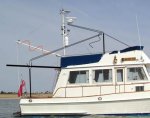
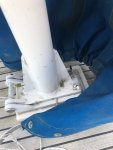
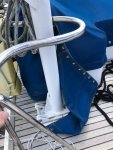
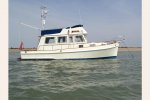
My new to me Grand Banks has a stub mast for its radar, aerials and anchor light. Presently the mast section is immense, and because I berth her upstream of Bursledon A27 bridge I need to lower and raise the mast twice each trip. I have already removed the boom to reduce weight on the crux, but think the answer is a lighter mast section.

So I am now looking for a broken section of yacht mast ideally something a 30 - 40' boat would have, and it needs to have about 4m of usable section.

If anyone has such a thing I would be pleased to discuss how much you would want for it.

Thanks.
 

Attachments

  • remote.axd (1).jpeg
    remote.axd (1).jpeg
    65.6 KB · Views: 71
  • remote.axd (6).jpeg
    remote.axd (6).jpeg
    96.2 KB · Views: 77
  • Mast  mount.jpeg
    Mast mount.jpeg
    13.9 KB · Views: 64
Last edited:
Is it not the radar and all the "other" stuff up there that is causing the weight problem. Changing the mast section may not make that much difference if that is the case.
 
My new to me Grand Banks has a stub mast for its radar, aerials and anchor light. Presently the mast section is immense, and because I berth her upstream of Bursledon A27 bridge I need to lower and raise the mast twice each trip. I have already removed the boom to reduce weight on the crux, but think the answer is a lighter mast section.

So I am now looking for a broken section of yacht mast ideally something a 30 - 40' boat would have, and it needs to have about 4m of usable section.

If anyone has such a thing I would be pleased to discuss how much you would want for it.

Thanks.
Use the existing mast fabricate a tall tabernacle with the pivot bolt as high as the dodgers ,then add ballast to the bottom section & maybe a small handybilly attached to the bottom to control it.
Jim
 
Use the existing mast fabricate a tall tabernacle with the pivot bolt as high as the dodgers ,then add ballast to the bottom section & maybe a small handybilly attached to the bottom to control it.
Jim
Not sure that is the best way to go. However sail boat people have perfected arrangements to lower mast safely and securely while traversing bridges. Should be a piece of cake difficult only by the weight of the gear attached. So you need a hinge at the base of the mast to allow mast to hinge down to horizontal. You need 2 side stays to keep mast on centre line as it traverses down and perhaps also to keep it up vertical. You need a forestay down to a gin pole going forward from base. This may be difficult to leave on permanently. Finally a tackle to lower the end of the gin pole. The boom and all the gear should be safe attached and hanging down into the cockpit area.
Or put simply stick with mast you have and improve lowering arrangements. Yachties here in Fremantle can lower 80ft of mast safelywhile under way for bridges just by setting up correctly. ol'will
 
The weight is definitely the mast as it is made of a 4mm section aluminium tube.

I quite like the idea of having the mast fall forward, which would also make the mounted components accessible when it is lowered.

This is now a Winter project so I will live with the temporary fix I am setting up at the weekend using a Handybilly with a 3:1 ratio on the lowering part.

Mast lowering.jpeg
 
Not sure that is the best way to go. However sail boat people have perfected arrangements to lower mast safely and securely while traversing bridges. Should be a piece of cake difficult only by the weight of the gear attached. So you need a hinge at the base of the mast to allow mast to hinge down to horizontal. You need 2 side stays to keep mast on centre line as it traverses down and perhaps also to keep it up vertical. You need a forestay down to a gin pole going forward from base. This may be difficult to leave on permanently. Finally a tackle to lower the end of the gin pole. The boom and all the gear should be safe attached and hanging down into the cockpit area.
Or put simply stick with mast you have and improve lowering arrangements. Yachties here in Fremantle can lower 80ft of mast safelywhile under way for bridges just by setting up correctly. ol'will
Look at a sailing boat from the Norfolk Broads. We hired a 36 foot gaff rigger with a huge mast, and lowered it easily for Potter Heigham bridge.
They do it exactly the way BritolJim says - move the pivot point up closer to to the height of the front of the bridge deck, using a tabernacle, but don’t cut the mast so that now have a bit below the pivot which can then add counterweights to.
 
The weight is definitely the mast as it is made of a 4mm section aluminium tube.

I quite like the idea of having the mast fall forward, which would also make the mounted components accessible when it is lowered.

This is now a Winter project so I will live with the temporary fix I am setting up at the weekend using a Handybilly with a 3:1 ratio on the lowering part.

View attachment 137169
If you drop it forward then you can use the boom as a gin pole if you make a brace so it can't swing
 
The weight is definitely the mast as it is made of a 4mm section aluminium tube.

I quite like the idea of having the mast fall forward, which would also make the mounted components accessible when it is lowered.

This is now a Winter project so I will live with the temporary fix I am setting up at the weekend using a Handybilly with a 3:1 ratio on the lowering part.

View attachment 137169
This method has worked very well. But a priority Winter job will be a new mast on a tabernacle falling forwards.
 
Some of the sail boats in our club have a keel stepped mast but a mast hinge is needed for traverse under bridges. A hinge is fabricated by cutting the mast at a 45 degree angle front to back at a height convenient for the mast to drop down. ie typically about 1 m above deck. A plate is welded over each open end of the cut (with holes in if needed for cables. The back part of each plate extends to carry lugs which hold a pin cross wise so making the hinge. The forward plates in this case extend to allow them to be bolted together when in upright position. This design might mean OP can use existing mast leave hinge at the bottom as is but will permit the mast to lower from a hinge above things like rails etc. Only concern is the force kicking the bottom of the mast away from the hinged mast when it is down, it would need a strut or stay to the under part of new hinge. ol'will
 
Top