Will my old Webasto cabin-heater ever stop smelling?

Babylon

Well-Known Member
Joined
7 Jan 2008
Messages
4,401
Location
Solent
Visit site
A bit parky it was at anchor, so I ran the Webasto for half an hour with all the hatches open in the expectation that it would eventually stop pumping out pure hydrocarbon pollution into the cabin, but it never did.

The exhaust was venting correctly out the stern of the boat, but the oil-based smell coming from the outlet ducting in the saloon was completely intolerable and didn't reduce, so I killed it and put on a second layer of woolies.

I thought these things never needed servicing, only regular use. Is there perhaps something wrong?
 
There's something wrong if it stinks like that. There was a thread a while back about this I seem to remember, and the wrong duct had been used and when heated smelt. Another option is the exhaust hose damaged and allowing these gases into the air duct?
 
As a matter of interest, did the CO detector observe anything? Also, were the cabin vents smokey, or just emitting a raw diesel smell?

First thing i’d do is examine the heater when it’s run-up (windows open :rolleyes:) and look for any signs of a leaky exhaust or the mixing of exhaust with fresh air-intake.
 
No visual evidence of fumes from the outlets down below - smell is oily rather than usual diesel exhaust fumes. Intake is (theoretically) via a hose to a grille inside an open cockpit side-cubby, but need to give the unit and installation (massively inaccessible under the cockpit coaming) a careful inspection for cracks in the hosing, loose connection etc.

In the distant past I used to find the smell would reduce after a while (burning off surface coating of oily substances?), but this is massive and enduring.
 
Having now chatted to a Webasto dealer on the phone, it is likely that the heat-exchanger has corroded, thus the membrane between the combustion side and the intake/output air is gone.

This seems feasible as the unit is now pretty old (1980s?) and the intake hose connects to a grille in in the side of an open locker in the cockpit - which occasionally fills with seawater (when I overdo things!) and also gets hosed out when periodically giving the cockpit a good clean.

The nightmare - in terms of inspection and removal - is that the unit is mounted up inside the narrow coaming of my small-cockpit boat, made further inaccessible by the roof of the quarter-berth below.

Spare parts are available, but I'm wondering if its worth replacing the whole unit? The current price of a replacement Webasto Air Top 2000 is about £1,250 (excluding the rest of the kit), but I've also been given a steer to the Planar units, which are less than half the money and most of the installation (ducting, fuel-lines, exhaust etc) can stay exactly the same:

https://planarheaters.co.uk/shop?olsPage=products%2Fplanar-diesel-heater-2kw-12-volt-kit
 
Yes, that's got to be the answer Graham!

I did briefly consider the alternative of a small stove to mount on the bulkhead at the foot of the port saloon berth, either a Hampshire Heater charcoal-burner or a Dickinson Newport solid-fuel burner, both dinky but more than adequate for my 27 footer and both about £700, but decided to stick with the diesel system already in place - all set up with fuel-lines, exhaust, air intake, outlet ducting, etc.

The Planar is such a direct replacement fit for the Webasto and I'll only need to wire in its own controller.
 
I fitted my Eberspacher in about 1998. Initially it was run frequently, winter sailing in Holland, for six years. Since then a lot less frequently in the Mediterranean but evenings can be chilly early in the season. There has always been a smell of oil in the heated air, not exhaust gas nor diesel smell. I assumed when it was first turned on that it was some sort of lubricant in the hose and would soon disappear but it never has. Not too offensive now and the heating is used so infrequently that it hardly justifies replacement of the hoses
 
...always been a smell of oil in the heated air, not exhaust gas nor diesel smell. I assumed when it was first turned on that it was some sort of lubricant in the hose and would soon disappear but it never has...

That's exactly it! I've always thought of it as a sort of WD-40 smell.

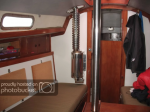
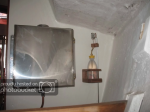
If I had nothing aboard and was starting again, I'd fit a standalone Refleks diesel heater on the bulkhead at the foot of the port saloon berth, with its own small tank in the forepeak, nice dry heat, no volts needed - photos below from a chap I know with the same 27ft yacht as mine.

In fact there's nothing to stop me (except the money of course) just disconnecting the old Webasto completely and fitting a Refleks. (The alternative is a Dickinson Newport diesel heater for much the same money, but this is slightly larger.)

Screen Shot 2019-05-10 at 11.16.13.png

Screen Shot 2019-05-10 at 11.16.39.png

Screen Shot 2019-05-10 at 11.16.56.png
 

Attachments

  • Screen Shot 2019-05-10 at 11.17.07.png
    Screen Shot 2019-05-10 at 11.17.07.png
    316.3 KB · Views: 4
Your Webasto may well be similar vintage to my Eberspacher. Heating hoses have come on a lot in 20 years. If I was in UK I would replace the hoses with some nice insulated modern stuff. My personal preference will always be a blown air system for convenience and efficiency.
 
Good points Vyv.

Made my decision and spoken to Owen who is coming down next week to install a new Planar etc, and will then also fit new insulated ducting myself.
 
I've just seen Planar heaters on eBay for similar. You need certain accessories for install on a boat but presumably the OP has got these already. Also on eBay you don't get the valuable after sales service that you get from Planar UK.
 
Top