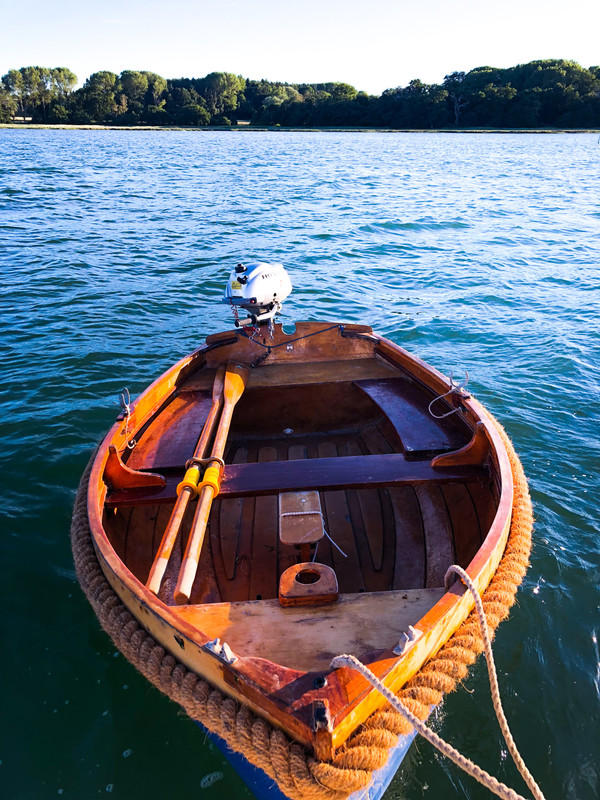
Why is there so few people towing a solid dinghy? (rather than rolled up inflatabubbles)

burgundyben

Well-Known Member
Joined
28 Nov 2002
Messages
7,484
Location
Niton Radio
Visit site
I have been thinking that this year, rather than faff about with an inflatable, which are crap to row and a pain to faff about with, I might use a solid tender and take it with me. I perceive this might also pave the way for ditching outboards and using oars on account of a solid dinghy being so much better to row.

My boat is a displacement boat, 8 knots max, its also a motorboat, so there's no significant affect on performance.

A lot of boats come and go through my home port but I rarely see a dinghy being towed, I do see a lot of inflatables, on the deck, or I guess rolled up in cockpit lockers.

Why so?
 
A solid dinghy is a great idea in harbour but at sea they be tricky unless you hoist them out on Davits. For example, they just love ramming your stern in a seaway.
they also sometimes escape, can fill with water and get in the way when your moor up and add drag. Fine in lake Solent on a nice summers day with flat seas, otherwise a pain
 
They are an inconvenience in Marinas, locks, long journeys etc. They row well but thats all, they are more unstable and carry less load; A "v" inflatable hull will row fine and more buoyancy.
 
they also sometimes escape, can fill with water and get in the way when your moor up and add drag. Fine in lake Solent on a nice summers day with flat seas, otherwise a pain
I grew up sailing with my dad towing a wooden tender behind us - surprisingly ok in rough seas offshore and following seas but magazines and books then were full of tips and techniques in the way that marina parking is a topic now. Best summed up as always keeping it a wave behind so it couldn’t ram ( used our longest warps, let out a lot or a little) and simply having two ropes so if one came undone the other held it.

We still tow our rib sometimes but I’d never go back to a blow up inflatable except in a small boat where I would expect it to live in a locker just in case but never used (14 years unused in the locker of my last small boat).
 
Way back in the impecunious days of my youth, I used to reckon that I could build several plywood dinghies for the cost of one inflatable. So that's what I did, towing a Yachting Monthly Pram (IIRC) behind a Folkboat. OK, a Folkboat isn't terribly fast, but it's not nice being overtaken on a run, by your dinghy.

Times move on.

Our sailing, on the West Coast of Scotland, almost invariably involves going ashore in the dinghy, and landing on beaches, rocks, or whatever the shore happens to be. For that, an inflatable is far and away superior to a solid dinghy. It's lighter to handle, and much less liable to get damaged. When sailing, we normally lift the dink aboard, where it stows up on its side on the side deck, ready for instant use when required. I extended the wooden folding oars to about 6 feet, and that slight modification has made rowing nearly as good as with a solid dinghy. I would never consider going back to solid.
 
I have been thinking that this year, rather than faff about with an inflatable, which are crap to row and a pain to faff about with, I might use a solid tender and take it with me. I perceive this might also pave the way for ditching outboards and using oars on account of a solid dinghy being so much better to row.

My boat is a displacement boat, 8 knots max, its also a motorboat, so there's no significant affect on performance.

A lot of boats come and go through my home port but I rarely see a dinghy being towed, I do see a lot of inflatables, on the deck, or I guess rolled up in cockpit lockers.

Why so?
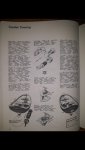
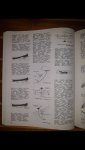
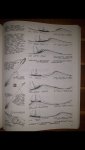
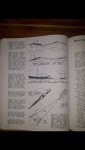
The Sailors Sketchbook describes how best to reinforce and tow a rigid tender and more importantly how to fashion a self bailing method! I will post some photos in a bit.

I think a rigid tender is a good idea and it should be able to be towed in big seas and delt with in port easily. It is just a forgotten art!
 
I have been thinking that this year, rather than faff about with an inflatable, which are crap to row and a pain to faff about with, I might use a solid tender and take it with me. I perceive this might also pave the way for ditching outboards and using oars on account of a solid dinghy being so much better to row.

My boat is a displacement boat, 8 knots max, its also a motorboat, so there's no significant affect on performance.

A lot of boats come and go through my home port but I rarely see a dinghy being towed, I do see a lot of inflatables, on the deck, or I guess rolled up in cockpit lockers.

Why so?
 

Attachments

  • Screenshot_20200310-165541_Gallery.jpg
    Screenshot_20200310-165541_Gallery.jpg
    475 KB · Views: 27
Last edited:
I'm leaning towards coughing up for an f-rib. Around the same price as portabote / sea hoppers without the potential ..buoyancy issues and should stow reasonably nicely on cabin top. Being able to stuff it in the pipe berth hidden behind pilot house seat would be nice but a smallish bag on the foredeck isn't the end of the world.
 
We towed a 10ft Orkney built clinker dinghy for many years and developed a few techniques to ensure the dinghy ran true.
We used a double painter forming a V with it secured to port and starboard bollards. In situations where we were going to having a bad following sea, we tied a drogue to the stern of the dinghy. I should add that a factor in our good experience towing was perhaps down to the dinghy having a keel.
 
I'm leaning towards coughing up for an f-rib. Around the same price as portabote / sea hoppers without the potential ..buoyancy issues and should stow reasonably nicely on cabin top. Being able to stuff it in the pipe berth hidden behind pilot house seat would be nice but a smallish bag on the foredeck isn't the end of the world.
I have a 275 FRIB with 9.9 Yamaha. It will fit 15hp. Advantage is its light and folds up. Great in rivers and when water is flat /flattish but in any chop its not so comfortable because it does not have a deep V and is a bit flat so it will slam. So it's good most of the time but next one will be double floor Highfield.
 

Attachments

  • Screenshot_20200310-170529_Twitter.jpg
    Screenshot_20200310-170529_Twitter.jpg
    386.7 KB · Views: 17
My old friend:


The Malcolm Goodwin designed and often built Nutshell is as good as you will get imho; she rows and tows extremely well and motors and sails pretty well.

To tow any dinghy you must (damhikt)

1. Either take the oars and anything moveable out or lash them in (wedging the oars under the thwart is not good enough - they will work loose).
2. Have a really strong eye low down on the stem or bow transom.
3. If she has a dagger board slot, close it off or stuff a rag into it.
4. Two painters are a good idea but they must be long.
5. Have a stern drag painter in the boat which you can flick over with a boat hook if conditions get bumpy and the dinghy wants to overtake you.

And once you have anchored or picked up a mooring...

6. Tie a bucket on a short line at the bow (NOT the stern) to keep the dinghy off your topsides.
 
My old friend:


The Malcolm Goodwin designed and often built Nutshell is as good as you will get imho; she rows and tows extremely well and motors and sails pretty well.

To tow any dinghy you must (damhikt)

1. Either take the oars and anything moveable out or lash them in (wedging the oars under the thwart is not good enough - they will work loose).
2. Have a really strong eye low down on the stem or bow transom.
3. If she has a dagger board slot, close it off or stuff a rag into it.
4. Two painters are a good idea but they must be long.
5. Have a stern drag painter in the boat which you can flick over with a boat hook if conditions get bumpy and the dinghy wants to overtake you.

And once you have anchored or picked up a mooring...

6. Tie a bucket on a short line at the bow (NOT the stern) to keep the dinghy off your topsides.
Thats a proper little ship! If you check out the photos I posted, they are quite readable if enlarged, on page 64 you will see the self bailing system installed.

The Sailor's Sketchbook is not as well known in Europe as it is in the U.S. It truly is a work of art!
 
I think a number of factors, mostly inter-related, have contributed to the decline in towing rigid dinghies, including -
1) yachts are generally MUCH larger now than in days of yore, so the potential for carrying a dinghy on deck or on davits, or an inflatable in a locker, is greater;
2) few rigid dinghies sold as tenders these days are well shaped and suited to towing (or even rowing!) - they're generally too flat bottomed and with insufficient freeboard and/or rise to the bow (designed for economic manufacture and transport, rather than use?) to keep enough waves and spray out;
3) more yachts are kept in marinas, where a dinghy is in the way and/or will add to mooring costs;
4) yacht's topsides are now more generally gel coated and shiny, so aren't regularly repainted and owners are less tolerant of the knocks and scuffs that may come from a rigid dinghy;
5) inflatables have probably reduced significantly in price, relatively speaking;
6) the former vast stock of cheap wooden dinghies of fishing/workboat, military and leisure origins have now largely rotted away due to age, the decline in skills and people's preparedness to undertake ongoing maintenance;
7) few people row far these days, and use of outboards much more common, so the disadvantages of an inflatable for rowing are significantly mitigated;
8) sailors these days are wusses. ;)

Another tip I recall for dissuading a towed dinghy from catching up with the towing yacht is to thread a funnel point forward on the painter, nearer the dinghy than the yacht and kept in place by a knot either side of it. If the dinghy overtakes the funnel it will be held mouth forward and the drag will tend to pull the dinghy back to its place.
 
Top