Why do so few cruising sail boats have a protected helm?

wipe_out

Well-Known Member
Joined
23 Feb 2013
Messages
1,399
Location
Bournemouth
Visit site
Hi all.. Maybe a silly question coming for a motor boater but I have been looking at sail boats lately with a view to potentially switching.. Now on the motor boat we switched from a sports cruiser to a pilothouse boat because the UK weather is typically rubbish and changeable.. This was one of the best decisions we made and significantly improved our boating experience.. We can go out on cloudy days and if we do catch a shower its no bog deal..

Looking at cruising sail boats (excluding motorsailers) it appears that pretty much none of them (under about 50ft anyway) have a protected helm setup, a nice example of what I am talking about is the Amel 55.. Now I am not looking at 55ft boats, more in the 30-35ft range, but is seems logical that some weather protection for the helmsman on a cruising boat, other than clothing, would be welcome..

So why don't cruising sail boats have any models with protected a helm?
 
I would expect that there are a number of reasons depending on the individual.

For me, I want to experience the real elements at work. It's part of sailing. In a car I am not so keen.
 
Because the mass-market models are designed for the Med and Carribean, especially for charter fleets. Economies of scale make these so much cheaper that boats properly designed for northern-european weather have struggled to sell well. Also, there's a prejudice that anything with an inside steering position (and not obviously designed to shunt icebergs in Greenland) must be one of those horrible motorsailer things and therefore rubbish at sailing :p

Pete
 
I cruised for nearly 30 years without a sprayhood, partly because they weren't common in the '70s, and because I enjoyed the view and the sense of being in touch with my surroundings. Now that I am older I appreciate my sprayhood with its HR glass protection, but it is not the only way to enjoy sailing.

Part of the issue is the position of the helm. I currently have a tiller, so my helming position is close to the sprayhood and I am sheltered from most spray when it occurs. An aft cockpit wheel is inherently more exposed but not necessarily excessively. What does strike me as a bit too Spartan is the fashion for helm seats on the actual transom, which may be all very well in the Med, but not in the North Sea.
 
@LONG_KEELER - I get wanting to be out and experience the outdoors on a good day but if you were on a long cruise, the point of a cruising sail boat, down the coast that was going to take say 10h (or even a longer run of a few days and nights) and it was raining wouldn't that really suck being out in the elements? Whoever was on watch would have to stand out there getting rained on..

@sauguday - Yes, a little like the canopy arrangement we had on our old sports cruiser but we found the hard top far more suited to the local conditions.. Seems like more "hard top" type options on sail boats would be a nice option to have (for those who want it)..
 
Because the mass-market models are designed for the Med and Carribean, especially for charter fleets. Economies of scale make these so much cheaper that boats properly designed for northern-european weather have struggled to sell well. Also, there's a prejudice that anything with an inside steering position (and not obviously designed to shunt icebergs in Greenland) must be one of those horrible motorsailer things and therefore rubbish at sailing :p

Pete

Yes, now that I get and it makes sense.. They are focusing on the med (just like the sports cruiser motor boats)..
 
One of the issues has to do with windward performance. True sailing boats are deisgned to minimise windage. A decent sized wheelhouse will create a fair bit of windage, which in anything under aorund 40ft tends to reduce performance to windward. Few Motor sailers sail well to windward for this reason. There are exceptions of course, but there is always some cost in lost windward performace.
 
It's the feeling of being in the middle of the elements with spray and rain wind flying at you as you tweak one bit of rope or another. And despite the sensation of speed you can always put the autohelm on and tuck under the sprayhood or make a hot drink on the move. The clothing is also designed to work really well too and most importantly make you feel you look impressive as long as you get you money's worth by a proper bucketful of wave in your face
 
If Sir would like to leave a small deposit, we'll get the yard to fit one to your Bavaria 55. Everything but everything is possible at the right price.
Donald
 
This is a subject oft debated here, particularly if sybarite or dancrane are feeling bored.

There was a time 30 years ago when wheelhouses or hardtop wheel shelters were common - but mainly on larger boats (40'+) and at the custom end of the market. It is very difficult to make a practical and good looking superstructure on boats less than 35'. There simply is not space to fit full headroom and big enough to have good visibility. Even worse on today's wide boats with high freeboard.

Some mass producers have tried with smaller boats in the UK (Westerly Konsort Duo, Hunter 27 Pilot and Horizon 323, Moody Eclipse etc). However the price premium for the extra work and the need for two helm stations etc is quite significant - sort of equivalent of going up the next size in boat. So all ended up as 7 day wonders and the limited real demand was satisfied very quickly.

The Scandinavians have had more success from a design point of view, reflecting the fact that sailing conditions, particularly extending the season mean that people seem to be prepared to pay the premium. However, most of the smaller ones like the LMs have disappeared from the market.

The reality is that the compromise of a good sprayhood and other canvas cockpit covers is a good one and a fraction of the cost of permanently installed shelter. You do see some DIY attempts at hard shelters, but mostly they are ugly and out of proportion to the rest of the boat.
 
Because the mass-market models are designed for the Med and Carribean, especially for charter fleets. Economies of scale make these so much cheaper that boats properly designed for northern-european weather have struggled to sell well. Also, there's a prejudice that anything with an inside steering position (and not obviously designed to shunt icebergs in Greenland) must be one of those horrible motorsailer things and therefore rubbish at sailing.

I'm afraid that is the reason, but the OP's question remains an ineradicable lament by many who sail (or who would like to sail, if it wasn't so comfortless) in a region where the weather is cold and wet, much more often than not.

It makes me laugh when owners of open-cockpit yachts say that the raw open chilliness is the whole point, and that "you just need warmer gear". I'm glad if they're happy, but it doesn't suit me. I have a car for when it's cold and wet; and I love to cycle when it's not. I wouldn't buy a car without roof or windows, just on the basis that it's pleasant to be outside, on a few days and nights in summer.

Unfortunately, I think most yachts are only used for a few weekends per annum; so clearly their unsuitability for our prevalent climate is accepted by buyers. Their high purchase price and the cost of storage/maintenance, in return for how rarely they're really a pleasure to use, makes them very expensive - which is apparently part of the appeal, as it implies the owner had money to burn.

My own conclusion is that the fizz-and-thrills of sailing are available in a decent dinghy, while for relaxing distance-cruising, I'll want a motor-sailer. The pity is that it must necessarily be an old motor-sailer, because hardly anyone is building them now.
 
I think the answer to the question is simple is obvious. Firstly to get a protected helm like an Amel or Nauticat the boat has to be big otherwise it just doesn't work. I know that there are smaller boats like Fishers but I don't believe that this is the sort of yacht the OP is talking about. To get the wheel at the front of the cockpit as in an Amel in a smaller boat would be expensive and difficult to arrange mechanically it would also seriously compromise the dynamics of the boat as you would have to raise the boom to give head clearance and that would affect the balance and performance of the boat.

To enjoy a protected helm the boat really needs to be a ketch and that adds a disproportionate cost to a small boat such that boat manufacturers think they won't sell.

Personally I think that there is a market for a pretty ketch but I am not sure how you could design a small ketch with a wide stern and lots of accommodation below and a decent sized cockpit. Buyers of small boats are buying small boats with lots of accommodation and if it does not have accommodation it will only sell in very small numbers.
 
I have a car for when it's cold and wet; and I love to cycle when it's not. I wouldn't buy a car without roof or windows, just on the basis that it's pleasant to be outside, on a few days and nights in summer.

That's because your car is just a means of transport, though. A sailing yacht is frankly a fairly impractical means of getting from A to B, so the comparison is not like for like.

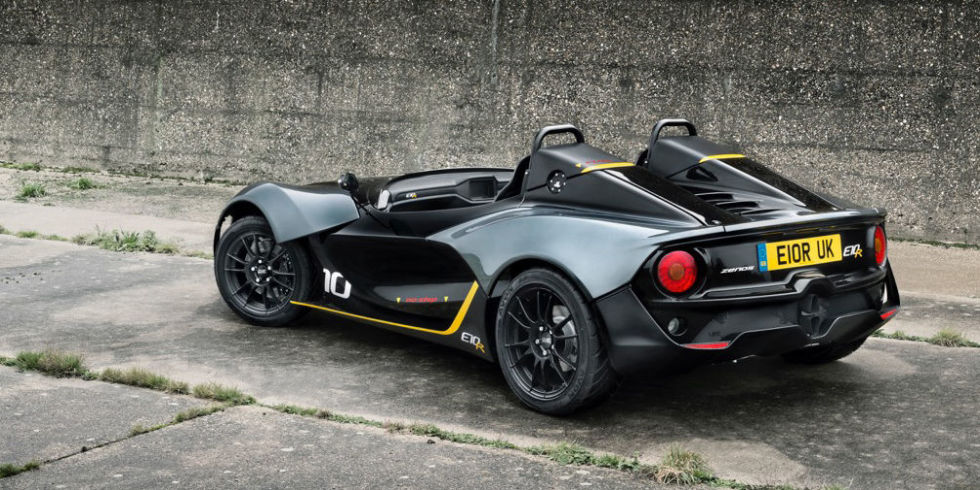
Some people, who have cars for fun rather than practical transport, absolutely do buy cars without roof or windows:

-MG_TC_Midget.JPG


Caterham-Seven-620R.jpg


landscape-1484932006-zenos-e10-r-03.jpeg


Pete
 
Some mass producers have tried with smaller boats in the UK (Westerly Konsort Duo, Hunter 27 Pilot and Horizon 323, Moody Eclipse etc). However the price premium for the extra work and the need for two helm stations etc is quite significant - sort of equivalent of going up the next size in boat. So all ended up as 7 day wonders and the limited real demand was satisfied very quickly.

You conveniently omitted Southerly, who I feel developed the inside sailing station design very effectively.

I mourn their demise, although i don't think it was because they didn't design and build a (series of) successful and attractive 'wheelhouse' sailing yachts of smaller size over a considerable period of time.
 
Top