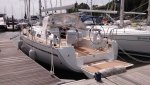
what's the logic of a cockpit drain ending under the waterline???

alexlago

Active Member
Joined
9 Sep 2018
Messages
44
Visit site
My boat has two 2" cockpit drains connected to thru-hulls located below the water line...
Besides this being a potential risk (with two 2" holes in the hull, better not to forget to close the seacocks ), I don't see the point of having them below the waterline, as I close the seacocks when I leave the boat thus preventing the rain water to be drained out of the cockpit...
I wonder if I'd better drill a cockpit drain above the water line and plug those two huge thru-hulls.
 
Nothing unusual about what you have' usually because going through the transom is either inconvenient or does not allow enough drop to drain the cockpit. Why would you want to close the seacocks when you leave the boat? Many boats do not have seacocks at all but straight drain tubes under water. The seacocks are there just in case the hose or clips fail which is highly unlikely, or you want to change the hose with the boat in the water - again highly unlikely.

Just make sure the hoses are sound and well clipped to the seacocks, leave them open and stop worrying about it.
 
When the boat heels, the water will flow preferentially through the lower drain hose. A hose routed to above the waterline will not have the 'head', so will drain more slowly. A full cockpit could be a tonne or more of water: you don't want that idly trickling away.

Why would you want to close the cockpit drains when leaving the boat ? Unless you have an cover over the cockpit.

Make sure you keep the drains free of mussels and barnies. It is worth having a length of flexible steel wire that you can poke down the drain to dislodge visitors.
 
Last edited:
I am another one who leaves my cockpit drains open. There is a hatch in the floor of the cockpit which has a lip of about one inch. If the rain water got higher than that it might get through the hatch and flood the engine and I don’t want that!
 
I wonder if I'd better drill a cockpit drain above the water line and plug those two huge thru-hulls.

One reason drains exit below the waterline is to prevent staining on the topsides. My old HR had cockpit drains exiting underwater, plus deck drains piped to underwater exits, all to avoid hull staining.
 
I don't know how deep your cockpit is but if there was torrential rain over an extended period of time and you don't make it down to the boat you will have a swimming pool if you shut the drains. If the level rises sufficiently could it flood over any cill into a locker or the cabin?
 
I don't see the point of having them below the waterline, as I close the seacocks when I leave the boat thus preventing the rain water to be drained out of the cockpit...
My old Mirage 28 had two cockpit drains that led to through hulls, water always finds it own level so as the water drains it will lift up the sea by a tiny amount.
 
Modern boats are quite a different shape. '70s boats had narrow sterns and it was usual to have cockpit drains leading underwater through crossed pipes, as did my Mystere. Many modern boats have a higher cockpit sole, so drainage above the water level is practicable, or even no drains and just an open stern, making a handy way to lose unwanted phones or children.
 
No it won't, the relevant head is only from the surface of the water in the cockpit to the sea level; this could actually be reduced with heel.

Sorry, your'e right. I wasn't clear. I was assuming crossed drains, where the lower drain in the cockpit is nearer to the sea surface when the boat is heeled.
 
Modern boats are quite a different shape. '70s boats had narrow sterns and it was usual to have cockpit drains leading underwater through crossed pipes, as did my Mystere. Many modern boats have a higher cockpit sole, so drainage above the water level is practicable, or even no drains and just an open stern, making a handy way to lose unwanted phones or children.
I don't understand the point of crossed pipes too...when the boat heels, the water gathers on the "heeling side" of the cockpit and will be drained to the level of the sea level, no more no less, wether the pipe is crossed or not...
 
My boat has two 2" cockpit drains connected to thru-hulls located below the water line...
Besides this being a potential risk (with two 2" holes in the hull, better not to forget to close the seacocks ), I don't see the point of having them below the waterline, as I close the seacocks when I leave the boat thus preventing the rain water to be drained out of the cockpit...
I wonder if I'd better drill a cockpit drain above the water line and plug those two huge thru-hulls.
As others have said, check soundness of skin fittings, valves, piping and clips and then leave them open. It's how your boat was designed to be used. Unless you are on board every few days, have a well fitted cockpit cover or are sailing in a desert, shutting the seacocks will flood the cockpit.
 
As others have said, check soundness of skin fittings, valves, piping and clips and then leave them open. It's how your boat was designed to be used. Unless you are on board every few days, have a well fitted cockpit cover or are sailing in a desert, shutting the seacocks will flood the cockpit.
then...supposing they are "made to stay open" , let's be consistent : why not get rid of the seacocks?
 
then...supposing they are "made to stay open" , let's be consistent : why not get rid of the seacocks?

Why not indeed - but I explained earlier why they are fitted. Hoses are not totally foolproof. However on some centre cockpit boats the drains are solid tubes bonded to the hull, and no seacocks.

You will may find yours are seized through lack of use, and if they are gate valves rather than lever operation probably best to change them as they tend to suffer from corroded drive shafts and it is impossible to tell if they are open or closed.
 
Vulnerability of the drain pipe to being damaged ? If you can't close the drain, you will have need of wooden cones to hand.

My drain pipes are very accessible in the space beneath the cockpit sole, and it's quite possible that in rough weather something like a fuel can might bash into one. I spose it's down to prudence, but if you have them already, why not keep them maintained, and use them ?
 
Vulnerability of the drain pipe to being damaged ? If you can't close the drain, you will have need of wooden cones to hand.

My drain pipes are very accessible in the space beneath the cockpit sole, and it's quite possible that in rough weather something like a fuel can might bash into one. I spose it's down to prudence, but if you have them already, why not keep them maintained, and use them ?
because a seacock is an added vulnerability especially if it's open... your fuel can will probably damage your hard valve before damaging the soft pipe...
But my question was related to why below the waterline, as this is also an added vulnerability...
 
I am another one who leaves my cockpit drains open. There is a hatch in the floor of the cockpit which has a lip of about one inch. If the rain water got higher than that it might get through the hatch and flood the engine and I don’t want that!

I once flooded my saloon in a previous boat when the cockpit drain became blocked by leaves. Heavy rain filled the cockpit until it overflowed the bridge deck. Cockpit drain seacocks seem somewhat pointless to me, although my drains emerge through the transom above the water.
 
because a seacock is an added vulnerability especially if it's open... your fuel can will probably damage your hard valve before damaging the soft pipe...
But my question was related to why below the waterline, as this is also an added vulnerability...


Afraid your thinking is not logical. If properly installed the seacock is not vulnerable. Some advocate that every outlet below the waterline should have a seacock on it, but cockpit drains because of their function might be an exception.

I have (and others) have already answered your question. The drain is below the waterline so that it always drains irrespective of the load in the boat (therefor where the waterline is) and when the boat heels. There may also be a constraint that prevents running the drain to the transom.

Suggest you draw out the profile of your boat, marking the waterline and the height of the cockpit floor and drain outlets in relation to the waterline.Then draw the same lines in section when heeled at 30 degrees. You should then appreciate why the drains are sited where they are.
 
I don't understand the point of crossed pipes too...when the boat heels, the water gathers on the "heeling side" of the cockpit and will be drained to the level of the sea level, no more no less, wether the pipe is crossed or not...
Don't blame me; I'm not a yacht designer. I suppose that one reason might be that in some boats the lower drain hole could end up below the water surface when heeled.

My Mystere at the end of our ownershi developed a leak, which I eventually traced to a cockpit drain pipe being holed where it passed the often hot dry exhaust. My solution, of closing the seacock, was only effective until it rained heavily when more water poured into the bilge. The next solution involved my going to a quinkelry in Trouville and trying to use my schoolboy French to purchase a bath-plug.
 
Top