Water in outboard gearbox - slow crank

GunfleetSand

Well-Known Member
Joined
15 Apr 2018
Messages
202
Visit site
Will make some time to do some more investigation myself but wondering what the group thought.

Would water in gearbox of a Yam F30 four stroke cause enough rust to give slow crank/hard to turn over engine?

Battery is new (800CCA) starter is clean, spins and engages with flywheel. Bypassing solenoid - in fact direct from battery to starter makes no change.

Have always felt it’s something in engine too hard to turn over - stuck pistons. One mechanic says head gasket.

More recently another mechanic suggested gearbox might be rusting due to oil seal leak. Service in October confirms water present as showed some milky oil, didn’t look major so was replaced with new oil and out in the list of future repairs. Seems unlikely to me but could over a few weeks there be a rust build up causing slow or no crank?

Yes engine in in neutral. If I remove plugs and turn over engine it very slowly cranks then speeds up to a high crank, plugs back in fires up. After that will start on the button.

Plan to drop leg/gearbox and see if there is a change to free movement . Will also check engine oil (looked perfect/lovely colour a few weeks back) inspect bores with scope and do a pressure test
 
I would drop the leg, as you say.
There is part of the driveshaft inside the gearbox spinning, whether in gear or not, so it is possible to be causing friction, possibly at the top bearing or seal too. Also check the water pump while the leg is down, it never hurts to have a look at the impeller and wear plates.
 
I would drop the leg, as you say.
There is part of the driveshaft inside the gearbox spinning, whether in gear or not, so it is possible to be causing friction, possibly at the top bearing or seal too. Also check the water pump while the leg is down, it never hurts to have a look at the impeller and wear plates.
Replaced impeller and plate underneath with new in October 22 service. I suppose with leg off I could grip the drive shaft with mole grips and feel for resistance.

Only other differential is with boat out of water the leg will have been vertical for the last few weeks not tilted
 
Replaced impeller and plate underneath with new in October 22 service. I suppose with leg off I could grip the drive shaft with mole grips and feel for resistance.

Only other differential is with boat out of water the leg will have been vertical for the last few weeks not tilted
You are not trying to start it with the water pump dry are you ?

Have you checked/ cleaned and remade all the main battery lead connections ? ............. Including the negative

.
 
had similar issue with a petrol mower, turned out to be valves out of adjustments, how old is the OB ?

2008 vintage. Yea someone else mentioned valves. I could probably find them and do have a feeler gauge, would need some research to learn what I’m looking for after that. Assume rotate engine via flywheeL and measure gaps!
 
You are not trying to start it with the water pump dry are you ?

Have you checked/ cleaned and remade all the main battery lead connections ? ............. Including the negative

.

Outboard always in water when starting so no pump dry.

Went from battery to grounds, to solenoi, to starter and remade connections positive and negative grounds. Fairly clean anyway but very clean now. Suspected battery isolator so by passed that and as mentioned went from battery direct to starter motor to rule out electric fault.

Once running it really does start on the button with a flick of the key
 
Will make some time to do some more investigation myself but wondering what the group thought.

Would water in gearbox of a Yam F30 four stroke cause enough rust to give slow crank/hard to turn over engine?

Battery is new (800CCA) starter is clean, spins and engages with flywheel. Bypassing solenoid - in fact direct from battery to starter makes no change.

Have always felt it’s something in engine too hard to turn over - stuck pistons. One mechanic says head gasket.

More recently another mechanic suggested gearbox might be rusting due to oil seal leak. Service in October confirms water present as showed some milky oil, didn’t look major so was replaced with new oil and out in the list of future repairs. Seems unlikely to me but could over a few weeks there be a rust build up causing slow or no crank?

Yes engine in in neutral. If I remove plugs and turn over engine it very slowly cranks then speeds up to a high crank, plugs back in fires up. After that will start on the button.

Plan to drop leg/gearbox and see if there is a change to free movement . Will also check engine oil (looked perfect/lovely colour a few weeks back) inspect bores with scope and do a pressure test
A long shot/guess, where the drive shaft comes out of the head on some OBs have a build up of salts which bind on the shaft to cause your symptoms
 
To narrow it down the simplest way would be to take the top cover off and try and turn the flywheel by hand (ignition off of course) then try it with the leg off too and see if there's a significant difference - there will be some resistance from it because of the rubber impeller vanes though.

If it turns over by hand reasonably freely with and without the leg on (apart from on the compression stroke of course) then it must be something electrical!

Otherwise its possible that the pistons are sticking in the bores a little but turning it over a bit begins to free them up - as it hasn't seized itself yet it's unlikely to be a lubrication failure but I suppose it's possible for water to get in from a failed head gasket and corrode in the bores a little - check your plugs, if one looks suspiciously steam-cleaned while the other is slightly fouled as normal, then water's been getting to it...
 
Update on this.

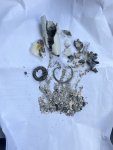
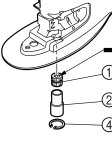
Drive shaft bushing located about 8” above water pump has imploded at some point, remains dropped into plastic retaining sleeve and the whole lot melted.

Took a bottle Jack and home made press to remove gearbox.

Outboard now cranks with the flick of a switch.

Remains in photo, some of it is boatyard floor.


83A0CAF2-8A12-4FE5-AEAF-D4E4A865E448.jpeg
 
12472040-0CD5-4F09-AE24-41797BC24B8E.jpeg3D433F1C-4C72-47B7-A1CD-29676874F67F.jpeg
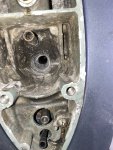
Leg casting overall is good but there was a bit of corrosion where the collar sits.

Seems like Yamaha and Suzuki both put these bushings into their outboards, not sure on what engine range but search results bring up both manufacturers.

Have ordered spares and will see how they fit back, If too major will try to make up slack with liquid something or if not run it without which seems to be acceptable and anecdotally done by other owners for years with no issues
 
Update on this.

Drive shaft bushing located about 8” above water pump has imploded at some point, remains dropped into plastic retaining sleeve and the whole lot melted.

Took a bottle Jack and home made press to remove gearbox.

Outboard now cranks with the flick of a switch.

Remains in photo, some of it is boatyard floor.


View attachment 151844
Corrosion, it swells the housing and squashes the bushing, then it starts to seize. Ive repaired them where the corrosion and precipitated salts is at the top end around theengine main bearing. A warning to us all if the engine starts becoming tight to turn
 
When I say it was a pig of a job to remove the gearbox/shaft I’m putting it mildly.

Now on the other hand it just plops out just like the Haynes book of lies tells you it should

Funny isn’t it, experience is everything. Just before second go at removing the gearbox bumped into a marine mechanic. Told him symptoms and he was like oh yea gearbox or lower leg before I’d finished my spiel.

At least I know all electric connections are good, starter motor (after removing it and taking it apart not once but twice) brushes not sticking and clean, battery is (grr) new even though it didn’t need to be. Oh and not to mention the hours I’ve put in on YouTube voltage drop tests and understand your outboard starting system videos!
 
Corrosion, it swells the housing and squashes the bushing, then it starts to seize. Ive repaired them where the corrosion and precipitated salts is at the top end around theengine main bearing. A warning to us all if the engine starts becoming tight to turn
If the replacement parts will fit without falling out or rattling around - Plan to make careful use of dremel or perhaps by hand remove any loose stuff and give it a prime first - mechanic just said loads of grease. I guess it's an easy to miss or not know about item
 
If the replacement parts will fit without falling out or rattling around - Plan to make careful use of dremel or perhaps by hand remove any loose stuff and give it a prime first - mechanic just said loads of grease. I guess it's an easy to miss or not know about item
I cleaned them up and put new seals in, got them from simply bearings.co.uk I asked for SS springs, worked ok
 
Top