VP D2-55 engine alarm question

MagicalArmchair

Well-Known Member
Joined
11 Jan 2013
Messages
1,540
Location
Kings Hill, Chatham Marina
Visit site
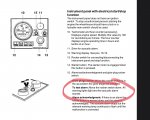
Mirage has a lovely D2-55. The procedure to start the engine, is turning the ignition on (a button), this shows the warning lights on the engine controls showing the alternator isn't charging etc, then glow plug button for ten seconds, then you start the engine up.

There is no buzzer when I turn the ignition on - does that mean if the engine alternator stops charging (the belt parts for instance), that tiny, impossible in daylight to see, red light just comes on and there is no alarm buzzer? What about overheating? Oil pressure? Surely there must be an audible alarm too?
 
Mirage has a lovely D2-55. The procedure to start the engine, is turning the ignition on (a button), this shows the warning lights on the engine controls showing the alternator isn't charging etc, then glow plug button for ten seconds, then you start the engine up.

There is no buzzer when I turn the ignition on - does that mean if the engine alternator stops charging (the belt parts for instance), that tiny, impossible in daylight to see, red light just comes on and there is no alarm buzzer? What about overheating? Oil pressure? Surely there must be an audible alarm too?
Doesn't the glow plug switch also incorporate the alarm test and acknowledge function?

The owners manual describes the starting procedure , which should include testing the audible alarm buzzer before energizing the glow-plugs and then operating the starter.

If an alarm condition arises while the engine is running the audible alarm should sound and one of the warning lights should indicate which condition has caused the alarm. The "test and acknowledge " position of the toggle switch will then silence the audible alarm while the relevant warning light continues to flash.

If the audible alarm does not sound when tested during the engine start sequence then the reason must be investigated.
 
Last edited:
Hi every boat I have worked on had an audible alarm system usually only on the engine oil pressure but on occasions high water temp as well. Find a friendly marine electrician to wire a buzzer into your lub oil sender and replace your warning lights with super bright LED's (the dimmable type) or if you want, wire the (single) buzzer into the lub oil ,coolant and alternator systems. Simples. Jim
 
Hi every boat I have worked on had an audible alarm system usually only on the engine oil pressure but on occasions high water temp as well. Find a friendly marine electrician to wire a buzzer into your lub oil sender and replace your warning lights with super bright LED's (the dimmable type) or if you want, wire the (single) buzzer into the lub oil ,coolant and alternator systems. Simples. Jim
If you read the owners manual for the engine in question you will find that the audible alarm should sound on low oil pressure, high coolant temperature or no charging
 
If you read the owners manual for the engine in question you will find that the audible alarm should sound on low oil pressure, high coolant temperature or no charging
I have not read the manual for that particular engine as all diesel engines are basically the same, I am using my past experience as a marine fitter maintaining / repairing many commercial craft. If you read the second part of the last sentence that is what I have suggested. Jim
 
Hi every boat I have worked on had an audible alarm system usually only on the engine oil pressure but on occasions high water temp as well. Find a friendly marine electrician to wire a buzzer into your lub oil sender and replace your warning lights with super bright LED's (the dimmable type) or if you want, wire the (single) buzzer into the lub oil ,coolant and alternator systems. Simples. Jim

You'd need to include some diodes if you did that.
 
You'd need to include some diodes if you did that.

Fortunately he doesn’t need to, as the engine panel already sounds the audible alarm if the alternator isn’t charging. All Jim is doing by making stuff up based on engines the OP doesn’t have, is confusing the matter.

Pete
 
Fortunately he doesn’t need to, as the engine panel already sounds the audible alarm if the alternator isn’t charging. All Jim is doing by making stuff up based on engines the OP doesn’t have, is confusing the matter.

Pete
Unfortunately, this tends to be the way most threads on here commence their downward spiral. :(

I know that I have said this a million times before on here, but surely it would have been more constructive to simply say "Fortunately he doesn’t need to, as the engine panel already sounds the audible alarm if the alternator isn’t charging"?

That gives the OP, whom we are all here to serve, all the information he needs without bringing any personal angles into the thread?

Just my personal observation.

Richard
 
  • Like
Reactions: RJJ
True, of course. I just get annoyed by people who double-down on being wrong when called on it, instead of accepting that they made an incorrect assumption (which is perfectly excusable). Mostly because it continues to inject misinformation into the thread which overshadows the correct answers.

Pete
 
Hi Pete did you not read the second paragraph of magical armchairs post and as for me making things up you should think again. All ic engines are the same be it diesel or petrol they just look different, they may be big they may be small they may be green or red in colour but for certain they all work on the same principle ( big bang in cylinder created by spark or compression/ heat) and they all need the same sort of protection to keep them healthy. Jim
 
Hi Pete did you not read the second paragraph of magical armchairs post and as for me making things up you should think again. All ic engines are the same be it diesel or petrol they just look different, they may be big they may be small they may be green or red in colour but for certain they all work on the same principle ( big bang in cylinder created by spark or compression/ heat) and they all need the same sort of protection to keep them healthy. Jim
That my be true but the control panels and the way they operate varies

The VP panel for the engine in question has an audible alarm which should be tested during the starting procedure and it should sound, when the engine is running in the event of low oil pressure. high coolant temperature or lack of charging
A few moments research before answering would have told you this . Even if you had read my earlier post , #3 you should have realised this

I suspect that the OP has not fully read the owners manual ... if he had he would not be querying the existence of an audible alarm. , he would know that there is one
It is a new boat to him so he may not have the engine manual or know that he can download one from VP's website.

His new Volvo Penta D2-55 may be indistinguishable from his old Yanmar 2GM20 in your eyes but the control panels operate somewhat differently
 
You are quite right control panels work in different ways but the one thing they have in common is they should all alarm if needed to and the simpler the system the better.
 
Thank you for all your responses. To my shame I have not yet cover to covered the manual, and as VicS rightly states, there is an alarm, and I can test it - it just differs in its function to my old 2GM20. Thanks for pointing out my error - time to properly read that manual!

A9B6B57C-B6F4-4BC8-9649-8CCCC8627CEA.jpeg
 
I tested the alarm (with the engine off) by pushing the rocker switch down - no sound came out! Buzzer kippered? Any suggestions for a fix? Take panel apart, check connections tho the buzzer I suppose is the first step?

Ably assisted by my 2 year old crew helper, Matthew: New video by Mark Ryan

But you did have the "Power ON/OFF" switch on ?

You could test the buzzer or you could connect a voltmeter across it and try the alarm test again to see if you get a reading .... whichever seems to be the easiest to do
 
Correct, the power was certainly on. So the warning lights were showing red, and the fuel gauge was on. Just when I pressed the rocker switch to test the alarm, there was not a sausage.
So now you need to prove if the problem is a faulty buzzer unit or a faulty logic block. Remove the two wires from the buzzer and connect the buzzer directly to a 12V supply, make sure the polarity is correct. (Might be easier to remove the buzzer unit from the panel) If no sound from buzzer then it is obviously kaput. If the buzzer sounds correctly then the problem is likely in the logic block that houses the warning lights.

Volvo prices for the spares are not very nice!! If it is the buzzer then you can source an identical item online by using the part number or alternatively buy a 12V buzzer/alarm sounder and wire it in place of the existing. If it is the logic module then you will likely have to pay Volvo's exorbitant price for a replacement.
 
Thank you, is the logic block behind that starter panel too?

I’ll check the connection to the other side of that rocker switch too.
The logic module is part of the engine control panel and it contains the warning lights. It is a sealed unit with a short wiring harness coming from it.
It will be obvious when you remove the engine panel from it's mounting position.
 
Top