Volvo stop solenoid getting warm

PaulRainbow

Well-Known Member
Joined
16 May 2016
Messages
19,451
Location
Suffolk
Visit site
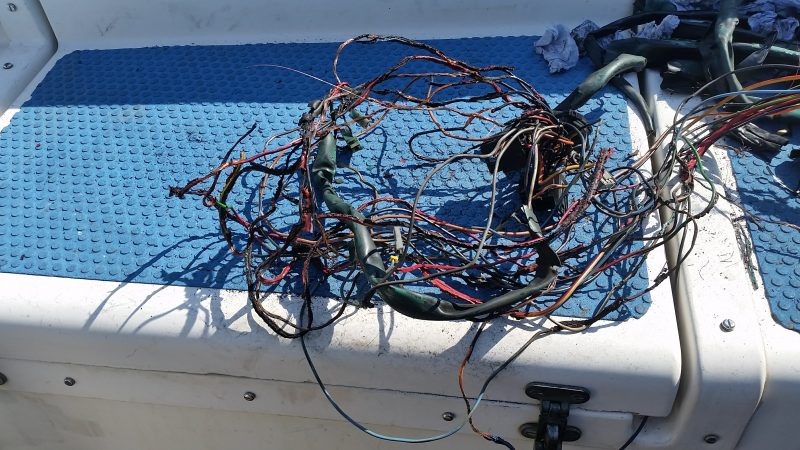
Here's what happens if the stop solenoid on a VP engine is left energised and the circuit breaker fails to trip. Not entirely sure of the exact chain of events, but i do know that the key was removed after stopping the engine. Either, the stop solenoid failed internally, shorting the wiring or, the energising relay stuck in the closed position, overheating the solenoid, leading to failure and shorting. Unfortunately, the circuit breaker next to the relay did not trip so the wiring got red hot. Luckily the owners went back onboard, found the boat full of smoke and turned the isolators off. The wiring was on the port side engine, on the hull side. Just a very few inches from thick sound deadening and a 1000 ltr diesel tank (linked to a second 1000ltr diesel tank on the stb side). The owners were very, very lucky not to have lost the boat.

Wiring harness out of production, so i had to make a new one. Both circuit breakers on both engines replaced just in case. Will be installing a revised system for stopping the engines, including a warning light on the dash to indicate the solenoid is energised. It's really surprising how quickly these solenoids get really hot when energised. Damn things cost £400 each too !!

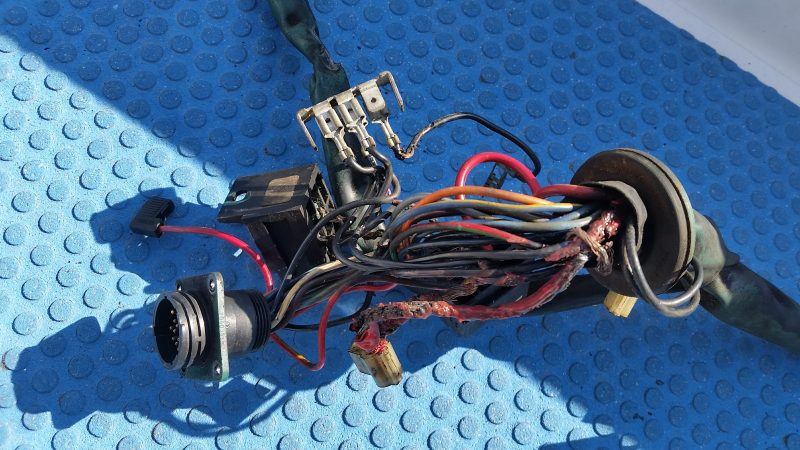
These are the relay/circuit breaker connections, the badly burnt red wires were connected to an 8a thermal breaker !
20180418_105450-e1528207178467.jpg


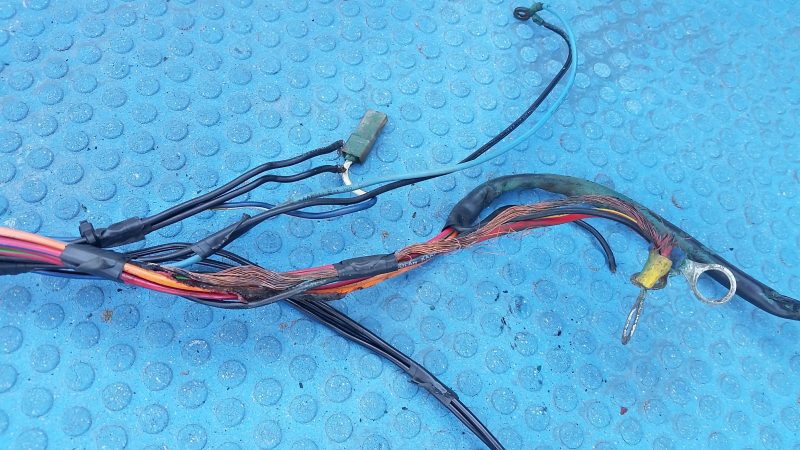
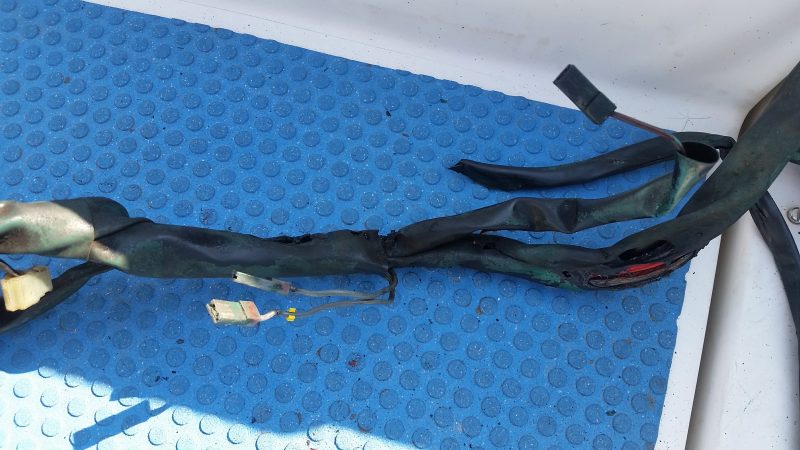
Couple of general pics, you can see in the second one that the red hot copper was starting to burn through the PVC covering :
20180418_105501-e1528207337938.jpg


20180418_105508-e1528207355125.jpg


After removing the pvc covering :

 
Interesting and a bit scary.
Did the breaker not trip because the current was in limits?
It could be the stop solenoid wiring is never intended to operate for more than a few seconds, so is not sized for continuous use? Particularly when you take into account the de-rating needed for a wire in a thick bundle and the high ambient temp of an engine box.
So the root cause is the relay sticking shut, or the switch somehow continuously energising the relay?
I've found car relays unreliable on boats.
 
Interesting and a bit scary.
Did the breaker not trip because the current was in limits?
It could be the stop solenoid wiring is never intended to operate for more than a few seconds, so is not sized for continuous use? Particularly when you take into account the de-rating needed for a wire in a thick bundle and the high ambient temp of an engine box.
So the root cause is the relay sticking shut, or the switch somehow continuously energising the relay?
I've found car relays unreliable on boats.

I think the breaker was faulty/old. Difficult to pinpoint precisely which part failed, but i have a feeling it was the relay sticking in the closed position, then the solenoid burning out internally, shorting the wiring. I don't suspect the switch, as it's a key switch and the owner had taken the keys out. He left the boat to move his car and came back to a boat full of smoke. Shows the importance of isolating engines when the boat is unattended, although this fault wouldn't happen on every boat. When i put it all back together we tried holding the solenoid in the energised position and it got uncomfortably hot pretty quickly.
 
I think the breaker was faulty/old. Difficult to pinpoint precisely which part failed, but i have a feeling it was the relay sticking in the closed position, then the solenoid burning out internally, shorting the wiring. I don't suspect the switch, as it's a key switch and the owner had taken the keys out. He left the boat to move his car and came back to a boat full of smoke. Shows the importance of isolating engines when the boat is unattended, although this fault wouldn't happen on every boat. When i put it all back together we tried holding the solenoid in the energised position and it got uncomfortably hot pretty quickly.

It is possible that the key switch failed to de-energise the stop circuit despite returning to the "O" position and the keys being with removed.?
 
It is possible that the key switch failed to de-energise the stop circuit despite returning to the "O" position and the keys being with removed.?

Technically you're right, but i don't feel that it did, can't be 100% sure of course. But to be absolutely certain i'm going to remove the solenoid connection from the key switch and connect it to a momentary push button switch, rated for the current draw of the solenoid and do away with the relay (wiring uprated were applicable). This will remove the risk of faults in the key or the relay and make sure that someone couldn't leave the key in the stop position. I'll add a red LED to the circuit to indicate that the solenoid is energised, so even if the button contacts stuck closed the owner gets a visible warning. That and new thermal breakers should keep it safe.
 
Top