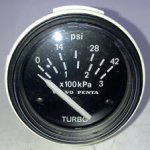
Volvo Penta D3-130

Jonathan2021

Member
Joined
11 Nov 2021
Messages
41
Visit site
Hi everyone,

does anyone here have common knowledge of the Volvo Penta D3 range?
Would anyone know if there are any internal differences through the power range or is it a matter of Tuning?
We recently purchased a Sunline Discovery 31 and are really struggling with planing and having enough power when she's fuelled up and few adults on board......
We keep minimum stuff on board.
Twin Engines were recently serviced and the Hull cleaned and anti fouled and is currently running Volvo 4 blade props with 1.66 gear ratio on SX stern drives
WOT is 3000rpm with 14.5 psi but once on the plane it revs to 4000rpm happily
Planing is a huge huge struggle!
We have been told that our setup may be underpowered for the sea and its possible the boat has a river set up. Not sure if this true or not....
Any help would be appreciated
 
The basic engine block is the same across D3-130 / D3-160 / D3-190.
The main difference is the turbo, which is a different part number on each.
What I don't know is how you would convince the electronics that you had a more powerful engine.

As far as I am aware, the number of people that have reported back success at upgrading on this forum is zero.
The other option is to sell the engines and repower.
In the owners manual, what is the maximum power quoted? Going beyond that is probably not a good idea, as it won't have been tested.
 
The basic engine block is the same across D3-130 / D3-160 / D3-190.
The main difference is the turbo, which is a different part number on each.
What I don't know is how you would convince the electronics that you had a more powerful engine.

As far as I am aware, the number of people that have reported back success at upgrading on this forum is zero.
The other option is to sell the engines and repower.
In the owners manual, what is the maximum power quoted? Going beyond that is probably not a good idea, as it won't have been tested.
Hi, thanks for the info. I thought that might be the case. I don’t think selling the current engines to re power is cost efficient but maybe worth considering if I can’t solve the problem. Shame really as a little extra power and the setup would be wonderful
 
Hi David, thanks for your reply. No trim tabs fitted. Have been Advised that trim tabs may not be a option due to the hull design. At this point I am tempted to risk it and see what happen. I just need that little extra lift,
 
Yes down to the max of -6 I have tried everything but to no avail
if it somehow manages to get on then the slightest reduction of engine trim it falls back off
 
The usual advice is not to tune by ECU programming as components of the engine may have been upgraded on higher power models.
Are you sure the turbochargers are functioning okay ? The variable vanes can seize up after extended low speed use.
 
The Turbos seem to be working. I’m getting almost identical boost of 14.5 psi at 3000 rpm but to be honest I’m not sure what it should be at that rev as I can’t find that data
 
Have the props been changed ? Your way down on rpms there. Should be 3800-4000ish I think.
edit...those rpms are for the 190..apologies. the 130 will be less rpm for sure
 
Last edited:
Just checking my turbo boost to reference your 14.5 psi .Here are the findings .

1,85 bar =26 psi 1830 rpm
1.45 bar = 21 psi 1530 rpm
0.23 bar = 3.3 psi 1050 rm

Wot is 2150 rpm


14.5 psi is 1.0 bar .That’s not enough boost my any turbo diesel standards l
Those D 3 s variable vane turbos are troublesome and stick .
You need to check the vane function as your boost seems low
 
Just checking my turbo boost to reference your 14.5 psi .

1,85 bar =26 psi 1830 rpm
1.45 bar = 21 psi 1530 rpm
0.23 bar = 3.3 psi 1050 rm

Wot is 2150 rpm


14.5 psi is 1.0 bar .That’s not enough boost by any turbo diesel standards .
Those D 3 s variable vane turbos are troublesome and stick .
You need to check the vane function as your boost seems low
 
Just checking my turbo boost to reference your 14.5 psi .

1,85 bar =26 psi 1830 rpm
1.45 bar = 21 psi 1530 rpm
0.23 bar = 3.3 psi 1050 rm

Wot is 2150 rpm


14.5 psi is 1.0 bar .That’s not enough boost by any turbo diesel standards .
Those D 3 s variable vane turbos are troublesome and stick .
You need to check the vane function as your boost seems low
That's so strange...the data from VP given even for the more powerful 190 version, say only 9.3 psi at 3000rpm...and even at full throttle, only about 19 psi
 
I may be wrong but suspect a boost gauge shows pressure above atmospheric pressure.
Otherwise it would read atmospheric pressure of 14.7 with the engine off but the ignition on
 
I may be wrong but suspect a boost gauge shows pressure above atmospheric pressure.
Otherwise it would read atmospheric pressure of 14.7 with the engine off but the ignition on
Yes “ boost “ as well as on top of atmospheric.
When turned off or tickover mine read zero .
They really start to spool up from 1400 ish and come on song at 1.5 to 1.8 bar .
Just Ave power output / cubic cap .Not talking Santa pod dragsters here .
 
Last edited:
this page here (TEKNDATA_D3_130I-B_utg02.xls (volvopentastore.net) ) has the tech specs for the d3-130 including boost pressure at various revs (about half way down the last page), reproduced below - so the boost you are seeing (14.5psi at 3000 rpm) is slightly higher than it should be - might be just an inaccurate pressure reading rather than actually being too high.

revs140018002000240028003000340038004000
boost psi0.71.52.97.312.313.813.815.216.0
 
Last edited:
Just checking my turbo boost to reference your 14.5 psi .

1,85 bar =26 psi 1830 rpm
1.45 bar = 21 psi 1530 rpm
0.23 bar = 3.3 psi 1050 rm

Wot is 2150 rpm


14.5 psi is 1.0 bar .That’s not enough boost by any turbo diesel standards .
Those D 3 s variable vane turbos are troublesome and stick .
You need to check the vane function as your boost seems low
I dont think you can compare your engine to a d3 like that - they are totally different ( as evideenced by your red line at 2150rpm , and the d3 revving to 4100rpm) , and as such the normal range of boost pressure will be vastly different in each engine (as shown in the table above)
 
Top