Volvo 4.3 V6 AQ205A, Water in oil issue.

GW The Reds

New Member
Joined
26 Mar 2021
Messages
12
Location
Rochford Essex
Visit site
Hi All.
I have just found a load of water in the engine oil on my Volvo Penta 4.3 AQ205A engine.
Any advice before I start to tear it down.
I run the boat in a sea water river, it has direct cooling. Grrrrr
I am hoping something simple (cheap) like inlet manifold.
I can't see how it could be exhust risers, as they have no oil in them (?).
help please.
 
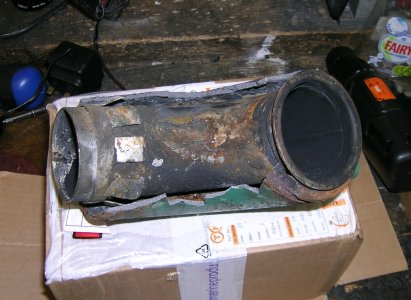
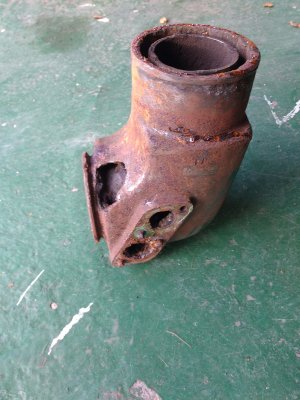
One possible problem could be the exhaust manifolds; How old are they? You maybe able to remove them and check without having to pull the engine.
The exhust manifolds have been removed once since, I purchased the boat some 6 years ago. They did look OK, but I was surprised as to how heavy they were, a real challenge to refitt, on my own.
 
The cast iron exhaust risers will crack if any residual water inside freezes. Had two risers crack on 4 cylinder petrol Mercruisers many winters ago.
The boat was ashore on the hard at the time.
Not a complicated job to do but fiddly (at least on my engines) simply due to lack of space immediately around the 4 bolts securing it.
 
The cast iron exhaust risers will crack if any residual water inside freezes. Had two risers crack on 4 cylinder petrol Mercruisers many winters ago.
The boat was ashore on the hard at the time.
Not a complicated job to do but fiddly (at least on my engines) simply due to lack of space immediately around the 4 bolts securing it.
Thankyou, I understand the risers cracking if frozen. But I don't think that they have oil in them, so how would the water get into the oil?
 
Thankyou, I understand the risers cracking if frozen. But I don't think that they have oil in them, so how would the water get into the oil?
Hopefully someone better than me (a mechanic) can offer an explanation but the exhaust manifolds mix exhaust gases from the engine with water cooling. You may have corrosion or a crack in the manifold which is bolted to the cylinder head – hence the oil.

Other than that it is possible the head gasket may have failed then it’s a compression or leak down test.

Whatever; it does unfortunately need to be sorted quickly.
 
Thru the exhaust valves if they crack .

You might have also a cracked block due to freezing , many many raw water cooled engines died that way
Thank you
Thru the exhaust valves if they crack .

You might have also a cracked block due to freezing , many many raw water cooled engines died that way
Hopefully someone better than me (a mechanic) can offer an explanation but the exhaust manifolds mix exhaust gases from the engine with water cooling. You may have corrosion or a crack in the manifold which is bolted to the cylinder head – hence the oil.

Other than that it is possible the head gasket may have failed then it’s a compression or leak down test.

Whatever; it does unfortunately need to be sorted quickly.
Thank you
 
One thing to do ASAP if not already done, is to remove all of the contaminated oil.
Then refill with fresh oil. To help against corrosion.
Can you give any thoughts to the time the engine may have sat with seawater in the oil?
In a perfect world there would be a suitable water displacing product you could fill the engine with but for now I'd go with fresh oil, and continuously trying to sample the oil from the bottom of the sump by sucking it out, replacing with fresh, and repeating until you're comfortable it's no longer contaminated.
That way at least no additional damage is occurring while you deal with the cause.

If you can prevent further seawater from reaching the engine, it may be a good idea to hand crank it with the new oil, just to move some of the components about.
But not before, as you want to avoid sending contaminated oil all around the engine.
 
One thing to do ASAP if not already done, is to remove all of the contaminated oil.
Then refill with fresh oil. To help against corrosion.
Can you give any thoughts to the time the engine may have sat with seawater in the oil?
In a perfect world there would be a suitable water displacing product you could fill the engine with but for now I'd go with fresh oil, and continuously trying to sample the oil from the bottom of the sump by sucking it out, replacing with fresh, and repeating until you're comfortable it's no longer contaminated.
That way at least no additional damage is occurring while you deal with the cause.

If you can prevent further seawater from reaching the engine, it may be a good idea to hand crank it with the new oil, just to move some of the components about.
But not before, as you want to avoid sending contaminated oil all around the engine.
Thank you Pete, very comprehensive response.
I had changed the plugs & ran it for a while, to warm the oil up, before I drained it & found the water in oil.
I have replaced the oil filter.
I have tried to remove the left side riser, but it is not wanting to release from the rubber flexi hose. Grrr.
I shall refill with new oil & see if it runs OK.
And then drain some oil from the lowest point & see what is happening.

I should got a twin diesel indirect cooling boat, but money to short to mention , worse now.
 
The key thing at this point is to try (as much as possible) to eradicate water sitting in/on any critical parts. If you are going to start it again, , I would consider starting it for a very very short time with fresh oil but no cooling water. It may not be good for your impeller (cheap) but should be good for all the bits that like oil not water (expensive)
Then while you investigate further, you have fresh uncontaminated oil throughout the engine trying to protect it.

Good luck. Which marina are you in?
 
As mentioned, if the leak is from the risers the water will run down ibto the manifold and there is always at least one exhaust valve open so it will run into the cylinder and eventually the sump. Was the water mixed with the oil like mayonnaise or just sitting seperately in the bottom of the sump. If is mixed then you need to get fresh oil circulatind round the engine as the water will rust the hardened finish on the camshaft. If its seperate from the oil then pump out and rinse it out with diesel to get most of it out, then the engine needs to be run up to normal temp to boil off any remaining moisture. To get the the rubber exhaust hose off spray around it with wd40 or similar and slide a long thin screwdriver down at different points to break the seal, then, look into the exhaust ports to see if there is any rust.
 
Top