Richard10002
Well-Known Member
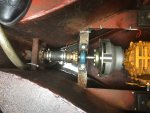
My boat has some kind of Vetus dripless stern gland. There seem to be several types of Vetus gland, so I cant find anything on the Vetus site or the web which is similar. I must admit to having no idea how it works, and have done nothing with it since buying the boat in 2011, I guess naively told myself that it could be maintenance free 
. Hope the pic appears.
A few weeks ago I cleaned out the bilge of rust, and gave it a coat of Vactan with a view to doing a proper paint job in a few weeks time. Over the weekend we went on a short trip for a pub lunch, (1 mile round trip), and the following day I noticed some water in the bilge, and the gland dripping about once every ten seconds. It's stopped dripping now, and actually dried up a little, but it's obviously time to do something with the gland.
I've heard of "burping" a dripless gland, squirting some grease into it, and replacing bits of it completely, (which may mean withdrawing the shaft a bit or a lot). However, I cant find any info to tell me exactly which gland I have, and how to maintain and/or fix it.
I'm hoping I just need to squirt some grease to start with, and see how it goes, but I dont know where and how, so any advice will be welcomed. I think I've got a decent grease gun somewhere, but it will probably only have ordinary grease in it. There is something that looks like a grease nipple attached to the hull just above where the prop shaft leaves the boat, but I would have thought that the seal would be at the engine end of the gland and I cant see anywhere to inject grease at that end.
I've asked the question on canalworld.net, and noone has the same gland as me, so lots of helpful general advice, but nothing specific.
Many thanks,
Richard
. Hope the pic appears.
A few weeks ago I cleaned out the bilge of rust, and gave it a coat of Vactan with a view to doing a proper paint job in a few weeks time. Over the weekend we went on a short trip for a pub lunch, (1 mile round trip), and the following day I noticed some water in the bilge, and the gland dripping about once every ten seconds. It's stopped dripping now, and actually dried up a little, but it's obviously time to do something with the gland.
I've heard of "burping" a dripless gland, squirting some grease into it, and replacing bits of it completely, (which may mean withdrawing the shaft a bit or a lot). However, I cant find any info to tell me exactly which gland I have, and how to maintain and/or fix it.
I'm hoping I just need to squirt some grease to start with, and see how it goes, but I dont know where and how, so any advice will be welcomed. I think I've got a decent grease gun somewhere, but it will probably only have ordinary grease in it. There is something that looks like a grease nipple attached to the hull just above where the prop shaft leaves the boat, but I would have thought that the seal would be at the engine end of the gland and I cant see anywhere to inject grease at that end.
I've asked the question on canalworld.net, and noone has the same gland as me, so lots of helpful general advice, but nothing specific.
Many thanks,
Richard