
Harpsden
Well-Known Member
Having just returned from a five day 'cruise and learn' course in the waters off Vancouver
and the Gulf Islands in Canada I thought forumites might like to see some photos from the trip
and hear about the course.
As I was finishing the preparation of the post I read Scubaman's great post
about cruising in Finland so apologies if there is any duplication.
The trip was inspired by an article in MBY by Barrie Baldelli in January this year
about chartering in the Gulf Islands.
Having decided to undertake a charter there next year with the family members
on-board it made sense to gain some familiarity with the very different waters
off the Canadian coast..
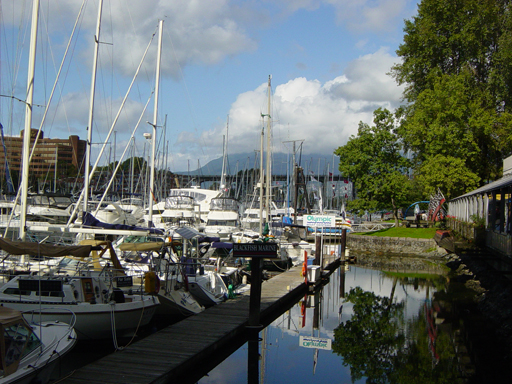
The cruise started at the False Creek marina in Vancouver which was very full
and gave an immediate challenge manoevring a boat on which you have no
experience in tight conditions.
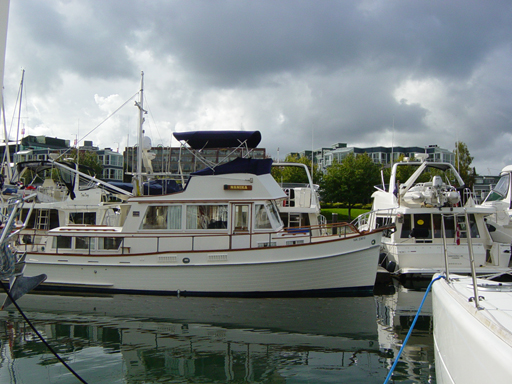
The boat for the five days was a thirty year old restored Grand Banks 36 -
Nanika - and also owned by the course instructor.
Although very different to our Sealine SC29 the twin prop vessel responded
in a very similar manner at slow speeds to the SC29 with its twin out-drives.
Having taken the helm and got Nanika out into the main channel with no
mishap the 20 mile crossing of the Strait of Georgia to the Gulf Islands was no
problem at a cruising speed of 8 knots. Hurricane force winds had hit the North
West coast of Vancouver Island the night before but the effect on the seas in the
strait had not yet arrived.
The first port of call was the protected anchorage and dock at Silva Bay on
Gabriola Island. By now I was getting used to the IALA B system with the
channel markers being the same shape as ours but with the colours reversed.
The lassooing technique for mooring was also of no use as the majority of docks
(pontoons being something else altogether in Canadian parlance) had rails
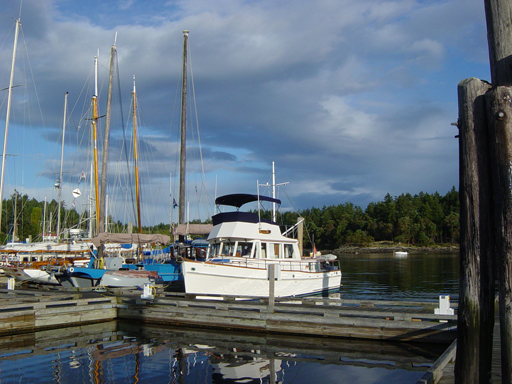
instead of cleats for tieing up. The picture of Nanika tied up in Silva Bay shows
how the docks are configured with rails instead of cleats.
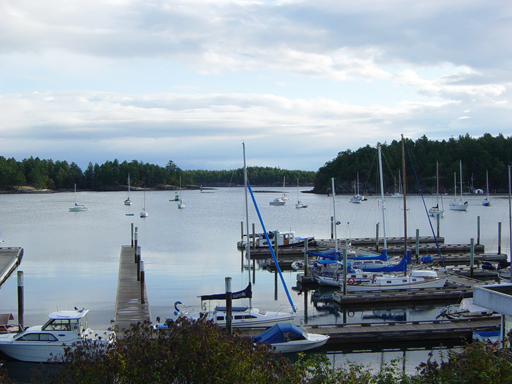
Being near the end of the season the harbors and anchorages all had plenty of
space as this view of Silva Bay shows. Overnight mooring costs seemed to be
round a pound per foot.
The wildlife was also different to that around the Solent with this sea otter
using the next dock to groom. We also had eagles, seals and porpoise throughout
the course.

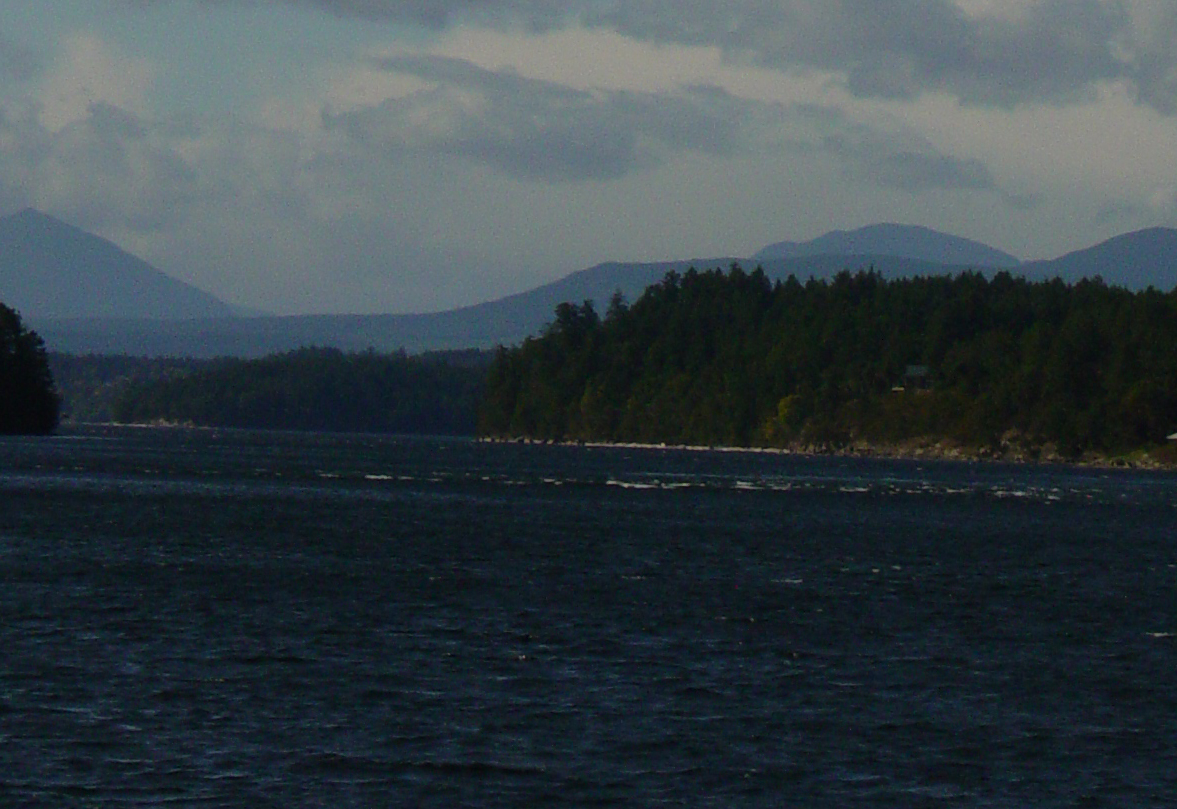
Entry from the Strait Of Georgia into the sheltered waters of the Gulf Islands
is through a limited number of passages all of which have very strong tidal streams
with flows up to 8 knots at times. We entered through Gabriola Passage and the
picture below shows the turbulence in the water which moved Nanika around
significantly even though she was a solid heavy boat with a good keel.
After anchoring for lunch in Pirates Cove on De Courcy Island we moved on to
Conover Cove on Wallace Island to anchor for the second night. There was
the threat of a strong wind blowing into the anchorage so we had an all chain rode
with a scope of 7:1. To prevent swinging round in a very tight anchorage we
stern tied to one of several rings on the shore installed for just that purpose.
A clever way to ensure more boats can enjoy the anchorage at busy times.
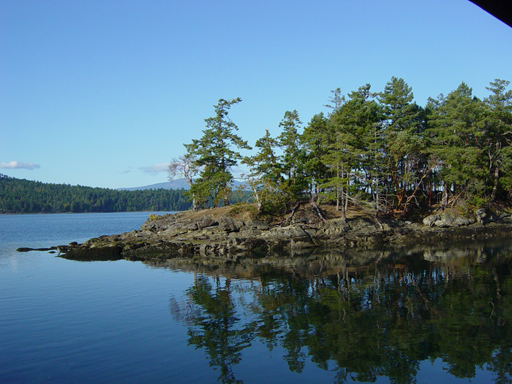
By the time we were fully anchored the sun was setting as this view through
the entrance shows. We had to re-set the anchor as the first time the hold
was not good enough.

The same view the following morning:-
We had got such a good hold at the second attempt that we were worried
that it may be a problem to retrieve the next day but all was well once
pulled from above and we moved on to Ganges Harbor on Saltspring Island.
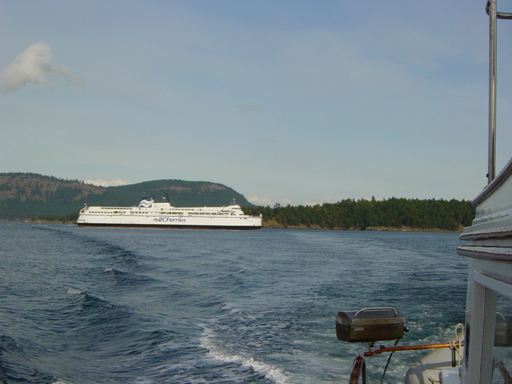
The main channels are used as ferry routes and a close watch had to be
kept for them at all times
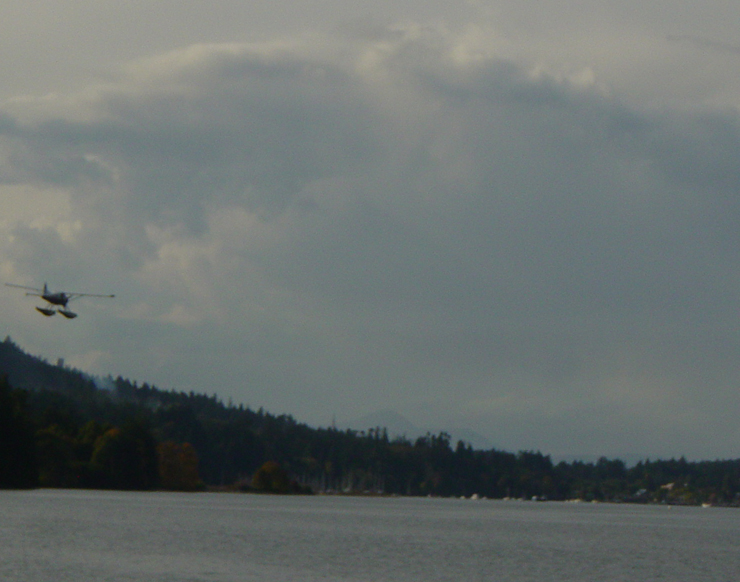
Apart from the ferries the other main transport around the islands is the
sea-plane and as it is the norm for a mobo to be the last in the pecking order
in the Col-Regs it was surprising to discover that sea-planes rank even lower.
Still it was necessary to keep a lookout up as well as around as this plane came
past us in the approach to Ganges Harbor.
Ganges Harbor is a lovely town on Saltspring Island with a busy harbor (Canadian spelling)
but still plenty of docking space on public docks.
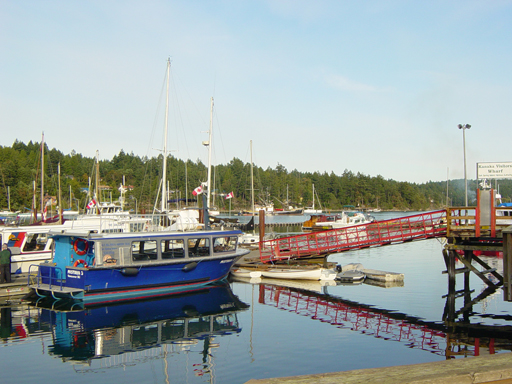
After a short stop to re-supply (fill up the fridge) we moved on to Poets Cove
marina in Bedwell Harbor on South Pender Island for the evening.
As with many of the anchorages and harbors the entrances almost take you by
surprise – the charts tell you they are there but they only become visible
at the very last moment. The entrances can also be difficult with narrow channels
and reefs running out in to the entrances from either side.
Poets Cove is a fantastic marina with a new first class hotel and facilities to
match including access to the pool and jacuzzi included in the mooring fee as
well as the normal facilities such as showers. Also available was free wi-fi
internet access – if only that was the case in the UK.
The next morning we moved on to Saturna Island. The shorter route took us
through the Pender Canal, a narrow waterway between North and South Pender island.
The entrance is narrow and shallow with an immediate turn to port around a
blind corner and then almost immediately the narrow central span of the bridge.
The local routine is to sound the horn before entering the channel and
listen for a response from anyone coming in the opposite direction before
committing to the passage. There are no pictures as I was too busy at the helm,
double checking the paper and electronic charts and sounding the horn!
At Saturna Beach the public dock gives access up a track to a winery on Saturna Island.
We walked up to the winery store to buy some bottles but it was closed.
Instead we were given a personal tour by the chief wine maker, a tasting
of a number of different varieties and a gift of wine and port; an amazing experience.
Nanika is on the public dock at Saturna Beach in the picture below.
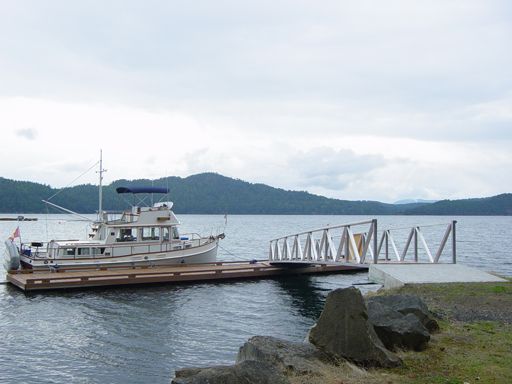
The extended tour put us behind schedule and meant we moored in
Montague Harbor just as the sun was setting.
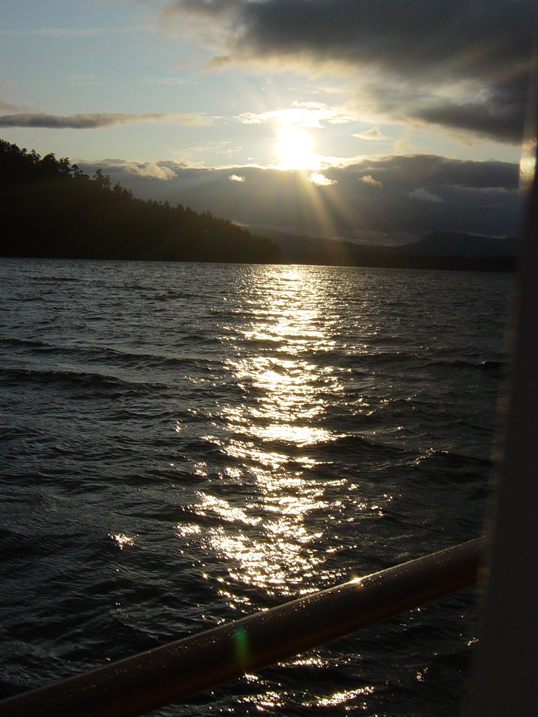
A large anchorage it had a huge number of mooring buoys available.
Overnight there were strong winds blowing from the North West and we
were aware we would have large seas with winds of 25 knots the next day for our
crossing back to Vancouver.
This picture shows one of the few other boats in the harbour on a mooring.
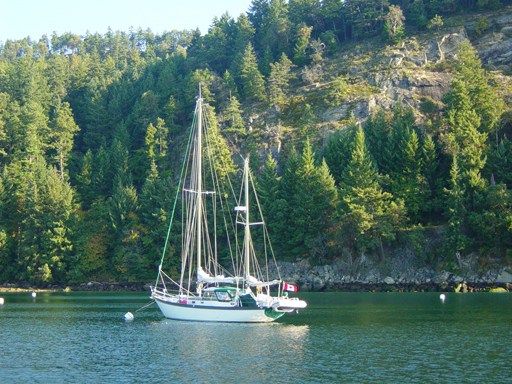
By now with regular practise and multiple approaches at each location the
docking and close quarter handling skills of those on-board had come on by
leaps and bounds. The evening ended with a two hour exam for the Canadian
Yachting Association Intermediate Powerboating Qualification (Day skipper
equivalent – but much more on safety, maintenance and regulation than
the RYA equivalent but far less on navigation and tidal curves which is handled
in a separate qualification).
On the final day we sailed up the Trincomali Channel to the Porlier Pass to gain
access to the Strait of Georgia. The weather reports given constantly on
VHF Channel 3 were still giving warnings of heavy seas. We found a swell
running at six feet plus (and higher at times) but confidence in Nanika meant we pressed on.
As the seas and winds were from the North West and we had to cross to the
North East a direct route was impossible. Instead we had to steer North into the
winds and waves and then South East with the wind to make safe progress.
The crossing took five hours instead of the two and a half hours on our
way out and constant steering was required to react to each wave as it arrived.
The chart below shows the route we took around the islands.
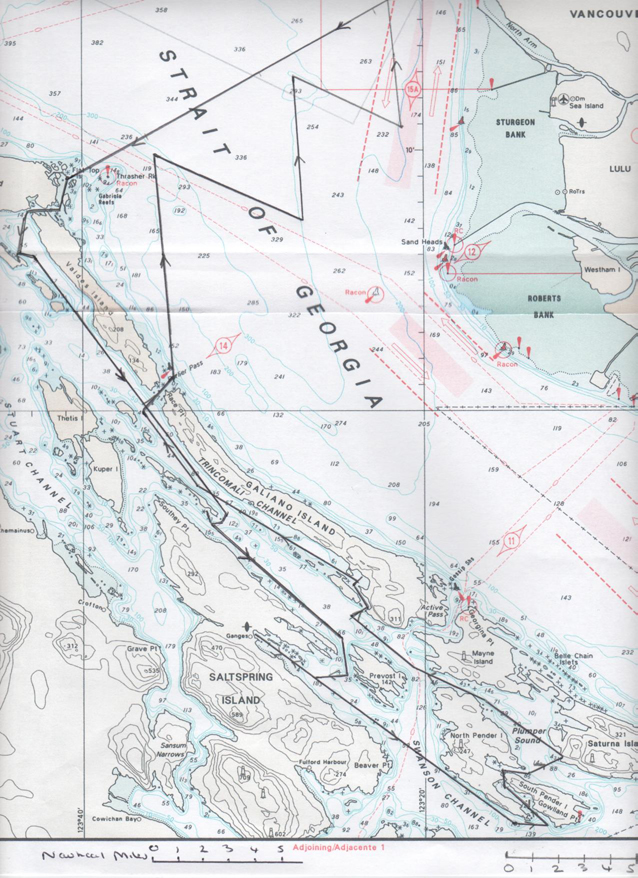
We arrived safely back into Vancouver having covered some 140 nautical miles
over the five days bringing a memorable experience to an end and the good news
the exam had been passed and the qualification gained.
Harpsden
and the Gulf Islands in Canada I thought forumites might like to see some photos from the trip
and hear about the course.
As I was finishing the preparation of the post I read Scubaman's great post
about cruising in Finland so apologies if there is any duplication.
The trip was inspired by an article in MBY by Barrie Baldelli in January this year
about chartering in the Gulf Islands.
Having decided to undertake a charter there next year with the family members
on-board it made sense to gain some familiarity with the very different waters
off the Canadian coast..
The cruise started at the False Creek marina in Vancouver which was very full
and gave an immediate challenge manoevring a boat on which you have no
experience in tight conditions.
The boat for the five days was a thirty year old restored Grand Banks 36 -
Nanika - and also owned by the course instructor.
Although very different to our Sealine SC29 the twin prop vessel responded
in a very similar manner at slow speeds to the SC29 with its twin out-drives.
Having taken the helm and got Nanika out into the main channel with no
mishap the 20 mile crossing of the Strait of Georgia to the Gulf Islands was no
problem at a cruising speed of 8 knots. Hurricane force winds had hit the North
West coast of Vancouver Island the night before but the effect on the seas in the
strait had not yet arrived.
The first port of call was the protected anchorage and dock at Silva Bay on
Gabriola Island. By now I was getting used to the IALA B system with the
channel markers being the same shape as ours but with the colours reversed.
The lassooing technique for mooring was also of no use as the majority of docks
(pontoons being something else altogether in Canadian parlance) had rails
instead of cleats for tieing up. The picture of Nanika tied up in Silva Bay shows
how the docks are configured with rails instead of cleats.
Being near the end of the season the harbors and anchorages all had plenty of
space as this view of Silva Bay shows. Overnight mooring costs seemed to be
round a pound per foot.
The wildlife was also different to that around the Solent with this sea otter
using the next dock to groom. We also had eagles, seals and porpoise throughout
the course.
Entry from the Strait Of Georgia into the sheltered waters of the Gulf Islands
is through a limited number of passages all of which have very strong tidal streams
with flows up to 8 knots at times. We entered through Gabriola Passage and the
picture below shows the turbulence in the water which moved Nanika around
significantly even though she was a solid heavy boat with a good keel.
After anchoring for lunch in Pirates Cove on De Courcy Island we moved on to
Conover Cove on Wallace Island to anchor for the second night. There was
the threat of a strong wind blowing into the anchorage so we had an all chain rode
with a scope of 7:1. To prevent swinging round in a very tight anchorage we
stern tied to one of several rings on the shore installed for just that purpose.
A clever way to ensure more boats can enjoy the anchorage at busy times.
By the time we were fully anchored the sun was setting as this view through
the entrance shows. We had to re-set the anchor as the first time the hold
was not good enough.
The same view the following morning:-
We had got such a good hold at the second attempt that we were worried
that it may be a problem to retrieve the next day but all was well once
pulled from above and we moved on to Ganges Harbor on Saltspring Island.
The main channels are used as ferry routes and a close watch had to be
kept for them at all times
Apart from the ferries the other main transport around the islands is the
sea-plane and as it is the norm for a mobo to be the last in the pecking order
in the Col-Regs it was surprising to discover that sea-planes rank even lower.
Still it was necessary to keep a lookout up as well as around as this plane came
past us in the approach to Ganges Harbor.
Ganges Harbor is a lovely town on Saltspring Island with a busy harbor (Canadian spelling)
but still plenty of docking space on public docks.
After a short stop to re-supply (fill up the fridge) we moved on to Poets Cove
marina in Bedwell Harbor on South Pender Island for the evening.
As with many of the anchorages and harbors the entrances almost take you by
surprise – the charts tell you they are there but they only become visible
at the very last moment. The entrances can also be difficult with narrow channels
and reefs running out in to the entrances from either side.
Poets Cove is a fantastic marina with a new first class hotel and facilities to
match including access to the pool and jacuzzi included in the mooring fee as
well as the normal facilities such as showers. Also available was free wi-fi
internet access – if only that was the case in the UK.
The next morning we moved on to Saturna Island. The shorter route took us
through the Pender Canal, a narrow waterway between North and South Pender island.
The entrance is narrow and shallow with an immediate turn to port around a
blind corner and then almost immediately the narrow central span of the bridge.
The local routine is to sound the horn before entering the channel and
listen for a response from anyone coming in the opposite direction before
committing to the passage. There are no pictures as I was too busy at the helm,
double checking the paper and electronic charts and sounding the horn!
At Saturna Beach the public dock gives access up a track to a winery on Saturna Island.
We walked up to the winery store to buy some bottles but it was closed.
Instead we were given a personal tour by the chief wine maker, a tasting
of a number of different varieties and a gift of wine and port; an amazing experience.
Nanika is on the public dock at Saturna Beach in the picture below.
The extended tour put us behind schedule and meant we moored in
Montague Harbor just as the sun was setting.
A large anchorage it had a huge number of mooring buoys available.
Overnight there were strong winds blowing from the North West and we
were aware we would have large seas with winds of 25 knots the next day for our
crossing back to Vancouver.
This picture shows one of the few other boats in the harbour on a mooring.
By now with regular practise and multiple approaches at each location the
docking and close quarter handling skills of those on-board had come on by
leaps and bounds. The evening ended with a two hour exam for the Canadian
Yachting Association Intermediate Powerboating Qualification (Day skipper
equivalent – but much more on safety, maintenance and regulation than
the RYA equivalent but far less on navigation and tidal curves which is handled
in a separate qualification).
On the final day we sailed up the Trincomali Channel to the Porlier Pass to gain
access to the Strait of Georgia. The weather reports given constantly on
VHF Channel 3 were still giving warnings of heavy seas. We found a swell
running at six feet plus (and higher at times) but confidence in Nanika meant we pressed on.
As the seas and winds were from the North West and we had to cross to the
North East a direct route was impossible. Instead we had to steer North into the
winds and waves and then South East with the wind to make safe progress.
The crossing took five hours instead of the two and a half hours on our
way out and constant steering was required to react to each wave as it arrived.
The chart below shows the route we took around the islands.
We arrived safely back into Vancouver having covered some 140 nautical miles
over the five days bringing a memorable experience to an end and the good news
the exam had been passed and the qualification gained.
Harpsden


