Using blowtorch to preheat Taylors stove

Spuddy

Well-Known Member
Joined
8 Jul 2003
Messages
1,958
Location
Kent
Visit site
I don't have a problem firing up my Taylors with meths but sometimes I'm forgetful and need to use it again when it's half-cooled. In those circs I don't want to start squirting meths about so thought a blowtorch would be suitable.
I know some folks use a blowtorch for normal lighting anyway so could do with advice on a suitable torch .... is size important?
Does it help to have burning bit at the end of an extended tube?
And also where exactly is best to aim the thing - underneath the top saucer shaped bit or does heat travel down if torch heats that top bit up?
Thanks for any suggestions
 
I used a typical DIY blow torch above the saucer that normally holds the meths. The purpose is to heat the tubes so that paraffin vaporises when you open the valve. You soon get the hang of how long to heat it for. This is the way it is done at Taylors when testing. However not sure it is any better on balance than using meths once you suss out exactly how much meths to put in. Only real benefit is that blow torch is easier when the boat is bouncing around! so I kept a blow torch on board as well as meths.
 
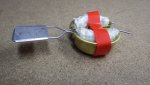
I used a Taymar blowlamp for a while and then I discovered these

Tilley-Lamp-Pre-Heat-Meths-Torch-151-Genuine.jpg

I keep it submerged in a small jar of meths and when lit, it pre-heats the burner for exactly the right time.
 
I used a Taymar blowlamp for a while and then I discovered these

View attachment 74651

I keep it submerged in a small jar of meths and when lit, it pre-heats the burner for exactly the right time.

Looks suspiciously like a Tilley lamp preheater, which is cunningly design to heat the lamp for exactly 85% of the time required to get it going properly. I always give mine a second go.

Wasn’t there a stove with some kind of pre start burners......

Optimus. Uses Taylor burners, but the preheat system is long obsolete. If anyone wants a brand new single burner one, PM me.
 
I considered using a blowtorch on mine as it would probably be easier than using meths, however having a blowtorch means that you have now have gas on board, butane?, and this was the main reason for me having a paraffin system.
 
We tried a cheap little Creme Brulee blow torch at first- more or less useless. Then got a proper Camping Gaz one and that is much better.
The main reason for using the blowtorch is in poor conditions or, more often, when you've been distracted and missed the alcohol going out and can't be sure whether the burner is still hot enough. Or if you've cocked it up and it's flaring, you can rescue the situation using the blowtorch. But most of the time we do just use alcohol to preheat- it's quieter and you can be filling the kettle etc whilst it burns, rather than standing there with the blowtorch the whole time. I've found that 10ml is plenty, and now use a bottle with a 10ml cap so that I can roughly measure it out.

Incidentally our Optimus stove does have the pre-heater device on the hob burners. It does work, but at the expense of tank pressure. I think it must draw air as well as fuel from the tank to atomise the fuel, so you can almost watch the pressure drop as it burns, and you have to keep pumping whilst it pre-heats. So it's useful to rescue a flaring burner but in most cases alcohol is easier.

We use alcool a brulee that we get friends to buy in France for us- much less smelly than meths.
 
I considered using a blowtorch on mine as it would probably be easier than using meths, however having a blowtorch means that you have now have gas on board, butane?, and this was the main reason for me having a paraffin system.

This was a factor in deciding me against it. I had one of those 175g gas cylinders empty itself at home and no harm was done because it was in a draughty shed but that amount in a yacht's bilge would cause a pretty big bang if ignited.
 
This works fine. I too rejected it on the basis that I'd then have gas on board. Chemist friends assured me that there is enough gas in one of those cylinders to make a serious bang.

I did actually use a torch for one season, storing it on deck, but it didn't stand up to the marine environment.

I also thought that the I should aim the torch at where the meths would normally be. An ex builder of the stoves contradicted me. He said it was important to get the top cap hot - that is the bit with all the wee holes in it. The argument was that paraffin squirts up and hits it and this should vapourise it. I don't think this was instead of heating the body of the burner, but rather as well as. He said to "play the torch over the burner".

By the way, I use a syringe to put 20ml of meths in the cup which burns in four minutes. I have a kitchen timer set to that and start it to remind me to light the thing, The syringe also makes it a little less dangerous lighting a burner when the other one is already lit or the oven top is hot. (No needle - we don't want anyone mainlining meths.)
 
I use a gas blowlamp to do the final heating, the new 4-leg burners from Toplicht don't quite get to vapourising temp. on a standard meths preheat, with or without the asbestos rings.
(I have quite a collection of heavily sooted-up burners and jets, and intend to try them in the ultrasonic cleaning machine I bought for gummed-up outboard motor carburettors. Whatever happened to the simple life.. )

The blowlamp lives on deck with its spare gas canisters, so any leak would go overboard, not in the bilges.
They go rusty, and there are several different incompatible sizes of bottle and thread in different countries. Was thinking of trying a MAPP gas blowlamp as used by plumbers, better quality and bigger bottles. Piezo electric ignition, at least on cheap blowlamps, lasts about 2 days in salty environments, so you need a lighter anyway...
( I would have a blowlamp anyway, for random heating tasks. And it is powerful enough to boil a small copper kettle in a minute anyway..)

My boat has a paraffin cooker because there is nowhere to put an overboard draining gas locker. I love the Taylor's looks, but it's a faff now and again.
If I had a sane place to put gas bottles, I would get a Taylors gas cooker, best of both worlds..
 
Last edited:
Sticking my oar in again. I too use the Hanse Burners and find them good. They have a tendency to deliver too much paraffin. if you have trouble getting the burners up to temperature when priming run the stove at a lower pressure. I run mine much lower - about 15-17 psi.

Taylors stoves are like Aga cookers - a complete pain in the arse - but if you own one you feel obliged to profess love for it. I'm speaking from extensive experience of both.

A gas safe installation would require butchery of my classic boat - hence the paraffin. You trade a small chance of explosion for 17 different opportunities to set your boat on fire.
 
Last edited:
Thanks Amulet, I will definitely try a lower pressure. If you have time to answer a rather finicky question, do the jets just come in one size? Your comment about 'too much paraffin' has just made me start wondering...
 
Thanks Amulet, I will definitely try a lower pressure. If you have time to answer a rather finicky question, do the jets just come in one size? Your comment about 'too much paraffin' has just made me start wondering...

I don't think jets differ intentionally in size, but I did get improvement on one burner that was misbehaving by replacing a relatively new jet. I also believe they wear out over time. I suppose pricking them could wear them. Also every now and again someone accidentally turns a ring down the wrong way - by putting the cleaning needle into the jet. (I have done it myself, so I'm not blaming crew.) If it is left like that it will weld on to the jet and then you have to replace needle and jet. I think that maybe sometimes when you think you got away with it you have actually damaged the jet. Therefore it is worth trying a replacement jet if a burner is being very unhelpful. It's on my list for one of the burners start of next season. Of course the fact that different burners like different pressure means you can't run your stove with a mixture of burner types. I found this out the hard way. You can get good performance out of a Taylors stove once you get used to it - it only takes 15-20 years to learn.
 
Top