Two-stroke outboard engine seized - water in cylinder? How bad is this?

Guess you didn't flush it before storage !
When searching "how to unseize a two-stroke" I found a thread on the Antique Outboard Club's forum in which a member described the worst seized outboard they'd dealt with - he reckoned that it had been run in saltwater and that "basically everything had been done wrong from a storage point of view", "by an owner that didn’t know any better". That describes me pretty well. He reckoned that it had "tipped so that saltwater ran into the exhaust ports and into the pistons" and I could quite possibly have have done that - no idea.

I definitely could have done better on this occasion but I'm a full-time cruiser, so I'm not sure how practical it is to run it in fresh water after every use. I'd love to do that.

I was assiduous over the past year in turning the clamping screws and exercising the hinge of the bracket, because those seized last time it was in storage for 6 months, but it didn't occur to me that this might happen.
 
I am presently dealing with an almost identical scenario. In my case the outboard was flushed by running in fresh water before storage
Spark plugs removed showed one cylinder full of salt .

Cylinder head removed.
This confirmed only the one chamber had the same salt crystals (as per the image above) in it while the other chamber was clean. I think the head gasket must have been allowing water into one of the cylinders and this has caused the issue.

The outboard has been in storage 2 years .

The spark plug threads in the cylinder head for the cylinder with the salt came away with the spark plug so I suspect it was a mild steel helicoil.

Started investigating yesterday with removal of cylinder head.
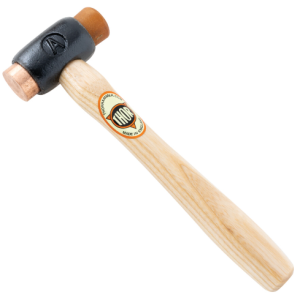
I have applied lots of penetrating oil and this initially achieved some slight movement only. I resorted to the idea of belting a piston using a rawhide mallet
Screenshot 2024-06-14 19.31.55.png
(I knew it would come in handy one day)
and once there was more movement, using piece of timber as a drift . Working the pistons alternately until all was free and the engine can be turned over using the pull start cord.

Now I need to see whether the cylinder head spark plug thread can be repaired.

If not I have seen a similar used but claimed to be functional power head advertised for sale which might be an solution.

Moral of the story is use marine stuff regularly otherwise it will rot.
 
The question I would be asking is how if it was working before it was put into storage have the bores and head developed such corrosion.
 
It’s a Tohatsu 2 stroke - my money still says free it up and it’ll run.
Plus one. Get the pistons to move with wooden drift and hammer on pistons. If no success remove con rod from crankshaft and try each piston individually. Worth a try once pistons move to refit head and try to start it. ol'will
 
Top