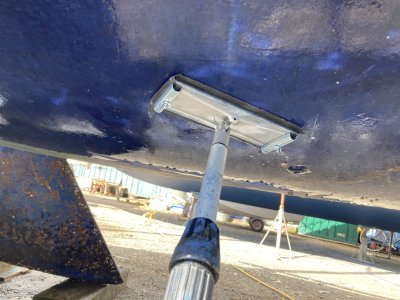
Tool for lightly sanding the hull

Gixer

Well-Known Member
Joined
29 Nov 2015
Messages
1,125
Visit site
When I come out of the water to antifoul, I jet wash and then lightly abrade the hull with these foam sanding blocks.
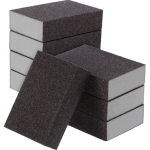
1675425821978.png

This gives a nice clean, smooth hull for the paint. Its a messy job and quite labor intensive so I want to come up with something that could be quicker. I'm thinking of mounting a few of these onto something like a broom handle which will enable me to get longer strokes and not have to be right under the boat. I do this wet so I would dunk the end into a bucket.
Anyone built something like this or have any better ideas?
 
All I have ever done is wash and then repaint with antifoul. Why bother sanding (wet only of course) unless you are a racer?
 
Wet sand blaster.
Sounds expensive

All I have ever done is wash and then repaint with antifoul. Why bother sanding (wet only of course) unless you are a racer?
I find the jet wash doesn't always get all the weed off and a quick go over with a sanding block makes a difference. Maybe I'm trying too hard, I'm not a racer as you say.
 
All I have ever done is wash and then repaint with antifoul. Why bother sanding (wet only of course) unless you are a racer?
Simply because a rough finish does have a marked effect on boat performance. That has nothing to do with racing. Just making the boat under one, sail efficiently as possible. After all doing so is the art of sailing. I get no joy from knowing that I am sailing badly. Just bodging is lazy- In my view at least.
 
I got a squeezy mop, the type with a foam pad, and attached two large Scotchbrite pads to the foam using contact adhesive. Great for doing the bits of antifouling that the pressure washer missed.
 
I wet sand every year. It prevents a build up of loose flakey paint. I use a dry wall pole sander with a gauze sanding material which comes in a roll. A hose with a gun, to wet the area to be done, and to wash off the slurry. The pole, with an articulated head, makes it easy, and keeps you out from under.
 
Use a drywall pole sander. There are other holders on this site
pole sander
I use wet & dry with it & a sprayer rather like a garden spray . That is used to spray an area with water for sanding.
The pads that you show are too much like hard work
I too use a pole sander but with sanding mesh, eg... 115mm x 5m Sanding Mesh, 120 Grit - Prodec Advance | CPC (farnell.com)
no clogging, readily washed with water

the combination works a treat (NormanS: Snap!)
 
Last launched my boat spring 2019, thinking of a lift out over a weekend this spring to pressure wash, clean prop and change anodes. The joys of Coppercoat; once you have made the initial effort that is.
 
Most people I know use a pole sander with mesh abrasive. Just have a bucket of water to dip and rinse now and then. The ProDec suggested above is OK.

In terms of bang-per-buck, I think the no-name mesh is better value than Mirka Abranet. My local hardware store actually stocks an unbranded range of grits at a sensible price.
 
When I come out of the water to antifoul, I jet wash and then lightly abrade the hull with these foam sanding blocks.

View attachment 150530

This gives a nice clean, smooth hull for the paint. Its a messy job and quite labor intensive so I want to come up with something that could be quicker. I'm thinking of mounting a few of these onto something like a broom handle which will enable me to get longer strokes and not have to be right under the boat. I do this wet so I would dunk the end into a bucket.
Anyone built something like this or have any better ideas?
Two lucky accidents gave me alternatives.

The first was when we moved our cat to avoid Bastille day fireworks somwhere in Britanny and ran aground on a falling tide. Wanted to clean off the bottom but had no sanding blocks, Instead I used the sand where we lay on a car wash sponge and it did the job brilliantly.

Getting my current boat ready for coppercoat, I rumaged around and found an old roll of what looked to me like really rough sandpaper. I used it and it was brilliant. Whats more you could wash it to remove the crud and it was as good as new. When I looked closely at what was written on the back I found that it was the self adhesive stuff that 3M sell for making non slip surfaces. I ended up attaching a piece to my rotary sander - I have never cleaned a hull as fast!
 
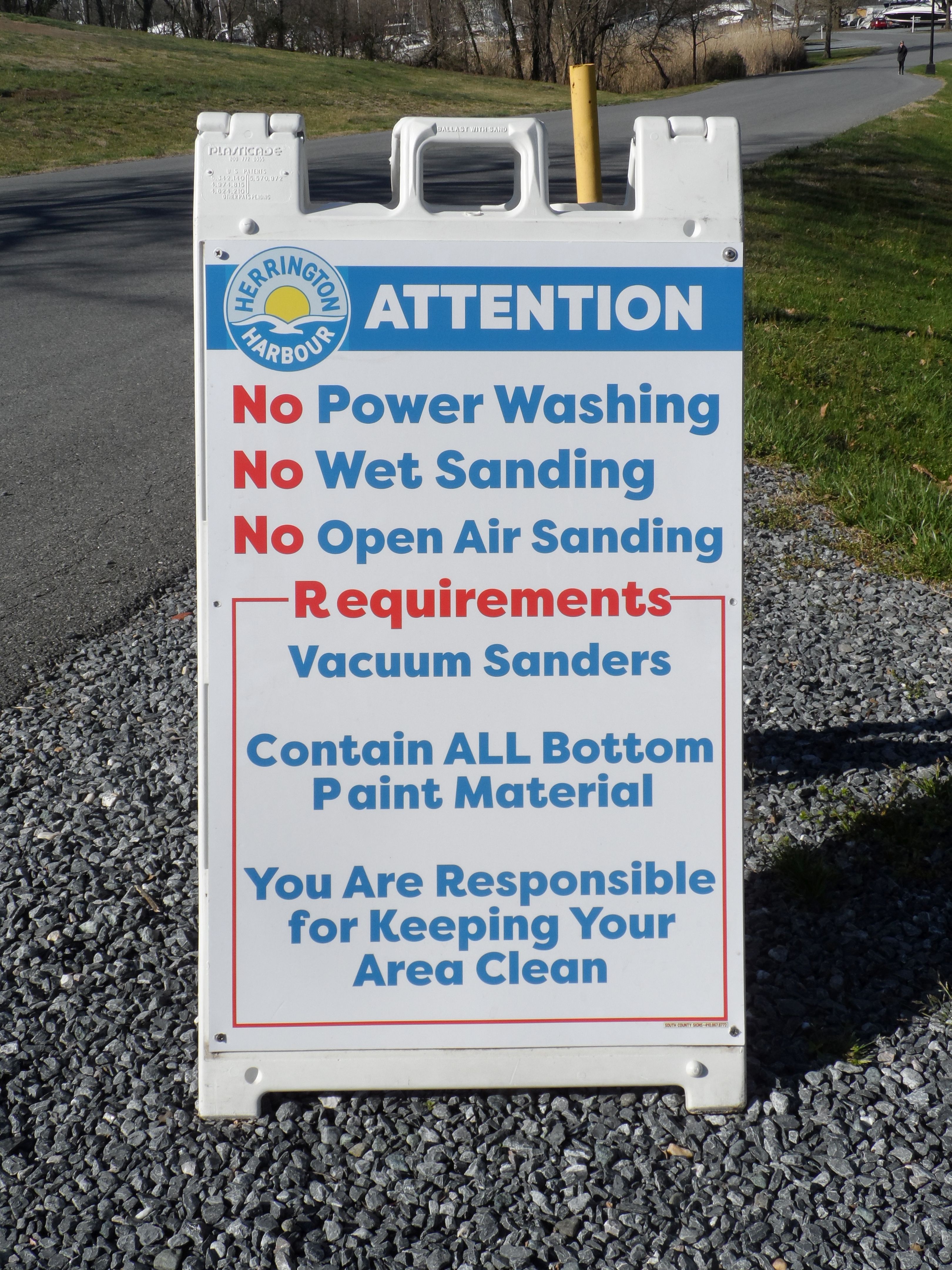
No wet sanding here. Only vacuum sanding (and they are strict about open air sanding if NOT vacuum).


no%20wet%20sanding%20HHN%203.jpg
 
Remove flaking antifoul and slap a new coat on every few years is more along my motto. If it's above the waterline it doesn't matter and if it's below the waterline you can't see it.😏
 
Top